MORI Family
MORI FamilyThe lineage of MORI Sōyū
Based upon records preserved within the MORI family
The MORI Family
The family of MORI Sōyū descends from the MORI lineage founded by MORI Yoshinari, who served ODA Nobunaga during the Sengoku period, and has lived through the great turning points of Japanese history—from the Sengoku and Edo periods to the Meiji era and the modern age.
The history of the MORI family is more than the history of a single lineage.
In the Sengoku period, its members served as warriors; in the Edo period, as daimyō; and, after the family branches spread to various domains, as hereditary retainers entrusted with the administration of those domains. From the Meiji era onward, members of the family contributed to the development of society in their respective spheres.
The following is an introduction to a portion of that history, based upon records preserved within the MORI family.
The Sengoku Period
-
1523 - 1570
MORI Sanzaemon Yoshinari
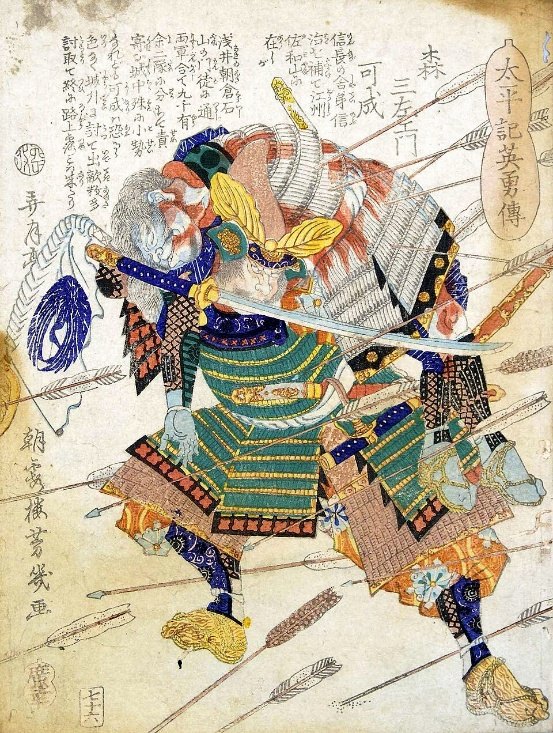
The starting point in the history of the MORI family is MORI Yoshinari.
Yoshinari served ODA Nobunaga and was one of the senior retainers who supported Nobunaga’s expansion of power, including by advocating the campaign that led to the Battle of Okehazama.
In Genki 1 (1570), during the Battle of Usayama Castle, in which the forces of Azai and Asakura clashed with those of ODA and TOKUGAWA, Yoshinari defended Usayama Castle and fell in battle after a valiant resistance.
After his death, the MORI family was succeeded by his son, MORI Nagayoshi.
-
1558 - 1584
MORI Musashi-no-kami Nagayoshi
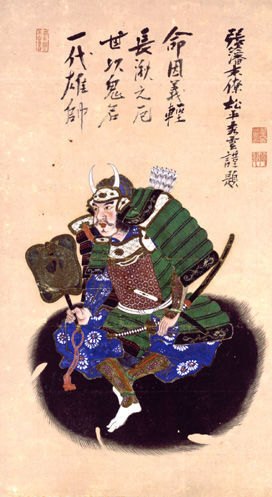
After the death of his father, Yoshinari, Nagayoshi succeeded to the family leadership at a young age and campaigned throughout the country under ODA Nobunaga. He distinguished himself in the conquest of Shinano and became renowned as a formidable warrior, earning the sobriquet “Oni(Demon) Musashi.”
After the Incident at Honnō-ji, Nagayoshi continued to distinguish himself under TOYOTOMI Hideyoshi, but fell in battle at Komaki and Nagakute in Tenshō 12 (1584).
-
1565 - 1582
MORI Ranmaru, Rikimaru and Bomaru
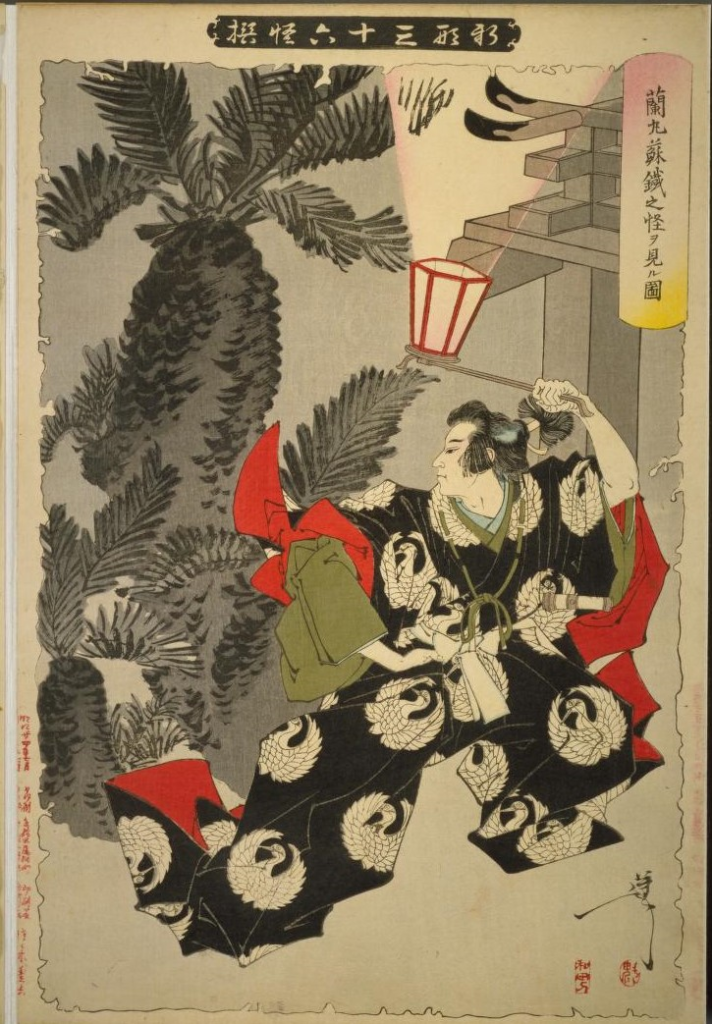
Among Yoshinari’s sons, in addition to Nagayoshi, was MORI Ranmaru (Naritoshi), known as one of ODA Nobunaga’s personal attendants. His younger brothers Rikimaru, Bomaru and Senmaru likewise entered Nobunaga’s service as pages and attendants.
Moved by the death in battle of MORI Yoshinari, Nobunaga took the four young brothers into his household, raised them under his protection, and employed them as personal attendants. Ranmaru in particular was described in contemporary sources as handsome, perceptive and exceptionally attentive.
The Tale of the Mandarins
One well-known anecdote concerns mandarins. Ordered by Nobunaga to bring mandarins from another room, Ranmaru was cautioned, “If you carry them that way, you will drop them.” Ranmaru tried to complete the task safely, but at the very end he stumbled, fell, and dropped the fruit. Nobunaga smiled wryly and the assembled warriors looked on in exasperation; yet Ranmaru had done so deliberately. Had he completed the task safely after Nobunaga had warned him that he would drop them, Nobunaga’s words would have been proved false. The tale illustrates the absolute authority accorded to the lord’s word.
The Number of Grooves in the Sword Scabbard
On one occasion, Nobunaga gathered his pages and said, “I shall give this sword to whoever can tell me the number of grooves carved into its scabbard.” The pages guessed and gave their answers, but Ranmaru alone remained silent. When Nobunaga asked why, he replied that he knew the answer because he was always responsible for maintaining the sword. He had therefore refrained from answering: remaining silent would conceal the fact, but giving an answer would amount to deceiving his lord. Impressed by this honesty, Nobunaga presented the sword to Ranmaru.
The sword is said to have been Fudō Yukimitsu, a celebrated Kamakura-period blade, reportedly burned at Honnō-ji. Yet a sword bearing that name survives unharmed today, so the identification cannot be regarded as certain.
Ranmaru’s habit of observing his lord’s conduct in daily life and anticipating what would be required of him also has an affinity with the spirit and attentiveness cultivated in the Way of Tea.
As Nobunaga’s close attendant, Ranmaru was granted Iwamura Castle and an income of 50,000 koku in March 1582, shortly before the Incident at Honnō-ji. Such treatment was extraordinary for a young man of only seventeen.
Three months later, he fell in battle alongside Nobunaga at Honnō-ji.
-
1570 - 1634
MORI Ukon-dayu Tadamasa
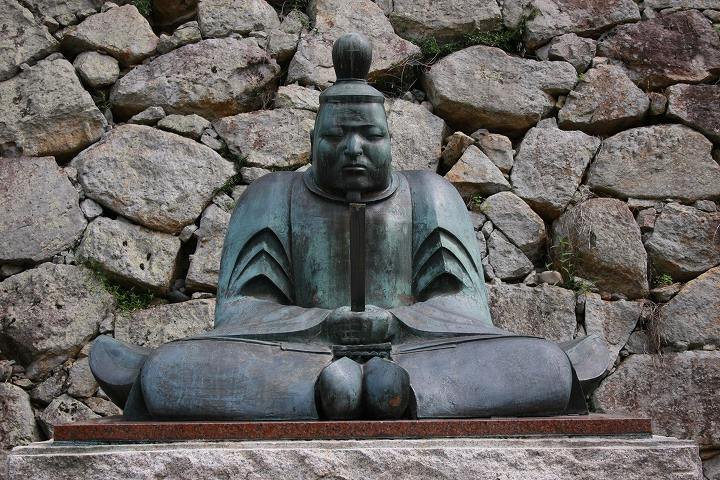
Among Yoshinari’s sons, the last to succeed to the MORI family leadership was MORI Tadamasa.
His childhood name was Senmaru. Until three months before the Incident at Honnō-ji, he served as one of Nobunaga’s attendants together with his brothers, including Ranmaru. However, after a quarrel with his colleague from the Yanada family, he was placed under confinement at Gifu Castle just as the Incident at Honnō-ji occurred. Yanada too fell at Honnō-ji, while Senmaru was rescued by his elder brother Nagayoshi.
He subsequently entered the service of Hashiba Hideyoshi, changed his name to Tadamasa, and inherited his brother Nagayoshi’s Kanayama Castle.
After Hideyoshi’s death, Tadamasa accepted HOSOKAWA Tadaoki’s invitation to join TOKUGAWA Ieyasu. He was granted Kaizu Castle, the former territory of Nagayoshi that had been taken into TOYOTOMI service. Delighted, Tadamasa renamed it Matsushiro, the present-day Matsushiro area of Nagano.
At the Battle of Sekigahara, he accompanied and supported the army of TOKUGAWA Hidetada as it advanced along the Nakasendō and took part in the attack on Ueda Castle. The campaign took time, and Hidetada arrived late at Sekigahara. Hidetada was severely rebuked by Ieyasu before the assembled generals, yet the fact that MORI Tadamasa and SENGOKU Hidehisa, who had accompanied him, were not punished has led to a modern interpretation that Ieyasu’s rebuke was partly a political performance intended to contain the anger of the generals, while preserving the TOKUGAWA main force of 35,000 men and weakening the forces of other commanders.
Although Tadamasa might have been expected to face punishment, he was subsequently elevated to daimyō of the entire province of Mimasaka, with a fief of 186,500 koku.
Later, his eldest son, MORI Tadahiro, was married to Kamezuruhime, the eldest daughter of MAEDA Toshitsune.
 Her mother was Tamahime, the second daughter of TOKUGAWA Hidetada and Oeyo. At the strong request of her grandmother, Oeyo, Kamezuruhime was chosen to marry into the Mori family. She was also granted the prestigious status of an adopted daughter of her uncle, Shogun TOKGUAWA Iemitsu, and entered the Mori family from the Maeda household in an exceptionally distinguished wedding procession.
Sadly, only three years after her marriage, Kameturuhime died at the age of eighteen.
In 1634, the eleventh year of the Kan’ei era, Tadamasa was ordered by the third shogun, TOKUGAWA Iemitsu, to take responsibility for the reception and entertainment accompanying the shogun’s visit to Kyoto. As Tadamasa was already bedridden with illness, he initially declined the assignment. He eventually traveled to Kyoto after receiving an indication that, once the reception had been successfully completed, he would be considered for the grant of the three provinces of Hōki, Iwami, and Izumo.
While residing in Kyoto by order of the third shōgun, TOKUGAWA Iemitsu, to provide hospitality during the shōgun’s visit to the Imperial capital, he was invited to a tea gathering at the residence of the wealthy merchant Daumonji Sōmai. After eating a peach as a confection, he suffered abdominal pain and died suddenly at Myōken-ji Temple in Kyoto on 7 July 1634. His body was cremated at Funaokayama in Kyoto and he was buried at Daitoku-ji’s Sangen-in.
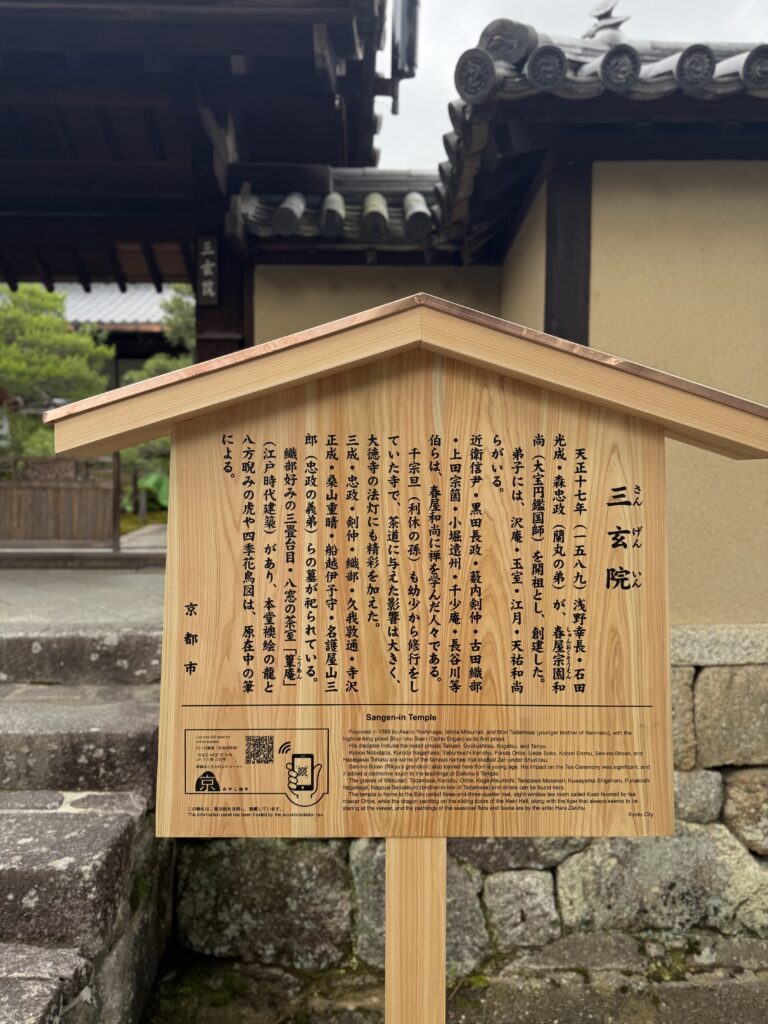
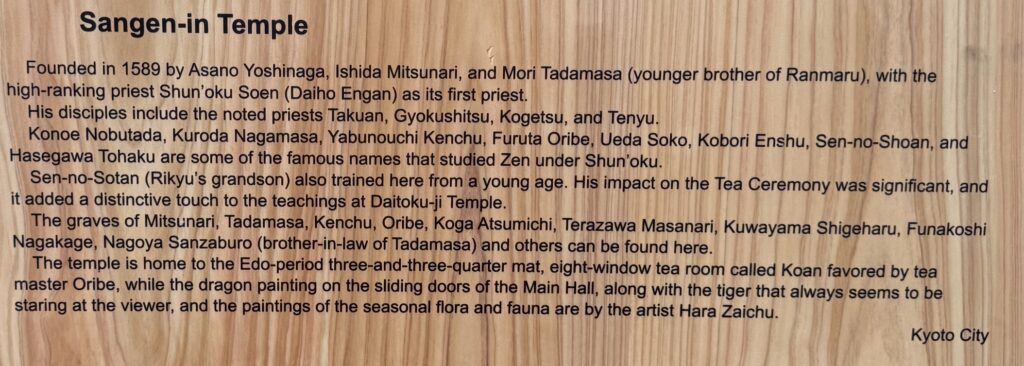
Tadamasa followed a path different from that of his elder brothers, serving both TOYOTOMI Hideyoshi and TOKUGAWA Ieyasu and ultimately establishing himself as a daimyō who ruled an entire province.The Sengoku period was an era in which the MORI family’s principal figures—Yoshinari, Nagayoshi, Ranmaru and Tadamasa—each played a part upon the great stage of Japanese history.
The Edo Period
MORI Tadamasa and the Tsuyama Domain
-
1610 - 1698
Second Generation — MORI Naiki Nagatsugu
MORI Tadamasa had two sons, but both died young. He therefore adopted Nagatsugu, the son of his third daughter Ogo, who had married the Sengoku warrior SEKI Narimasa, making Nagatsugu his grandson and heir to the MORI family.
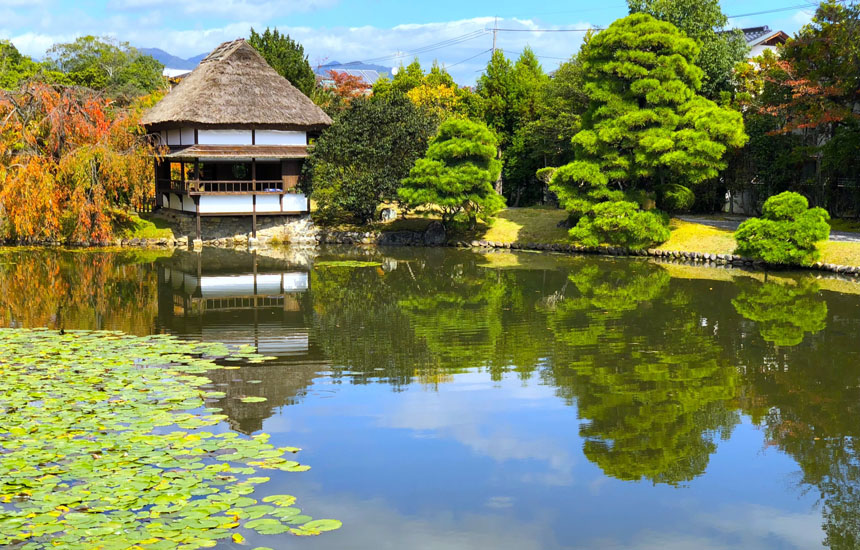
Nagatsugu organized the administration of the domain, developed the castle town, and devoted himself to the promotion of industry and culture within his lands.
He also repaired and founded temples and shrines, embraced the Ōbaku school of Zen Buddhism then encouraged by the TOKUGAWA house, and established Ōbaku temples within the domain.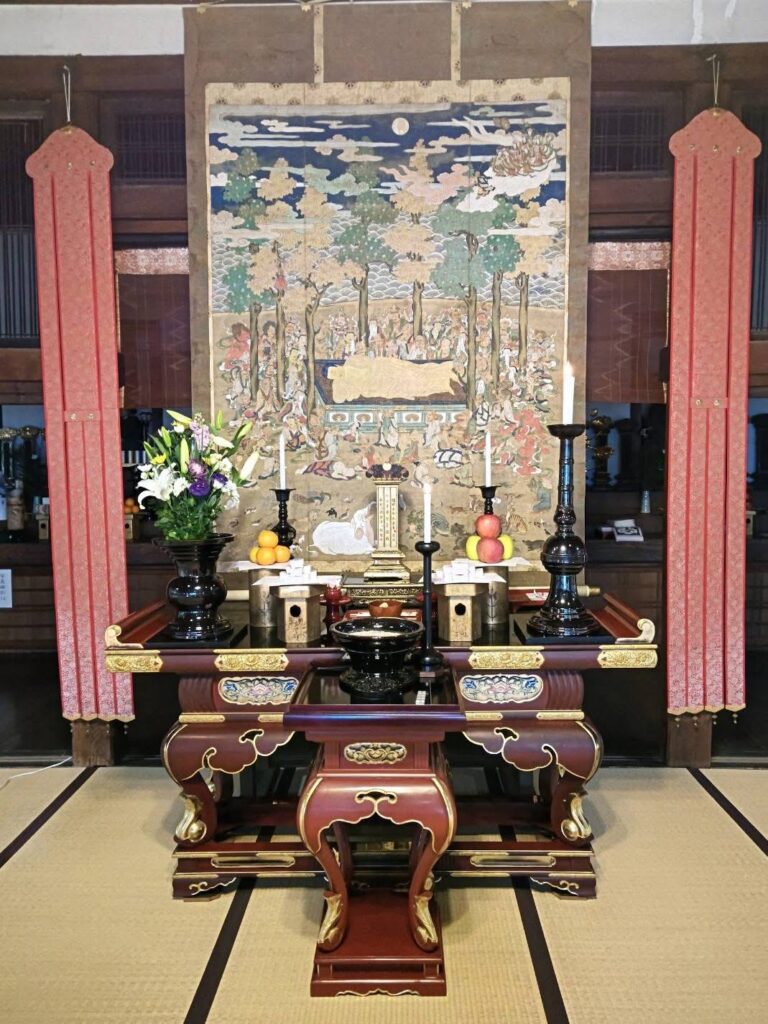
The rule of Nagatsugu was one of the periods in which the Tsuyama Domain enjoyed its greatest stability and prosperity.His long tenure was, however, marked by the sudden death of his eldest son and heir, MORI Tadatsugu, from an epidemic. Deeply grieved, Nagatsugu is said to have promised at Tadatsugu’s deathbed that Tadatsugu’s son Naganari would succeed as lord once he came of age. Tadatsugu reportedly closed his eyes with a smile upon hearing this. After Tadatsugu’s death, Nagatsugu immediately resolved to retire and arranged for his second son, MORI Nagatake, to serve as lord until Naganari reached adulthood.
-
1645 - 1696
Third Generation — MORI Hōki-no-kami Nagatake
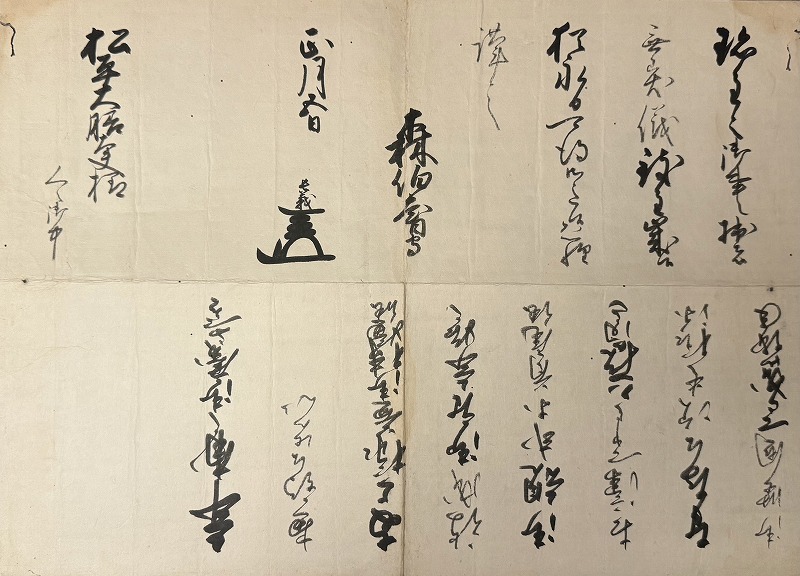
MORI Nagatake, the second son of Nagatsugu, excelled in martial arts. He strengthened his connections with the shogunate and actively accepted assignments undertaken on behalf of the bakufu, such as fire-watch duty at Zōjō-ji Temple, seeking to win the favor of the shōgun’s house and raise the standing of the MORI family.
These undertakings, however, required great expenditure and placed the domain’s finances under severe strain. In domestic administration, Nagatake sought to strengthen the authority of the lord by excluding hereditary senior retainers and favoring personal attendants. He issued domain notes, ordered repairs to the Saragawa irrigation channel to stabilize agricultural production, and maintained the domain’s finances through reductions in the stipends of retainers and the confiscation of temple and shrine lands. In 1676, he granted his younger brother Nagatoshi 15,000 koku of newly developed land, establishing the Tsuyama-Shinden Domain. This is said to have been intended to secure a retirement allowance greater than Nagatoshi’s own holdings once Nagatake himself retired.
Naganari came of age. Nagatake, reluctant to relinquish the lordship, nevertheless retired following the advice of the former lord, Nagatsugu.
As fourth lord, Naganari granted Nagatake 20,000 koku, but not as a territorial fief: it was to be paid from the domain’s storehouses in rice. Ordinarily, a warrior holding 10,000 koku or more was regarded as a daimyō, but without territorial possession he could not formally be a daimyō. This has also been interpreted as retaliation by senior retainers and warriors whose stipends had been reduced.
Nagatake appealed to the senior officials of the shogunate, without effect. The 20,000 koku in warehouse rice remained unchanged. He died of illness at the domain residence in SEKIguchi, Edo. He refused burial in the MORI family’s hereditary cemetery and, according to his will, was buried at Kan’ei-ji’s Gokoku-in. He was later reinterred to make way for the mausoleum of TOKUGAWA Tsunayoshi; after a further reinterment at Aoyama Cemetery in the Meiji era, his gravestone was eventually moved to the MORI family cemetery at Kagaku-ji in Ako.
-
1671 - 1697
Fourth Generation — MORI Mimasaka-jijū Naganari
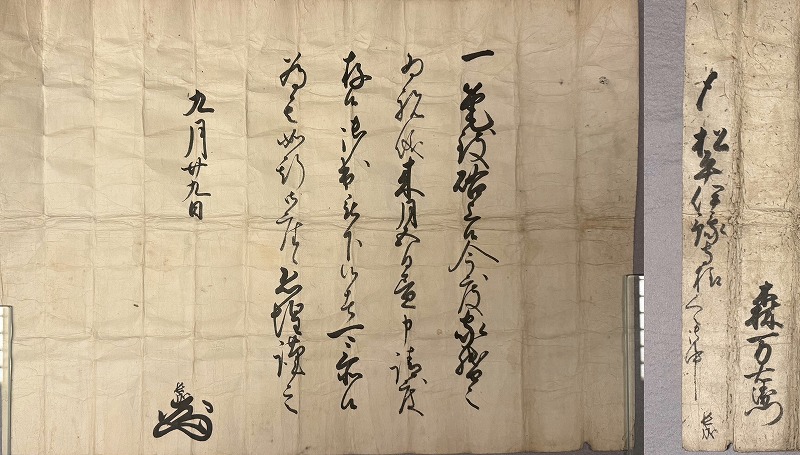
Naganari was the eldest son of Tadatsugu, himself the eldest son of the second lord Nagatsugu. Because Tadatsugu died young, Naganari became heir at the age of three. Under the Edo shogunate, however, a daimyō who was a minor could not designate an adopted heir; should he die before adulthood, the domain would be confiscated and abolished.
In an age when childhood mortality was high, it was therefore considered risky to place a three-year-old at the head of the domain. His uncle Nagatake became lord instead, on the understanding that the lordship would pass to Naganari once he had grown up. Naganari duly came of age, and after Nagatsugu advised Nagatake, who sought by various pretexts to delay the transfer, the lordship was finally handed to Naganari.
The relationship between the two was not especially cordial. Nagatake, in particular, having received no territorial grant, sometimes searched for shortcomings in Naganari and reported them to the senior officials of the shogunate.
Judging the MORI family to possess substantial financial resources, the shogunate ordered the construction at Nakano Village of a kennel intended to house 100,000 stray dogs. Funds were raised from merchant houses in Osaka and Edo, and the facility was completed in roughly six months. Shōgun Tsunayoshi granted Naganari the court rank and title of jijū that had been held by Tadamasa. Yet Naganari, who was physically frail, died at twenty-seven after overwork. He left no children and was buried at Shōun-ji in Shibuya.
The Fifth Generation — MORI Morotoshi and the Abolition of the Tsuyama Domain
-
1673 - 1705
Heir — MORI Morotoshi
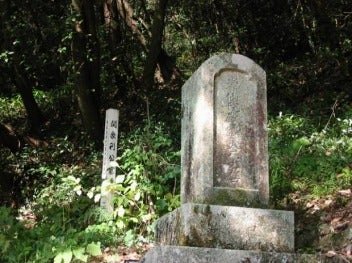
At the Tsuyama residence in Edo, the family struggled to determine a successor before formally reporting Naganari’s death to the shogunate.
Accordingly, SEKI Morotoshi—who had served as a senior retainer of the Tsuyama Domain, had connections with the senior officials of the shogunate, and had been adopted into the SEKI family as the eighth son of Nagatsugu—was brought back into the MORI family. A document, purportedly in Naganari’s own hand, was prepared stating that Morotoshi was to succeed to the MORI family and was submitted to the shogunate. Approval was obtained, and Naganari’s death was reported the following day. Adoption on one’s deathbed was prohibited, but it is evident that the shogunate was at least dimly aware of the circumstances.
Morotoshi thus became the fifth lord. While travelling from Tsuyama to Edo to offer his formal greetings to Shōgun TOKUGAWA Tsunayoshi, he caused an incident within Kuwana territory by criticizing senior officials of the shogunate and slashing at one of his attendants. It is also said that Morotoshi himself was reluctant to assume the lordship.
The Tsuyama Domain attempted to conceal the incident, but the frequent visits of physicians quickly became known to the Kuwana Domain. Following Kuwana’s report, the shogunate refused to recognize Morotoshi’s succession and ordered the confiscation of the MORI lands and the abolition of the domain.
Petitions from the MAEDA family of Kaga and the HOSOKAWA family of Higo, however, resulted in the MORI family being treated as a case of abolition for lack of a legitimate heir, while permitting its branch families to survive. The surviving second lord Nagatsugu, then eighty-seven, received 20,000 koku as a retirement allowance; MORI Nagatoshi received 15,000 koku; and SEKI Nagaharu received 18,000 koku—a total of 53,000 koku, a drastic reduction from the former 186,500 koku. Morotoshi, ordered to remain in confinement, was placed under the custody of his father Nagatsugu and, after his father’s death, under his elder brother Naganao. He died at Nishiebara, the site of Nagatsugu’s retirement estate, and was buried at Eishō-ji in Ibara.
The MORI Family in the Edo Period
The MORI Lineage Spreads Across Japan
After the abolition of the Tsuyama Domain, branches of the MORI family dispersed to various regions and continued their respective houses in different capacities.
Among them were houses that remained daimyō families, as well as houses that became hereditary retainers serving other daimyō families.
The MORI House of Nishiebara — later Lords of the Ako Domain
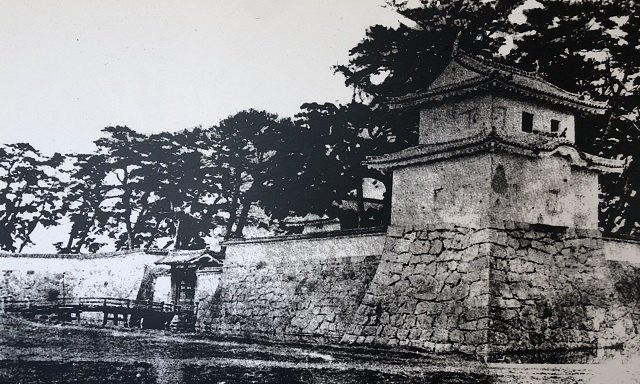
When the Tsuyama Domain was abolished, the second lord Nagatsugu was still alive at the age of eighty-seven. The shogunate therefore granted him 20,000 koku as a retirement allowance and permitted him to establish a jin’ya at Nishiebara. This became the Nishiebara Domain. Nagatsugu died the following year, and his tenth son, MORI Naganao, succeeded him.
After ruling Nishiebara for eight years, the Ako Domain in Harima was vacated following the Genroku Ako Incident. Some time thereafter, MORI Naganao was ordered to transfer his domain. From that point onward, his house became the MORI family of lords of Ako and continued until the end of the Edo period.
The MORI House of the Mikazuki Domain
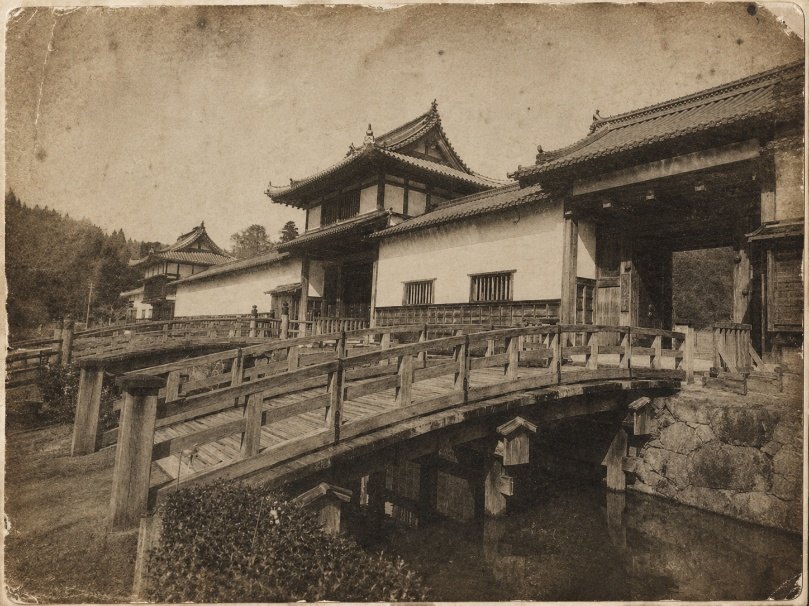
MORI Nagatoshi, the third son of Nagatsugu, was granted 15,000 koku from the Tsuyama Domain by the third lord, MORI Nagatake, and was permitted to establish an independent branch. As the Tsuyama-Shinden Domain, it held territorial rights while conducting its administration from within Tsuyama Castle, making it a branch domain of Tsuyama.
With the abolition of the Tsuyama Domain in 1697, however, its lands were confiscated. Nagatoshi, who was then at Tsuyama Castle, was urged by some retainers to resist the shogunate and barricade himself within the castle. News nevertheless arrived from Edo that petitions for the survival of the MORI family had been accepted. In order to demonstrate submission to the shogunate, Nagatoshi left the castle and entered the family temple Hongon-ji to remain in confinement.
The surrender of Tsuyama Castle was thus completed without incident. Thereafter, Nagatoshi was granted 15,000 koku in Mikazuki, Harima—the same nominal income as before—and permission to build a jin’ya. This was the beginning of the MORI house of lords of the Mikazuki Domain.
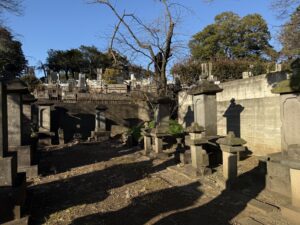
Later, under the third lord Toshiharu, the shogunate’s confidence in the house led to its being entrusted with the administration of 30,000 koku of tenryō lands surrounding the Mikazuki Domain. Although its formal standing remained 15,000 koku, its actual administered income was equivalent to a 45,000-koku domain, helping to support the domain’s finances for approximately forty years.
-
1649 - 1735
First Lord — MORI Tsushima-no-kami Nagatoshi
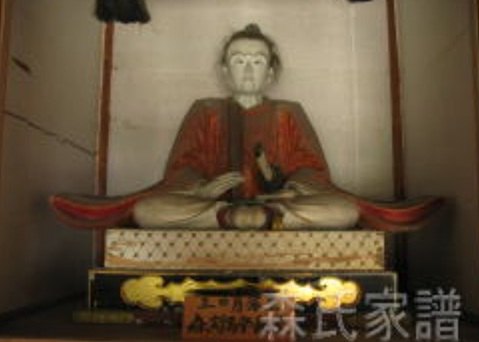
The first lord, MORI Nagatoshi, was said to be handsome and intellectually gifted. Although many domains reportedly sought him as a son-in-law, Nagatsugu wished to preserve his talents for the MORI family and kept him within the house as a reserve heir.
His relationship with Nagatake was also close. Even after the fourth lord Naganari came to distrust Nagatake and retainers ceased visiting Nagatake’s residence, Nagatoshi is said to have visited his elder brother on the seventeenth day of every month and spent the day with him.
On one occasion, Nagatake asked why Nagatoshi always came on the same day. Nagatoshi replied, “Elder brother, the seventeenth is the day on which you bestowed my domain upon me.” Deeply moved, Nagatake is said to have answered, “Had I known I had such a dutiful younger brother, I should have given you not fifteen thousand koku, but fifty thousand.”
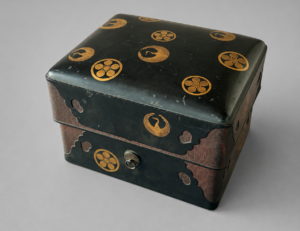
Nagatoshi also avoided the Tsurumaru crest of the main MORI house and favored the alternate crest, Gosan-no-kiri. Because the paulownia crest was associated with the TOYOTOMI family, many daimyō houses tended to obscure or avoid its origin. Nagatoshi, however, boldly declared within Edo Castle, “This crest was not bestowed by the Taikō; it was given to me by my elder brother.” DATE Masamune, hearing this, reportedly remarked that “Lord Tsushima possesses the stature to serve as the lord of a great domain.”
Nagatoshi died at the age of eighty-six at the Mikazuki residence. He was the sole elder of the MORI lineage who still remembered the era of the Tsuyama Domain. Although he had long refrained from using the Tsurumaru crest, at the recommendation of MORI Masafusa, lord of Ako, his gravestone at Ikegami Honmyō-ji was carved with both the Tsurumaru and Gosan-no-kiri crests. Thereafter, the Mikazuki Domain used the two crests according to circumstance.
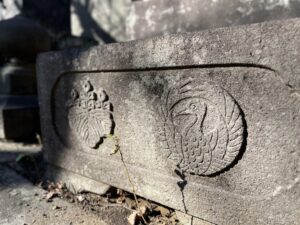
森長俊廟の香炉に刻まれた二つの紋 His eldest son Naganori succeeded him as second lord. The MORI house of Mikazuki continued as lords until the Meiji Restoration and, in the Meiji era, received the court rank of Junior Fourth Rank and the title of Viscount, thereby entering the kazoku peerage.
The MORI House of the Kururi Domain
MORI Mitsutoshi, later known as Mitsuteru, the third son of the lord of the Tsuyama-Shinden Domain, MORI Nagatoshi, lived in the Edo residence as a reserve for his two elder brothers. Through a spear-training school he became acquainted with KURODA Sangorō, son of KURODA Naoki, a senior retainer of the Tatebayashi Domain. He grew close to the KURODA family, began frequenting their residence, and was eventually taken into service as Sangorō’s personal attendant.
The KURODA family became a daimyō house when TOKUGAWA Tsunayoshi, lord of Tatebayashi, became the fifth shōgun. As the family subsequently transferred its domain to Numata, Shimodate and finally Kururi, the MORI family accompanied it.
Once the KURODA family settled in Kururi, the MORI family, as one of its long-established retainers, was granted hereditary service as chief retainers. Successive generations served as both Edo-based chief retainers and domain-based chief retainers. The family crest was established as Kōrin-kiri, based upon the Gosan-no-kiri used by the main MORI house of the Mikazuki Domain. The Tsurumaru crest was restored only after the beginning of the Meiji era.
-
1672 - 1712
First Generation — MORI Izumo-no-kami Mitsuteru
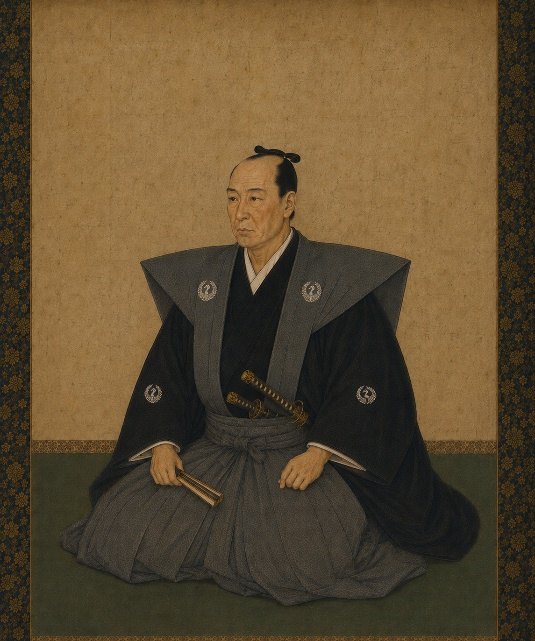
Born in Edo as the third son of MORI Nagatoshi, lord of the Tsuyama-Shinden Domain.
His mother was the daughter of a Tsuyama Domain retainer of the Ban family. Until he was formally acknowledged by Nagatoshi at the age of fifteen, and adopted the name Mitsutoshi, he was regarded as an illegitimate son.
Skilled in Ōtsubo-ryū horsemanship and Saburi-ryū spear fighting, he met KURODA Sangorō, eldest son of KURODA Naoki, a senior retainer of the Tatebayashi Domain, and entered KURODA service, changing his name to Mitsuteru. When TOKUGAWA Tsunayoshi, lord of Tatebayashi, became the fifth shōgun and Sangorō changed his name to KURODA Naokuni and was raised to daimyō status as lord of Shimodate in Hitachi, Mitsuteru was appointed castle governor. Illness, however, forced him to retire after waiting for his eldest son Mitsuharu to come of age.
He died at Shimodate Castle while undergoing recuperation and was buried at Jōshin-ji in Edo. His wife was Sadako, the adopted daughter of Nakayama Bizen-no-kami Nobuharu, a hereditary chief retainer of the Mito Domain. He died at the age of forty.
-
1690 - 1708
Second Generation — MORI Gorōbei Mitsuharu
Born in Edo as the eldest son of Mitsuteru. At thirteen he was summoned by KURODA Naokuni and served for approximately two years as a page. When his father Mitsuteru, castle governor of Shimodate, fell ill, Mitsuharu was released from page service and sent to Shimodate.
He came of age at eighteen and succeeded to the family leadership, but only six months later died of an epidemic within Shimodate Castle. He was buried at Jōshin-ji in Edo, and the family leadership passed to his younger brother Mitsunaka. He died at eighteen.
-
1695 - 1766
Third Generation — MORI Seidayū Mitsunaka
Born in Edo as the third son of Mitsuteru. He entered the service of KURODA Naokuni and served as a page and sword attendant. Following the sudden death of his elder brother Mitsuharu shortly after the latter succeeded to the family, Mitsunaka became head of the house and served as commander of foot soldiers and magistrate of archery.
He assisted at the funeral and one-hundredth-day memorial service of his grandfather MORI Nagatoshi and received from his uncle, the second lord Naganori, a Bizen Osafune Sukesada sword that had belonged to Nagatoshi. While serving as flag magistrate, he was ordered to garrison Tatebayashi Castle.
When the second KURODA lord, Naosumi, transferred his domain to Kururi, Mitsunaka was appointed commissioner for the construction of Kururi Castle and then made a chief retainer. From this time onward, the MORI family became a house whose members served as chief retainers generation after generation.
In old age, when he could no longer walk freely, the lord KURODA Naoteru permitted him to use a palanquin within the castle. When he became ill in his later years, physicians of the lord and doctors from the Mikazuki Domain came to attend him. He died in Kururi and was buried at Myōchō-ji. His gravestone was made from stone used in the construction of the castle, with hinges of lead; his coffin was buried according to the ichiji-isseki rite, with one character of the Lotus Sutra written upon each small stone. He died at seventy-one.
-
1727 - 1804
Fourth Generation — MORI Gorōbei Mitsuaki
Born within Shimodate Castle as the eldest son of Mitsunaka. He entered KURODA Naosumi’s service as a mounted guard. He accompanied Naosumi on duty at Osaka Castle and on official pilgrimages to Nikkō, and advanced through positions as commander of foot soldiers, magistrate of temples and shrines, and personal secretary before becoming chief retainer after Mitsunaka’s death.
He subsequently served KURODA Naoteru and Naohide. When Naohide went to Edo Castle to offer his formal greetings to Shōgun TOKUGAWA Ieharu, Mitsuaki accompanied him and was granted an audience with the shōgun in the White Chamber of Edo Castle.
Mitsuaki revered his great-great-grandfather MORI Nagatoshi and regarded him as a model for administration. When the lord of Mikazuki, MORI Toshiharu, learned of this, he permitted Mitsuaki to use Nagatoshi’s retirement name, Kaio.
He died at seventy-seven. His wife was Miki, the twelfth daughter of KURODA Naosumi.
-
1742 - 1819
Fifth Generation — MORI Seidayū Mitsuatsu
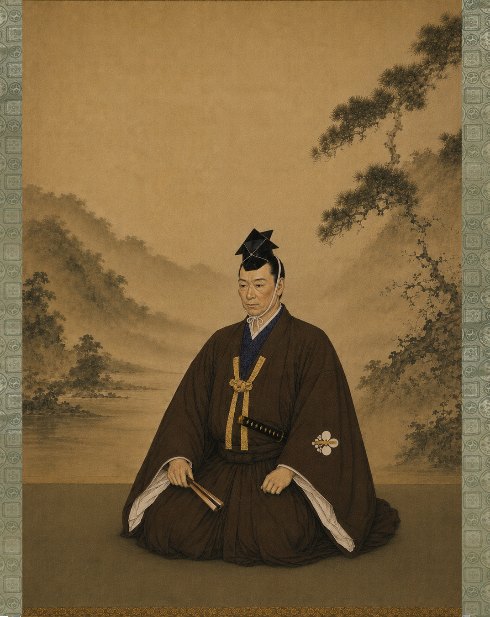
Born at Numata Castle as the second son of Mitsunaka. Under Uemura Sahei, he mastered Ōtsubo-ryū horsemanship and received full transmission at seventeen. He established training grounds at Takadanobaba and Kanda-Suji-chigai, teaching the sons of daimyō families.
Through one of his pupils, MATSUDAIRA Nobuakira, his skill came to the attention of Shōgun Ienari. He was granted demonstrations of his horsemanship before the shōgun at the Fukiage riding ground within Edo Castle and at the Hamagoten, the present Hamarikyu Gardens, and received ten gold pieces and a horse saddle.
In the Kururi Domain he entered KURODA Naosumi’s service, serving first as a page, then as sword attendant and intermediary. He also accompanied KURODA Naohide on duty at Osaka Castle. When Naohide died suddenly at Osaka Castle, Mitsuatsu served as his substitute and handed over the assignment to the succeeding daimyō, Katsunaga, lord of Fukushima.
While stationed in Osaka, he visited Shakabun-in, the MORI family’s temple on Mount Kōya, and donated 180 ryō. In recognition, he received an ink inscription from MORI Tadasuke, lord of Ako. He also accompanied KURODA Naoharu to Edo for the formal acknowledgment of succession and was granted an audience with Shōgun TOKUGAWA Ienari.
He transferred the family leadership to his adopted son Mitsunaga, but when Mitsunaga died young he succeeded once more. On that occasion, Shōgun Ienari presented him with ceremonial garments, while MATSUDAIRA Nobuakira, a senior councillor and one of his pupils in horsemanship, presented him with a waka poem in recognition of his service as a leading retainer.
He died at seventy-nine. Having no children, he adopted Oyu, the second daughter of his elder sister Oei, who had married Kinoshita Mitsumasa, a chief retainer of the Kuse family, lords of the SEKIyado Domain. He was buried at Jōshin-ji in Edo. His wife was Riyo, daughter of Sakamura Shōzaemon, a chief retainer of the Katsuyama Domain in Awa.
-
1773 - 1806
MORI Gorōbei Mitsunaga
Born in Edo as the second son of Narita Shinken, a chief retainer of the Iwakitaira Domain in Mutsu. He married Oyu, the adopted daughter of Mitsuatsu, became an adopted son-in-law, and served as a personal secretary.
After succeeding to the family leadership and being appointed chief retainer, he died in Edo the following year. His eldest son Heikichi, later known as Mitsufuku, was only one year old and was therefore raised by his adoptive father Mitsuatsu, who again assumed the family leadership. Mitsunaga was buried at Jōshin-ji in Edo.
-
1805 - 1855
Sixth Generation — MORI Seidayū Mitsufuku
Born in Edo as the eldest son of MORI Mitsunaga. His father died the following year, so he was raised by his grandfather Mitsuatsu and educated by his grandmother Riyo. When his grandfather died at the age of fifteen, he succeeded to the family leadership as the direct grandson heir.
The chief-retainer seat of the MORI family in the Kururi Domain was therefore vacant, but in 1832, at the age of twenty-seven, he assumed the office of chief retainer. He accompanied the domain’s duties at Kan’ei-ji and Osaka Castle. At Osaka Castle, an anecdote survives that he loudly rebuked the guards of Kyōbashi Gate, which was about to be closed at curfew, and forced them to open it.
He also compiled the MORI family records, MORI Shoru, which gathered accounts of events within the castle, relations with various daimyō houses, and annual observances of the domain, as well as the MORI family genealogy, MORI-shi Kafu.
He died at fifty-one and was buried at Myōchō-ji in Kururi. His wife was Eiko, aunt of KUZE Isoharu, a member of the KUZE family of lords of the SEKIyado Domain.
-
1824 - 1876
Seventh Generation — MORI Kakuzaiemon Mitsushin
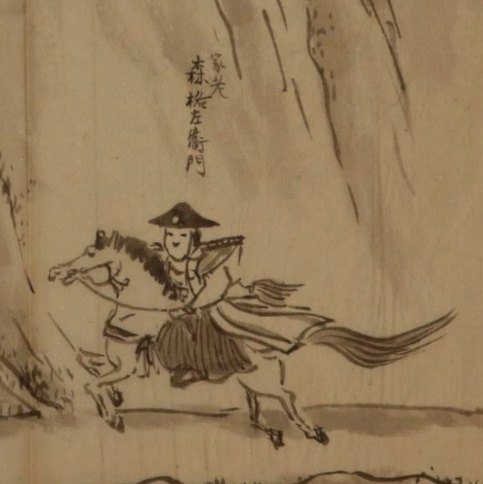
Born in Edo as the fourth son of SHIBAYAMA Masayoshi, a personal secretary of the Kururi Domain. He devoted himself to martial arts and received full transmission in Taneda-ryū spear fighting, Jippō-ryū swordsmanship and Ogino-ryū gunnery.
He married Osen, daughter of MORI Mitsufuku, and became his adopted son-in-law. Taken into the service of KURODA Naoshizu, he served as magistrate of heavy artillery and, together with Mitsufuku, led domain troops in preparations for the arrival of foreign vessels off the Kujūkuri coast.
During the turmoil of the final years of the shogunate, he restrained the bakufu forces that pressed for action while the senior council decided that the domain should join the Imperial army. He therefore aligned himself with the movement led by Satsuma and Chōshū.
With the beginning of the Meiji era, the lord KURODA Naoyasu became governor of the Kururi Domain, while Mitsushin became its chief administrative officer. He was relieved of office following the abolition of the domains and establishment of prefectures.
He died at fifty-three and was buried at Myōchō-ji in Kururi.
-
1848 - 1916
Eighth Generation — MORI Katsuzō Mitsushige
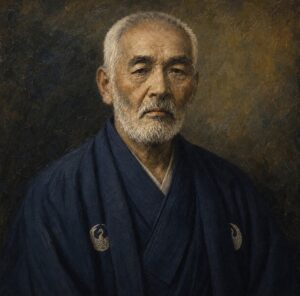 Born in Edo as the eldest son of Mitsushin and known by his common name, Katsuzō. He entered the service of KURODA Naoyasu and served as an intermediary.
By order of the shogunate, he was placed in charge of artillery operations during the attack on the Satsuma Domain residence. After joining the Imperial side, he assisted Prince Nōshū, the abbot-prince of Rinnō-ji, in travelling to the capital; the prince later became Prince Kitashirakawa Nōshū.
After the Meiji Restoration, he served the former KURODA family as an administrative aide and acted as intermediary in the transfer of the former Edo suburban residence of the Kururi Domain, the present-day Chinzanso, to YAMAGATA Aritomo. Through this connection he entered the service of the YAMAGATA family and spent one year as manager of the Isano Farm in Yaita, Tochigi Prefecture.
He later returned to Tokyo and, on YAMAGATA Aritomo’s recommendation, assumed an important post in the Geographical Bureau of the Ministry of Home Affairs. At the request of KURODA Naoyasu, now a Viscount, he compiled accounts of the administration of the former Kururi Domain and left such works as A General Survey of the Kururi Domain Administration, A Drop from the Rain Castle, The Dream of the Rain Castle, Nansō Jikki and Records of KURODA’s Retainers.
He died at sixty-eight and was buried at Jōshin-ji in Fukagawa, Tokyo.
-
1866 - 1923
MORI Katsutaro
Born in Edo as the eldest son of Katsuzō. He established a company in the textile industry and lived between Osaka and Tokyo.
At the end of the Meiji era, Katsuzō received an informal indication from the YAMAGATA family that they wished to transfer the land of the former Kururi Domain’s suburban residence to the FUJITA Baronial family. While staying in Osaka, Katsutaro acted on behalf of his father as intermediary with the FUJITA family in Kyōbashi, Osaka. In Taishō 7 (1918), Chinzanso became the property of the FUJITA family.
He died in Tokyo and was buried at Jōshin-ji in Fukagawa. He was fifty-five.
-
1852 - 1884
Ninth Generation — MORI Chūzō
Born in Kururi as the third son of Mitsushin. He entered the service of KURODA Naoyasu and served as a page, but illness forced him to retire, after which he lived in his father’s household.
Under the Stipend Abolition Measures of Meiji 9 (1876), the stipends of former domain retainers throughout Japan were confiscated. In Meiji 19 (1886), the MORI family decided to dispose of its chief-retainer residence in the third bailey of Kururi Castle. His elder brother Katsuzō moved to Tokyo, while Chūzō inherited the household goods and moved to farmland in Nuda, formerly part of the land associated with his family stipend.
He died at thirty-two and was buried at Konpuku-ji in Kururi. As he had no children, he adopted Ushinosuke, the fifth son of HATANO Bunji, the eldest son of Omasa, the younger sister of Mitsushin. His wife was Yaeko, daughter of HATANO family, former retainers of the domain.
-
1865 - 1931
Tenth Generation — MORI Ushinosuke
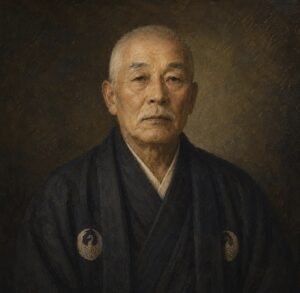
Born as the fifth son of HATANO Bunji, eldest son of Omasa, the second daughter of MORI Mitsufuku. He was adopted by MORI Chūzō and succeeded to the family leadership after Chūzō’s death.
He served in the First Sino-Japanese War and, after returning home, engaged in agriculture. He died at sixty-six and was buried at Konpuku-ji in Kururi. His wife was Sumiko, eldest daughter of TANAKA Tasuke.
-
1894 - 1984
Eleventh Generation — MORI Zentaro
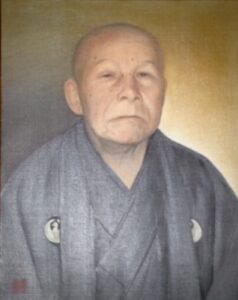
Born as the eldest son of Ushinosuke. While taking over and operating his father’s agricultural work, he pursued a desire to serve in the navy and worked at the Kisarazu Naval Air Station.
In Shōwa 13 (1938), when Emperor Shōwa visited to inspect the naval air corps, he was granted an audience together with the governor of Chiba Prefecture and the mayor of Kururi.
He remained at Kisarazu Base during the war and saw the end of the conflict there. After the war he devoted himself to agriculture, but also participated in the horse-racing enterprise of his third son, Shigeru, selling part of the family farmland to invest in the enterprise.
He died at ninety and was buried at Konpuku-ji in Kururi. His wife was Koto Kanmon.
-
1925 - 1983
Twelfth Generation — MORI Shigeru
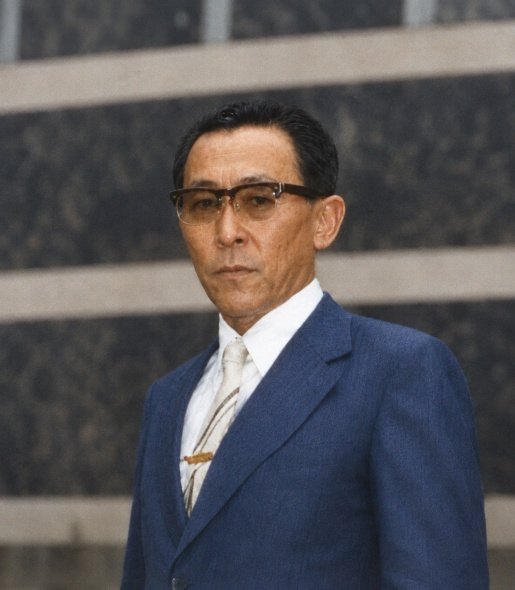
Born in Kururi as the third son of MORI Zentaro. From his youth he was deeply interested in horses, and even in the early Shōwa period he became a familiar sight in the town, riding on horseback through Kururi.
In Shōwa 16 (1941), he approached local leading figures and established the Machihara Racecourse, where he himself competed as a jockey. Several months later, the attack on Pearl Harbor took place and the Greater East Asia War began. Horse racing, regarded as entertainment, became subject to voluntary suspension, and the racecourse was left idle; it was reopened soon after the war.
With the enforcement of the Horse Racing Law in Shōwa 21 (1946), privately operated and private racecourses were ordered to close, and Machihara Racecourse was shut down. It merged with Kashiwa Racecourse, in present-day Toyoshiki, and the racehorses were transported to Kashiwa.
Later, Kashiwa Racecourse needed to relocate. Reclaimed land in Funabashi was selected as the alternative site, but funds were insufficient. Through Prince Takamatsu Nobuhito, an appeal was made to the Kawasaki Racing Club and Matsutaro Shōriki, proprietor of the Yomiuri Shimbun, who was then under a public office ban. The Kawasaki Racing Club’s purchase of the land made the establishment of Funabashi Racecourse possible. At the opening ceremony, Their Imperial Highnesses Prince and Princess Takamatsu graciously attended.
Although Shigeru made the relocation from Kashiwa to Funabashi possible, he declined to participate in the management of the business, choosing instead to remain devoted to work directly with horses and founding the MORI Stable. This became associated with the present Funabashi Racecourse, now owned by Yomiuri Land Co., Ltd.
At the time, four stables first opened at Funabashi Racecourse: MORI, Ito, Takamatsu and Hakodate. They remain among the oldest stables in Chiba Prefecture.
-
Thirteenth Generation — MORI Hajime
Born in Funabashi as the eldest son of MORI Shigeru.
Upon the death of MORI Shigeru in Shōwa 58 (1983), he succeeded as the thirteenth head of the MORI family.
He inherited the MORI Stable founded by Shigeru and continued it thereafter.
-
Heir Apparent — MORI Yuki (Sōyū)
Born in Funabashi as the eldest son of MORI Isamu, the third son of MORI Shigeru.
In 2012, following the death of his father Isamu, he became the heir apparent of the MORI family.
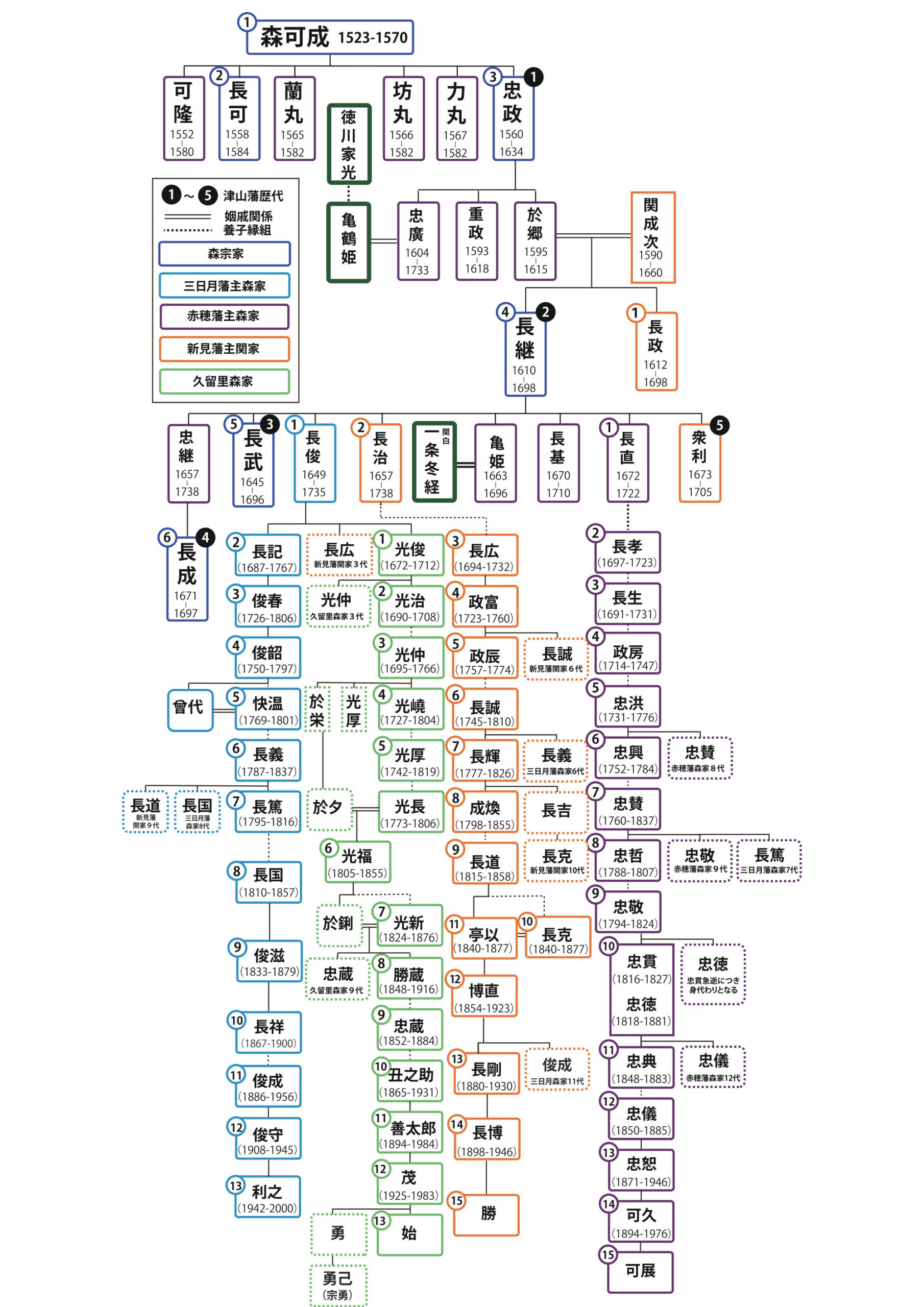
Family Tree
Family treeThe family tree, including the branch houses. Tap the image to enlarge.