2026.02.23
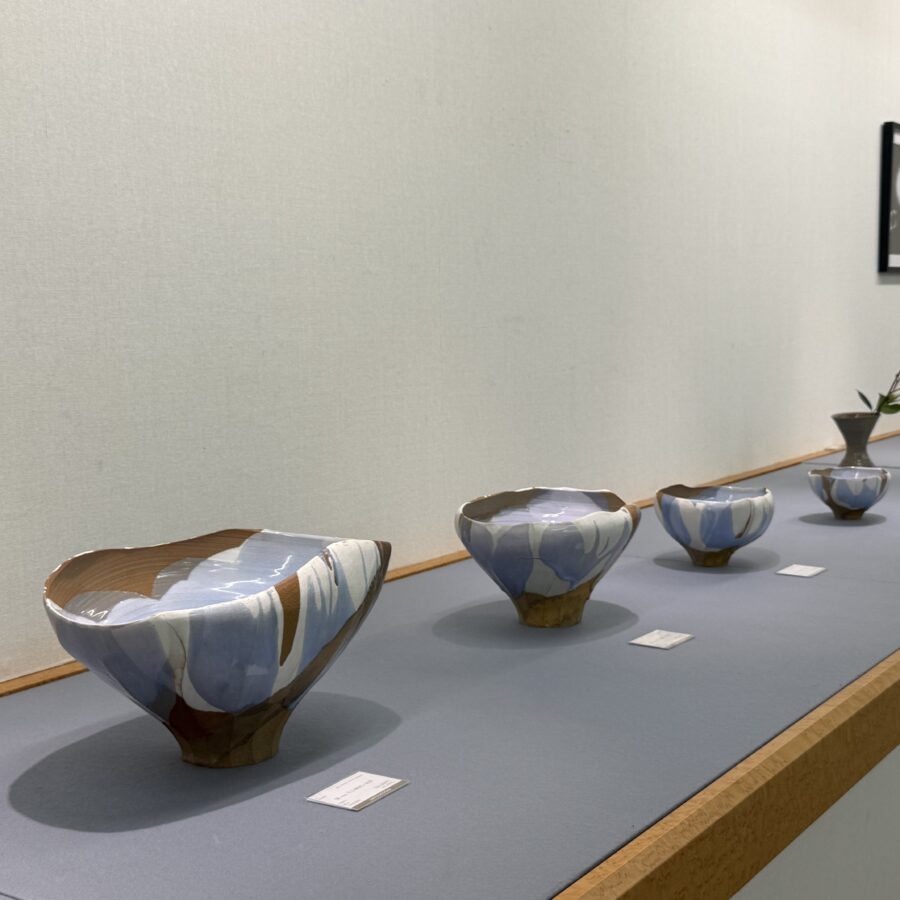
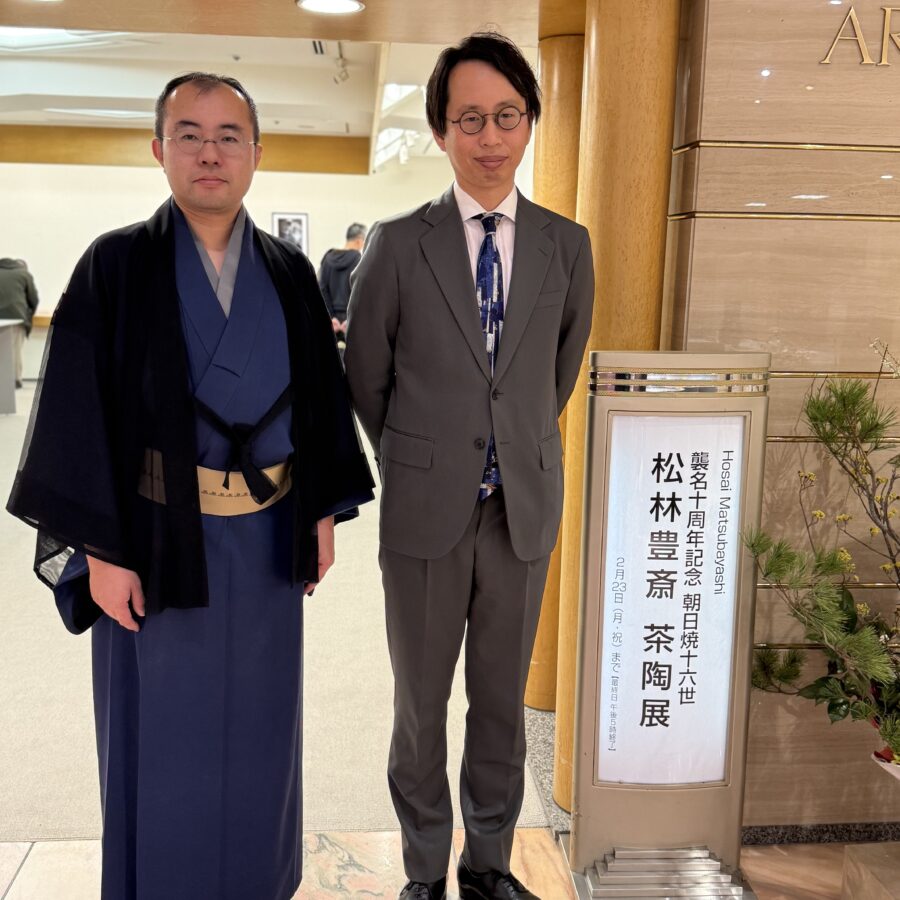
Tea service at the exhibition of tea ceramics by Hosai Matsubayashi XVI of Asahi-yaki
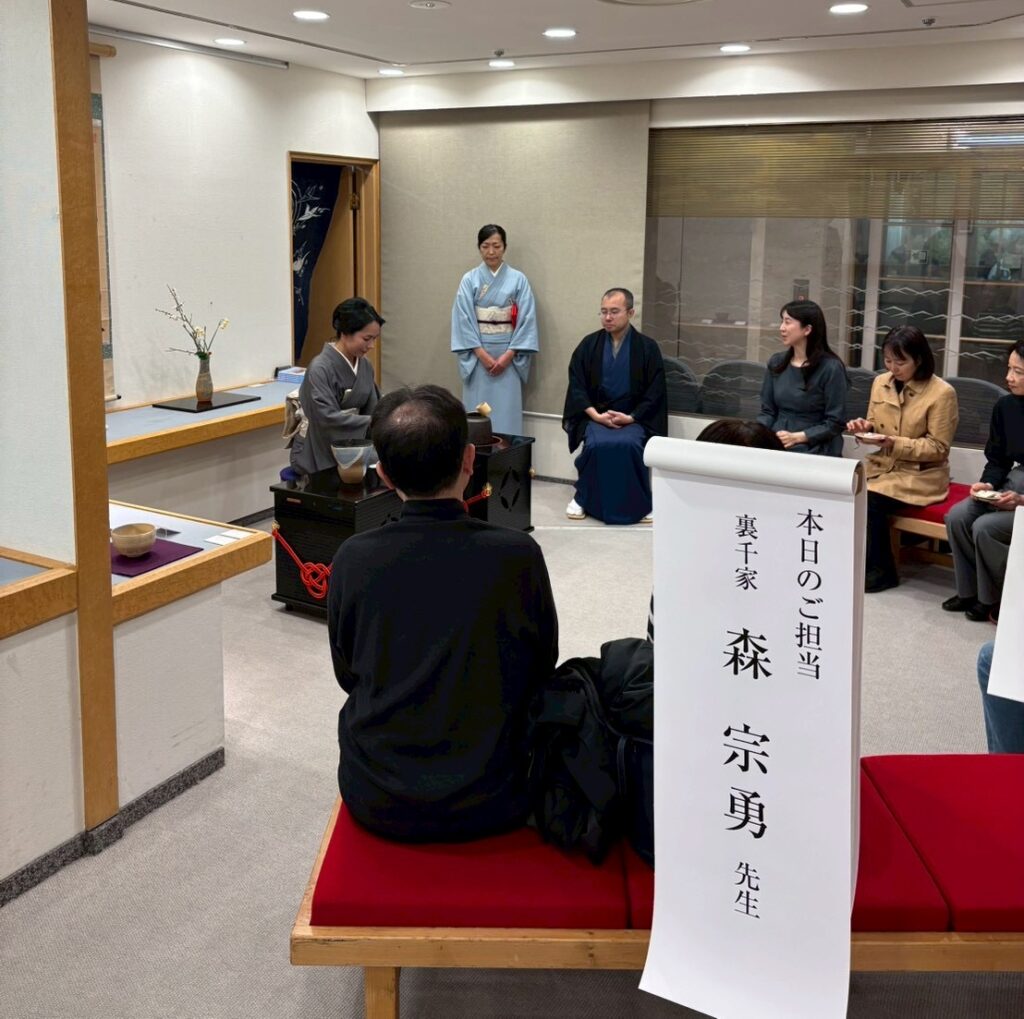
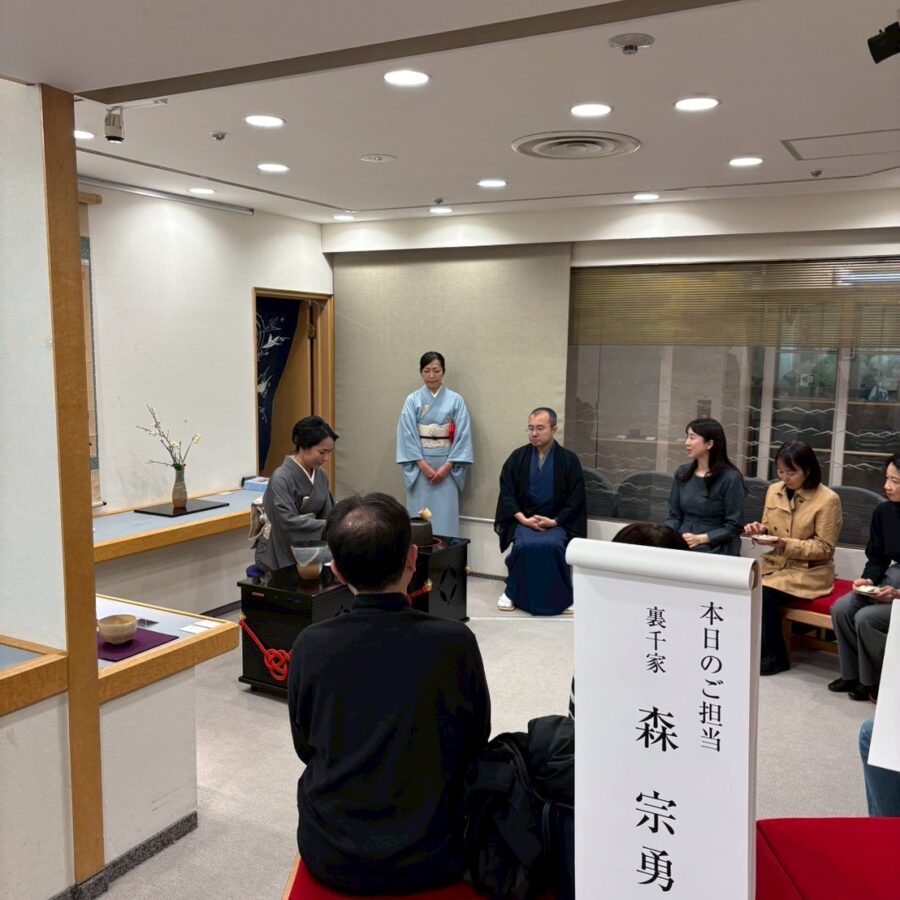
At the ongoing Asahi-yaki Exhibition by Matsubayashi Hōsai XVI at Mitsukoshi Nihombashi, I had the honor of hosting a tea gathering as part of the exhibition.
Taking place in the middle of a three-day holiday weekend, we were fortunate to have beautiful weather and pleasantly warm temperatures. Thanks in part to the wonderful conditions, we welcomed 89 guests across eight sittings—about 1.5 times the number originally anticipated. For the final sitting, we increased the number of places to accommodate additional guests.
As a devoted Asahi-yaki enthusiast, I feel most at ease when I am surrounded by Asahi-yaki utensils.
Quite simply, there is so much to talk about.
When the tea setting is composed entirely of Asahi-yaki pieces, conversation comes naturally, and I can relax and enjoy the gathering myself.
It is rare to have the opportunity to create a tea gathering using Asahi-yaki throughout, so it was a particularly enjoyable experience.
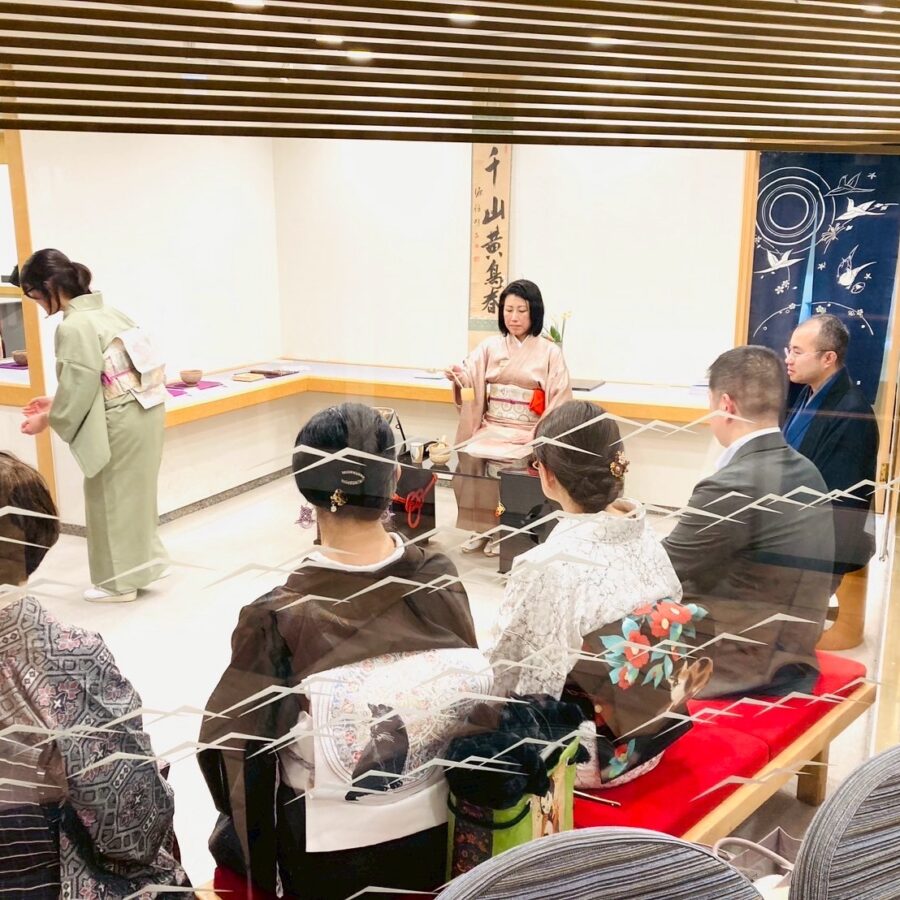
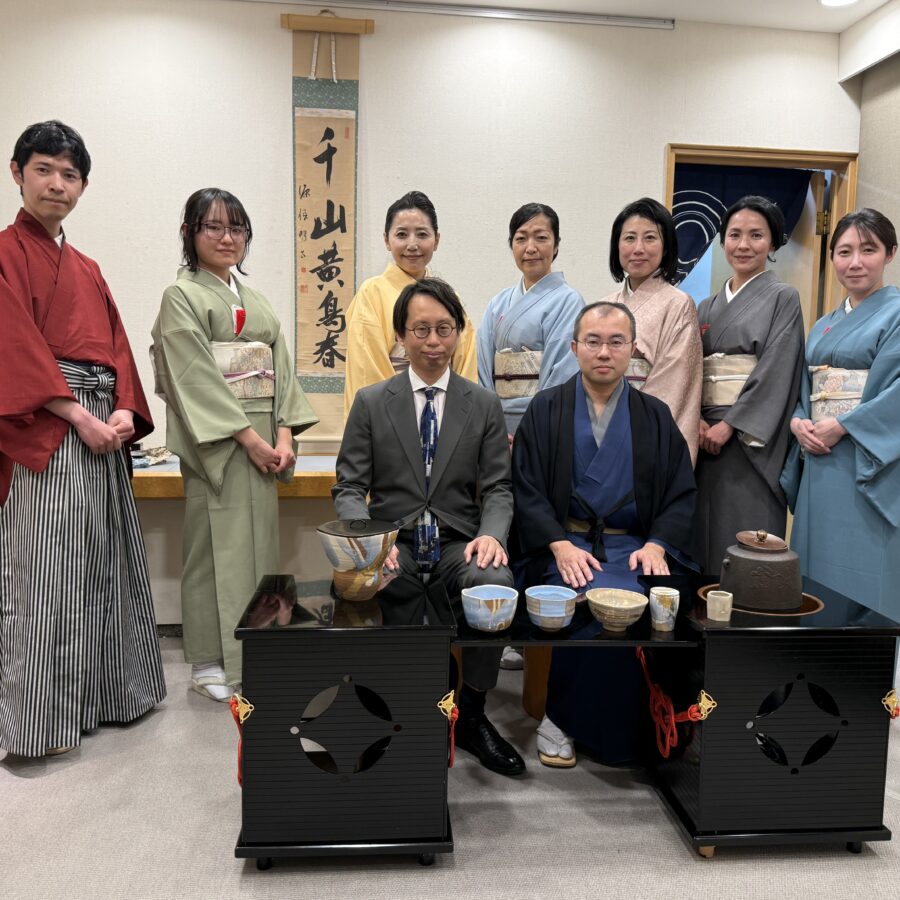
For the kakemono, we used calligraphy by Matsudaira Nobuakira, a senior councilor (rōjū) of the Tokugawa shogunate.
For the chashaku, I brought out Sumidagawa, an uta-mei, a poetic name based on a waka poem, given by Gengensai, the 11th Grand Master of the Urasenke school.
This time, we formed a joint team of students from two of our three practice locations: Tokyo and Kanozan.
It was our first attempt at holding a tea gathering without members of our main practice location in Chiba.
The students also carefully coordinated the colors of their kimono, making sure that no two outfits were alike while maintaining a harmonious overall appearance.
We were deeply grateful to welcome many distinguished guests, including a former chamberlain of the Imperial Household, friends from the tea world, including those working in Kasumigaseki, as well as artists and craftsmen, and many followers and friends from both Japan and overseas.
We were especially pleased that so many people responded to invitations from our students and came to share the occasion with us.
On the black-lacquered Misonodana tea shelf, we arranged an Asahi-yaki mizusashi, a tea container, and tea bowls, all featuring the elegant Geppaku glaze.
The combination was particularly striking and beautifully showcased the character of Asahi-yaki.
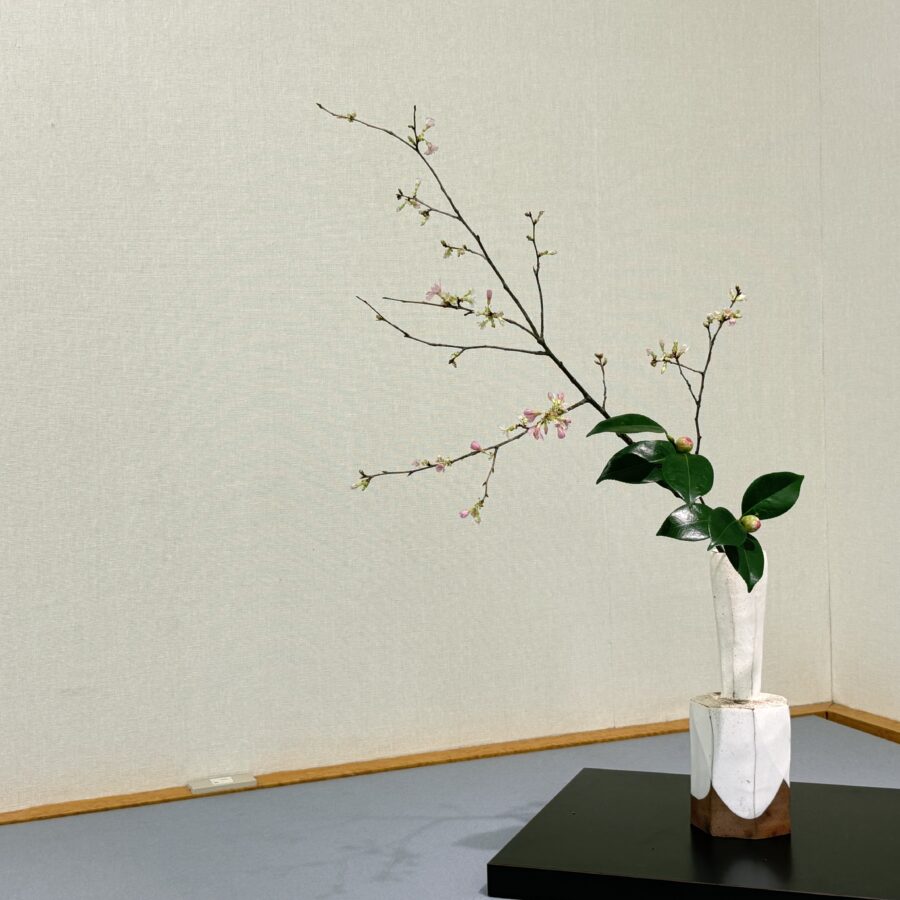
For the flower vase, we chose a piece in Benikase, a traditional Asahi-yaki style, featuring hakeme brush markings.
Into it, we casually arranged white plum blossoms, narcissus, and camellia.
It was a truly enjoyable tea gathering, surrounded entirely by Asahi-yaki, with its distinctive forms, glazes, and the rich history that each piece carries.