2018.06.13
Tea Gathering for the Succession of the MATSUBAYASI Hōsai XVI
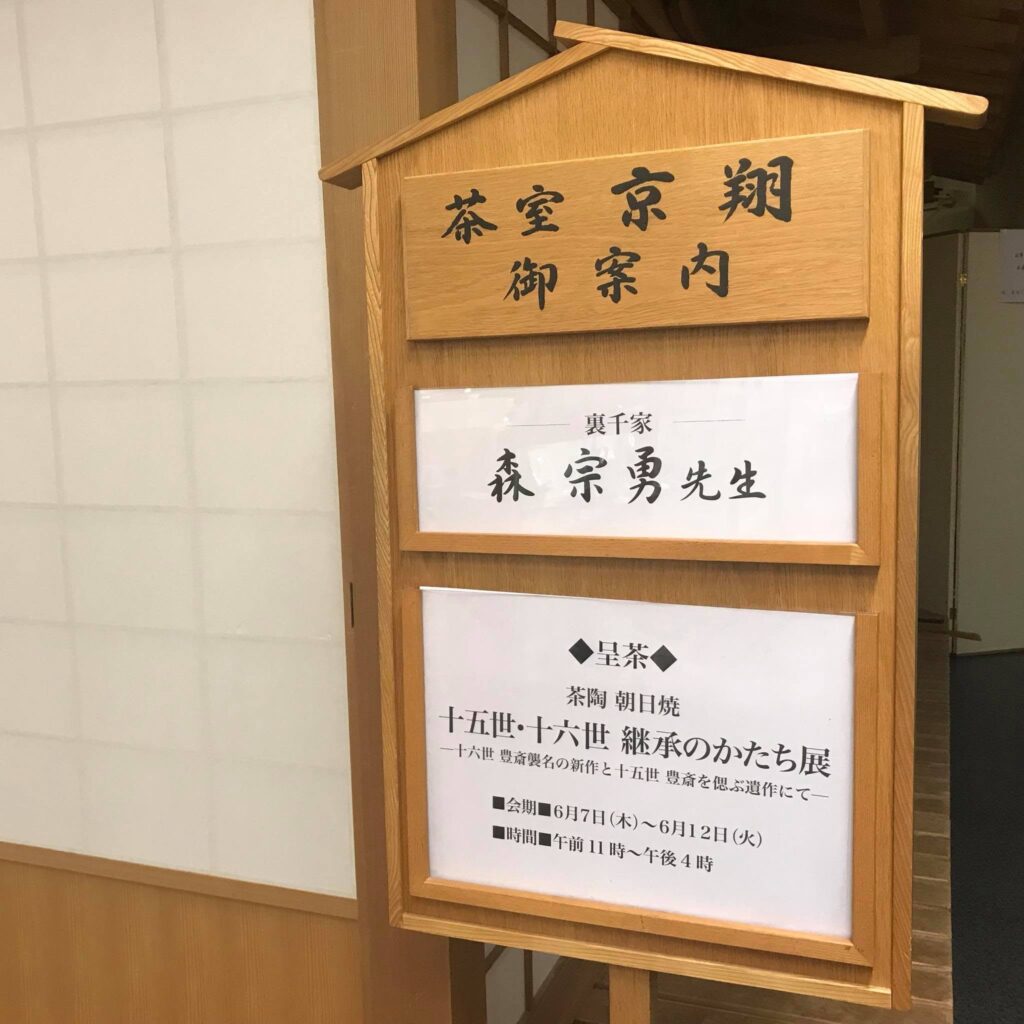
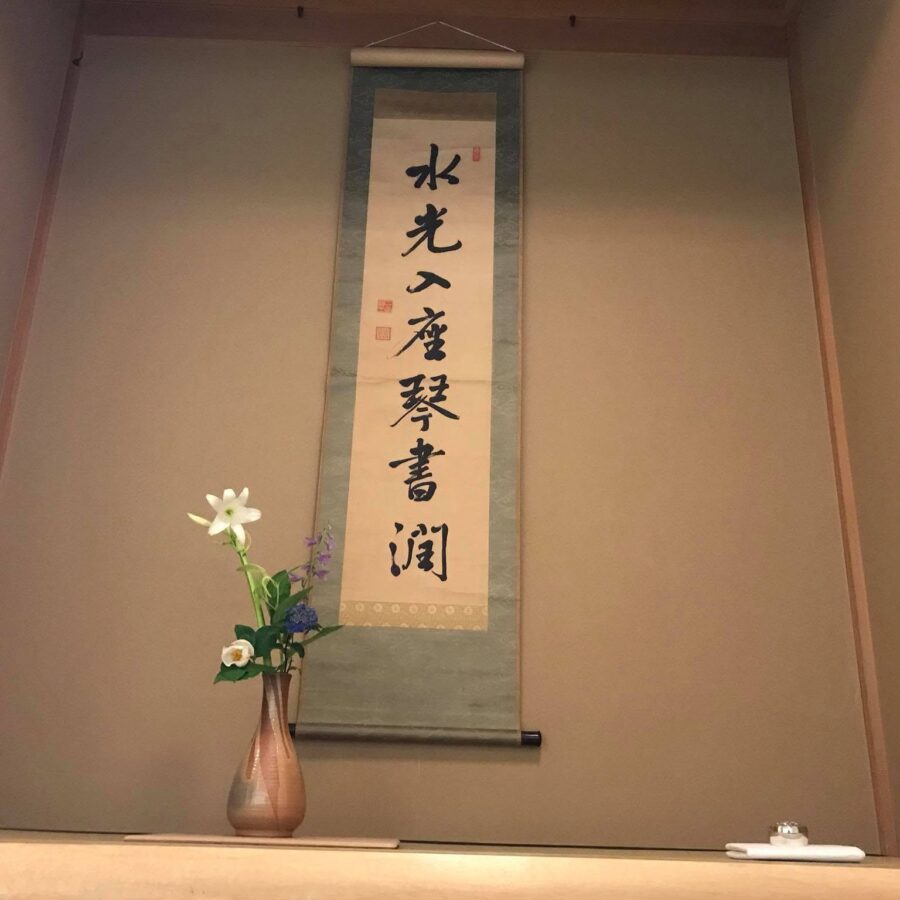
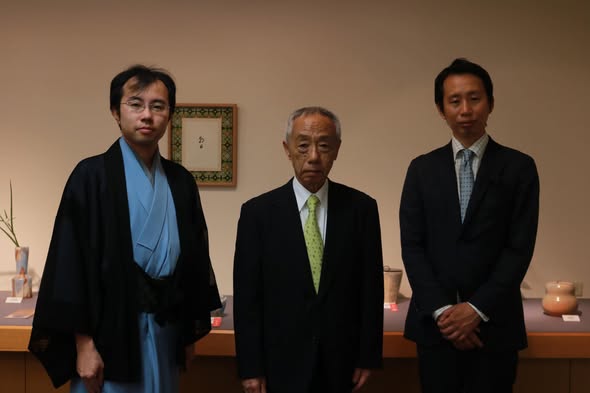
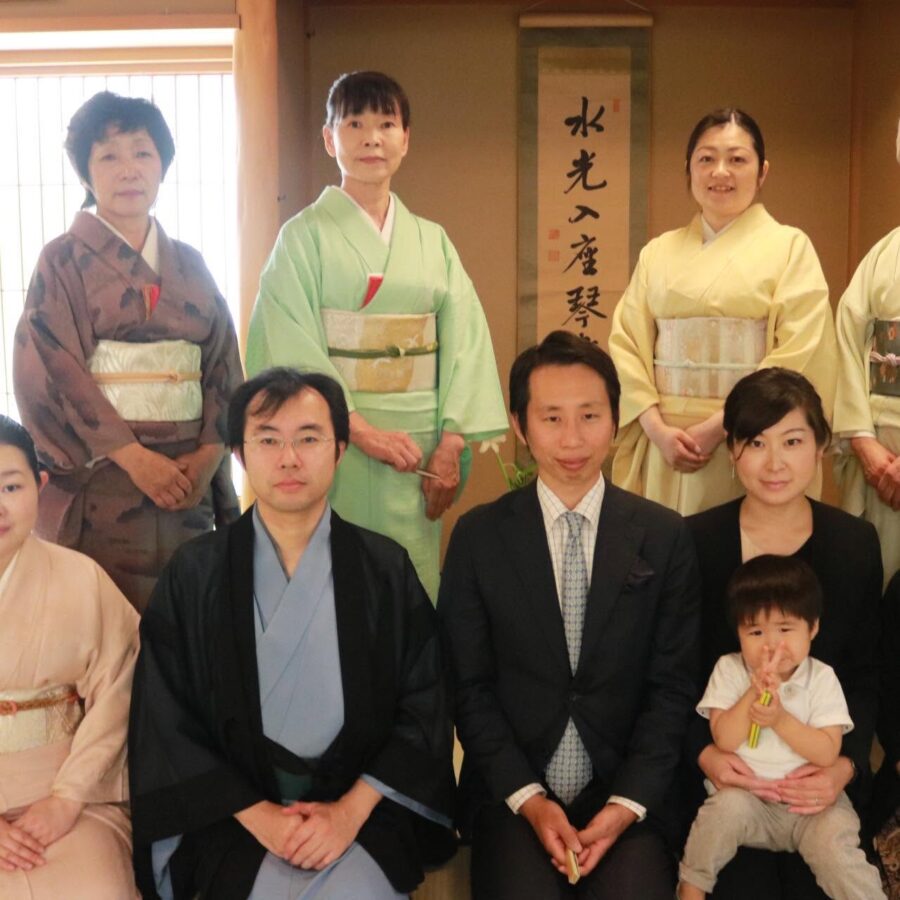
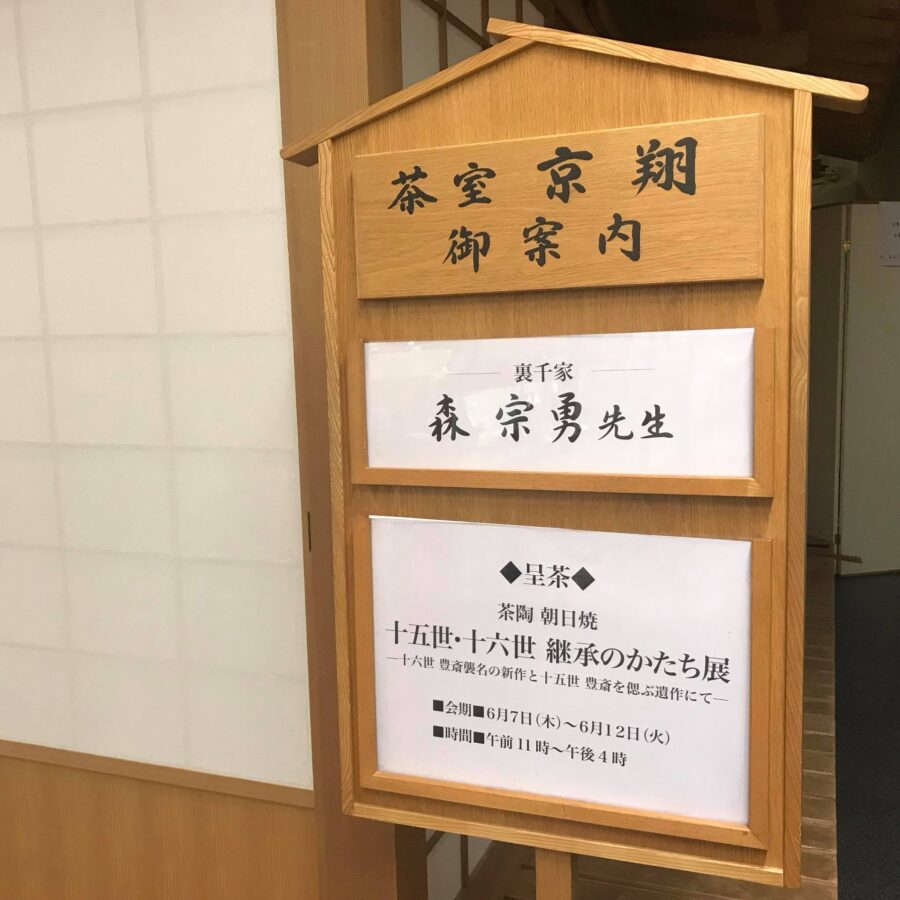
An exhibition celebrating the succession of my dearest friend, Yusuke Matsubayashi, the 16th generation Hōsai of Asahiyaki, together with an exhibition of works left by his predecessor, is currently being held at Keio Department Store Shinjuku. On the 11th, I was deeply honored to be entrusted with the tea service.
On this occasion, I was also privileged to attend upon members of the Imperial Family. To have been given such an honor was truly beyond measure.
At the first sitting, we were further honored by the presence of Mr. Eishi Kuroda, 18th head of the Kuroda family, the lords of the Kururi Domain, to whom the Mori family historically owed allegiance. For this particular sitting, I welcomed him in the manner of a Kijin-date, the formal style of serving tea to a distinguished guest, assuming the role of Mori Seidayū, 16th generation senior retainer of the Kururi Domain. My hands were trembling as I performed the procedure.
Of course, the sitting was also open to members of the general public, and some of the guests seemed rather surprised to witness such a formal Kijin-date taking place alongside an ordinary public tea gathering.
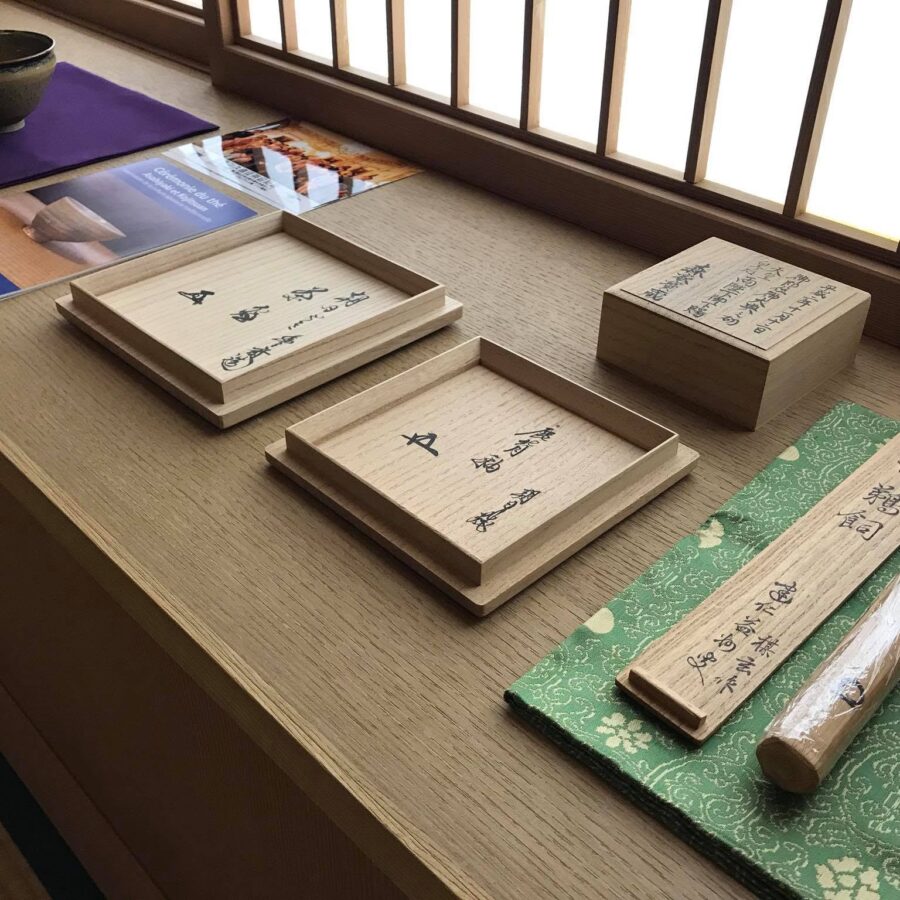
The tenmoku bowl I used was a tea bowl presented to the Mori Viscount family in 1945. By a remarkable coincidence, it was made by Asahiyaki’s 13th-generation Kōsai.
I feel that the moment I discovered this tenmoku in the storehouse of my family’s ancestral home was perhaps the moment my relationship with Asahiyaki began.
From the second sitting onward, I appeared as Mori Sōyū, and used a work by the late 15th-generation Hōsai as the principal tea bowl. For all fourteen guests, I was able to share pieces from my own collection of Asahiyaki.
My personal collection of Asahiyaki includes nearly 300 works, at least according to the catalogue. Ordinarily, I suppose it would be difficult to use more than two pieces from the same kiln in a single tea gathering.
I often think that perhaps one should not collect works from a single kiln.
But I simply cannot help myself. I love everything about Asahiyaki—the texture, the character of the workmanship, its quiet presence, and, in the case of tea bowls, even the particular forms of their kōdai, the foot.
I suppose the day they tell me, “We will no longer sell to Mori,” will be the day my life as a tea practitioner comes to an end.
For this very reason, opportunities to display my collection outside my home are inevitably limited, and composing a kaiki with the utensils for a gathering is usually quite a challenge.
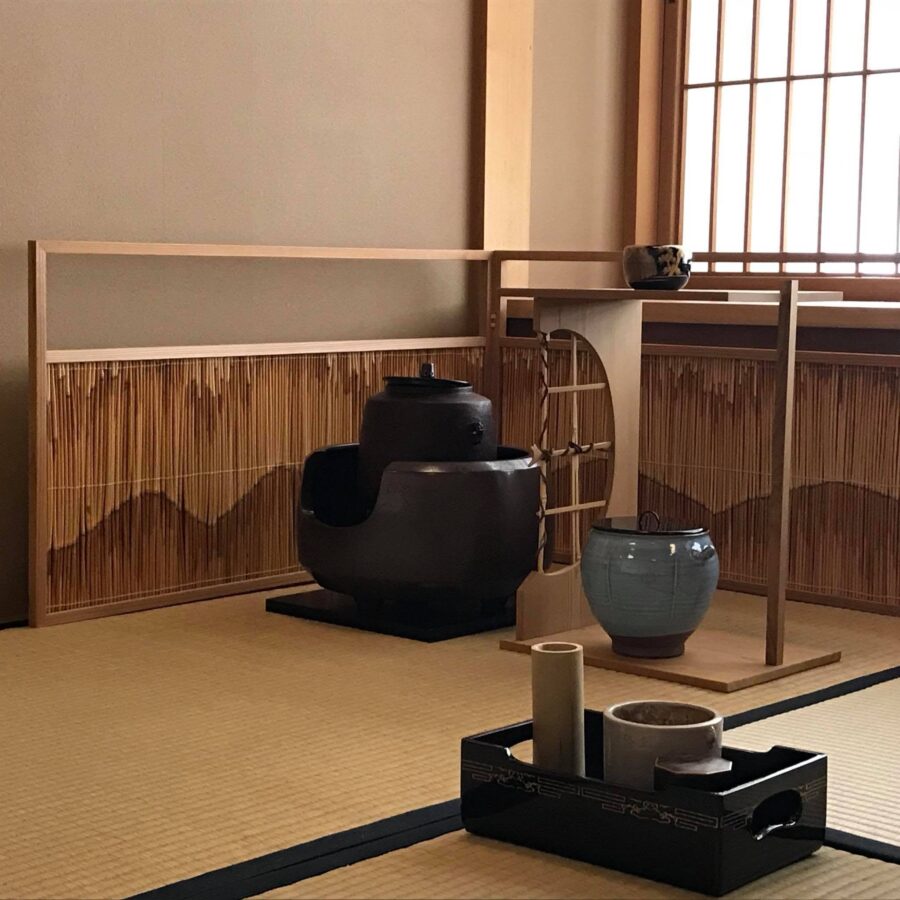
This time, however, I was able to realize something I had long wanted to attempt: an entirely Asahiyaki tea gathering.
For once, there was no struggle at all. The kaiki was completed a full month in advance, and I spent the following weeks happily experimenting, exchanging one piece for another and enjoying the possibilities.
This time, I deliberately did not use any of the old Asahiyaki pieces from the Edo period. Instead, everything—from the tea bowls and water container to the brazier vessel and confectionery containers—was drawn from the successive generations of Asahiyaki, from the 12th-generation Shōsai through the present 16th-generation Hōsai.
Despite the heavy rain brought by the approaching typhoon, nearly 100 guests came to visit us—ladies who have long supported me, fellow teachers of the same tea tradition, friends in tea, and even former colleagues whom I had not seen in many years.
It was a gathering almost as large as those held on a regular holiday.
The Matsubayashi exhibition will also come to an end tomorrow, the 13th.
My deepest thanks go to my students and fellow practitioners who helped with the event, and above all, to the Matsubayashi family for giving me this extraordinary opportunity.
And now, next week, it is London!