2026.01.12
New Year’s Tea Gathering, 2026
It is written 「初点」 and read Hatsudate.
The year before last, the head family was in mourning, and last year, our own family was in mourning. As a result, we did not invite guests, and for two consecutive years, we held Hatsudate simply as the first practice of the new year.
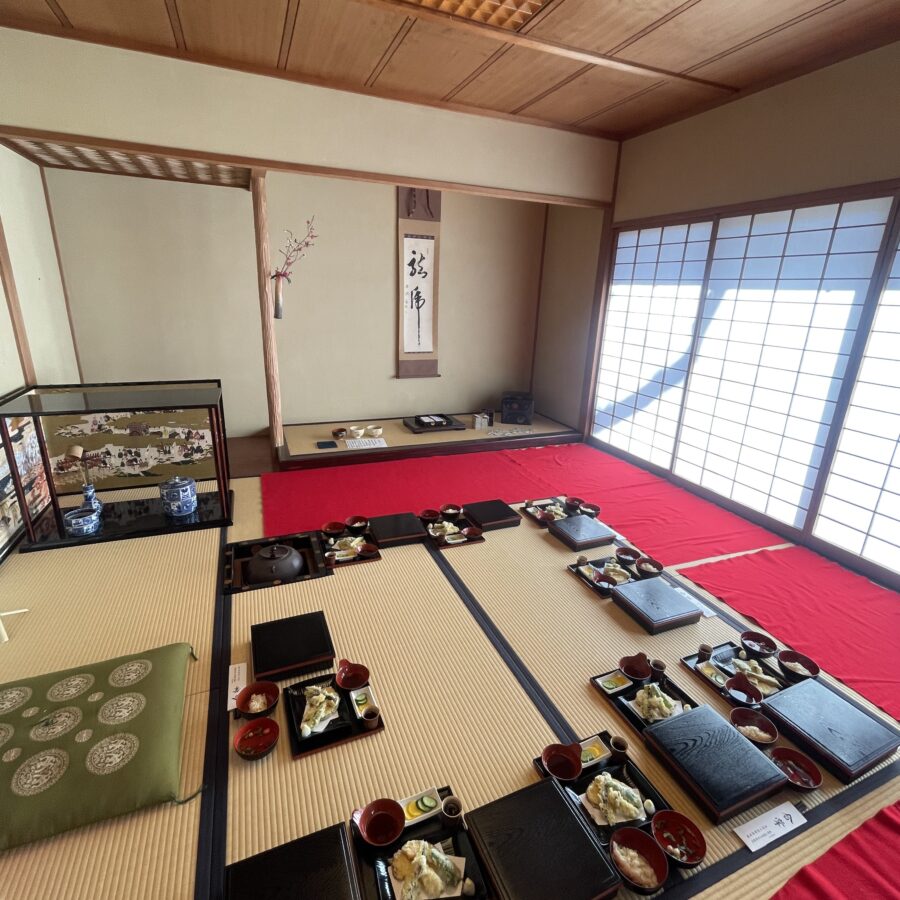
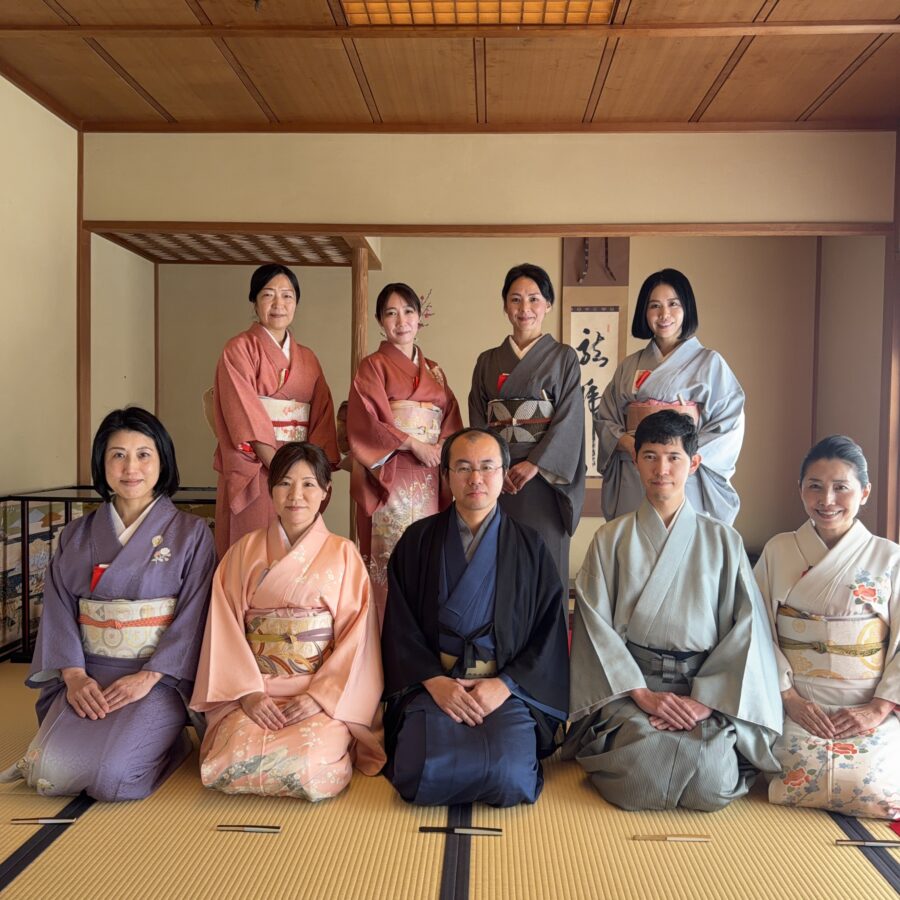
We divided the students into two groups, with each group following a different sequence: koicha → usucha and usucha → koicha.
For the first sitting, we began with koicha. For the second, the students took turns preparing usucha in the daisu style, serving injin-cha as a practice exercise.
For the reciprocal usucha practice, our goal was to complete three rounds. In the first round, we used Awata-yaki; in the second, Sōma-yaki; and for the third, we placed a red Raku bowl by Kōnyū, encouraging everyone to aim for the third round.
Unfortunately, it seems that two rounds were the limit for both groups, and they did not quite reach the long-awaited Raku bowl.
To avoid sharing the same tea cloth, we also had the students change their chakin between preparations.
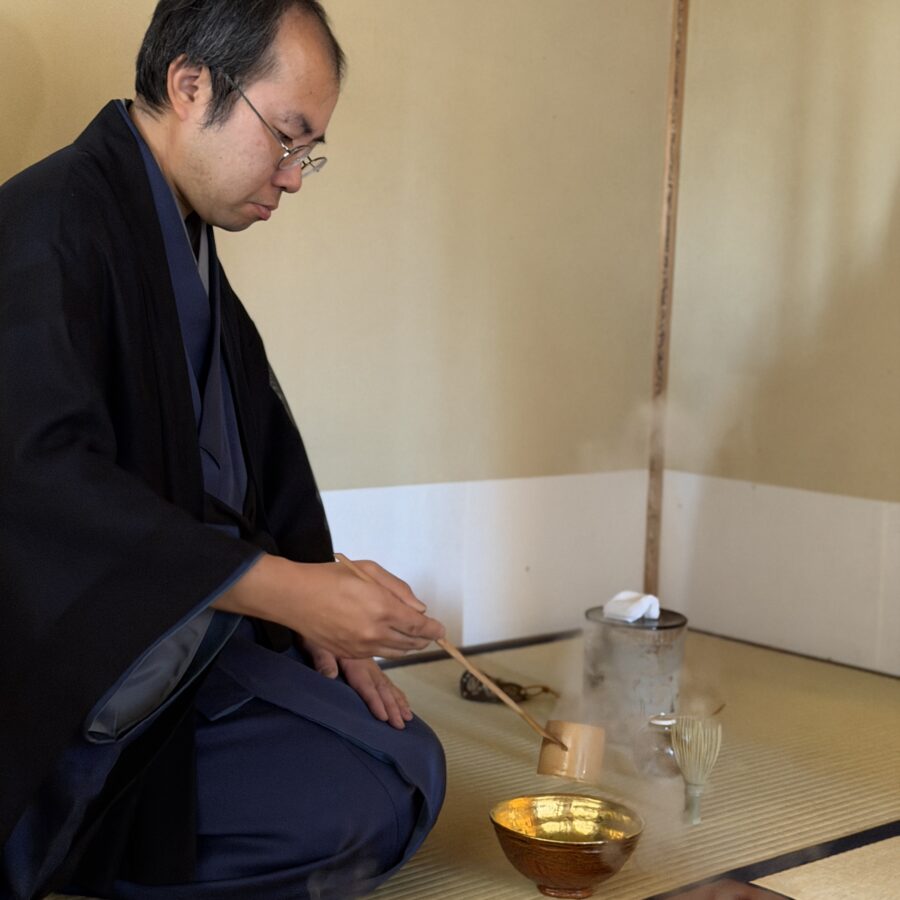
While they were performing temae, I was in the small tea room. I dropped the ladle, the incense was far too strong, and I struggled through my own temae while trying to maintain a suitably composed expression.
Looking at these photographs afterward, I could only breathe a sigh of relief.
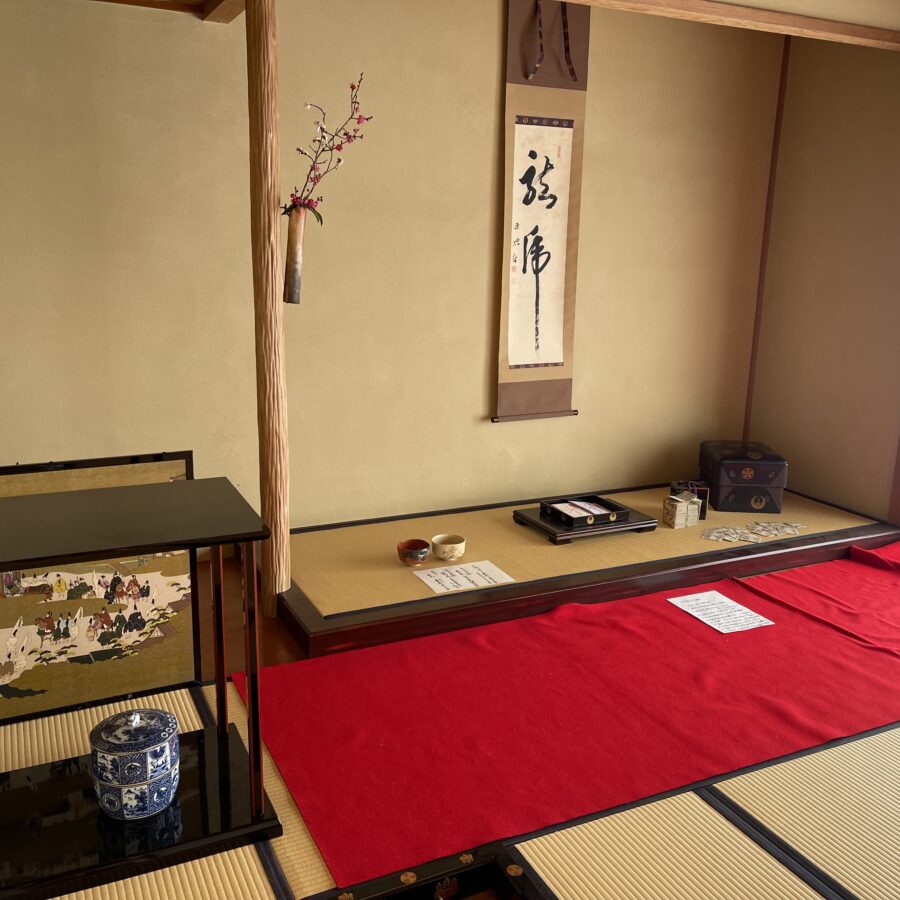
The Tokonoma
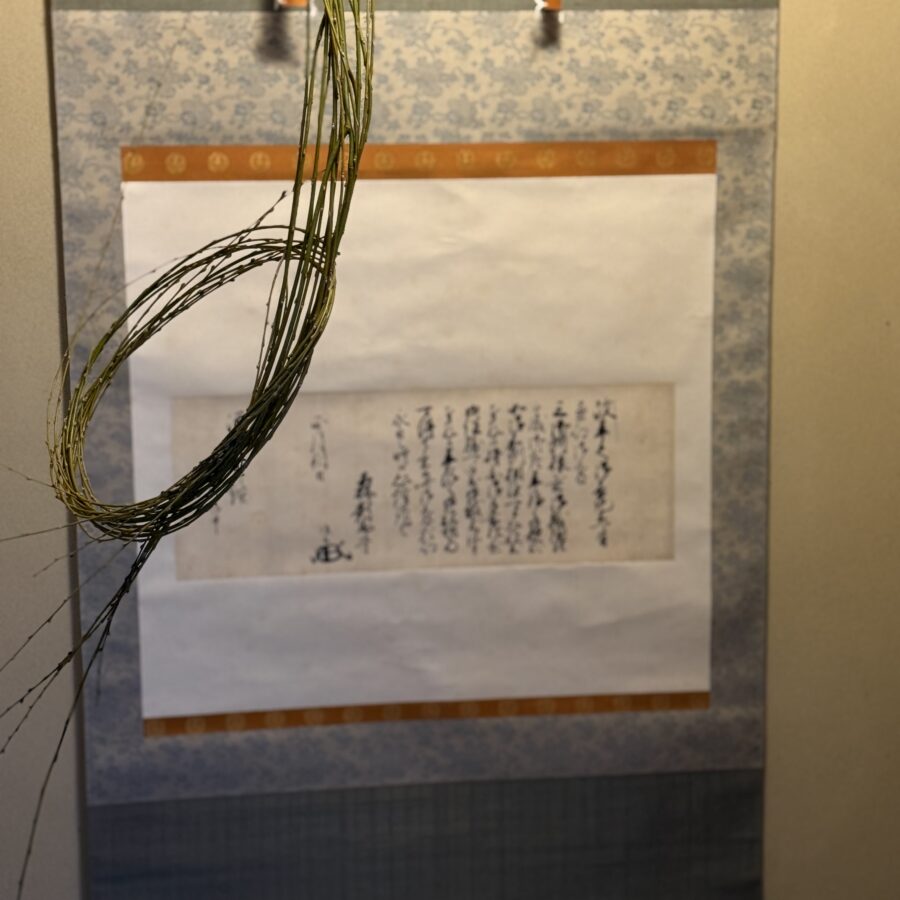
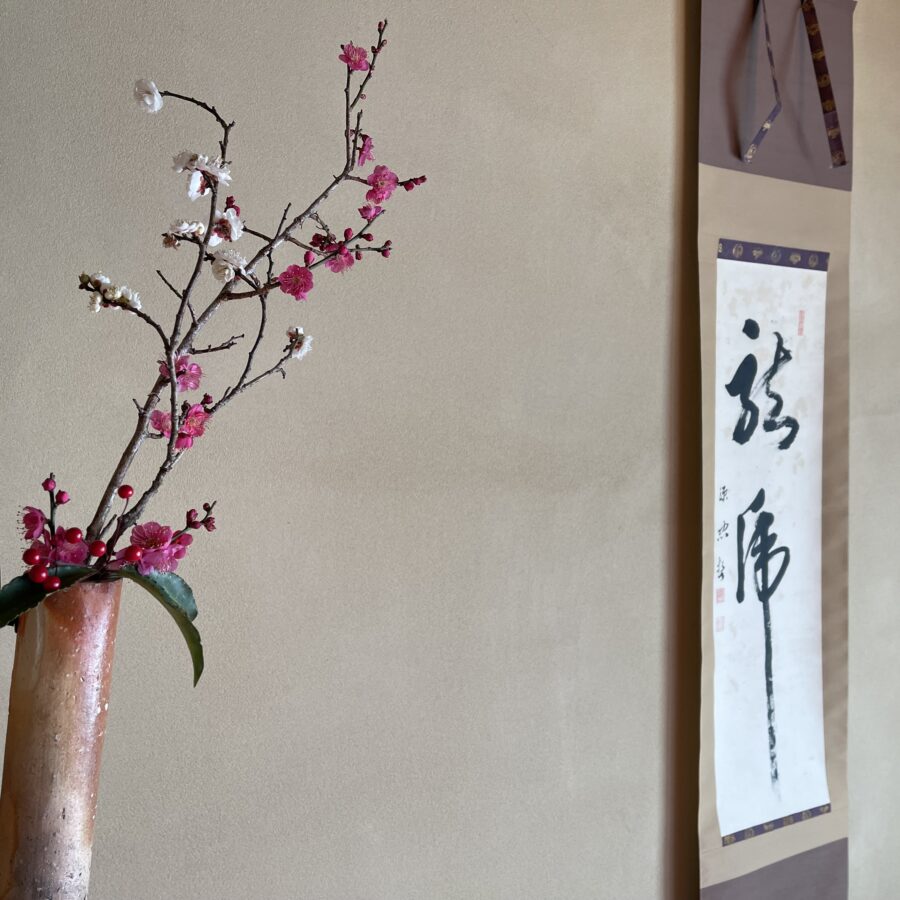
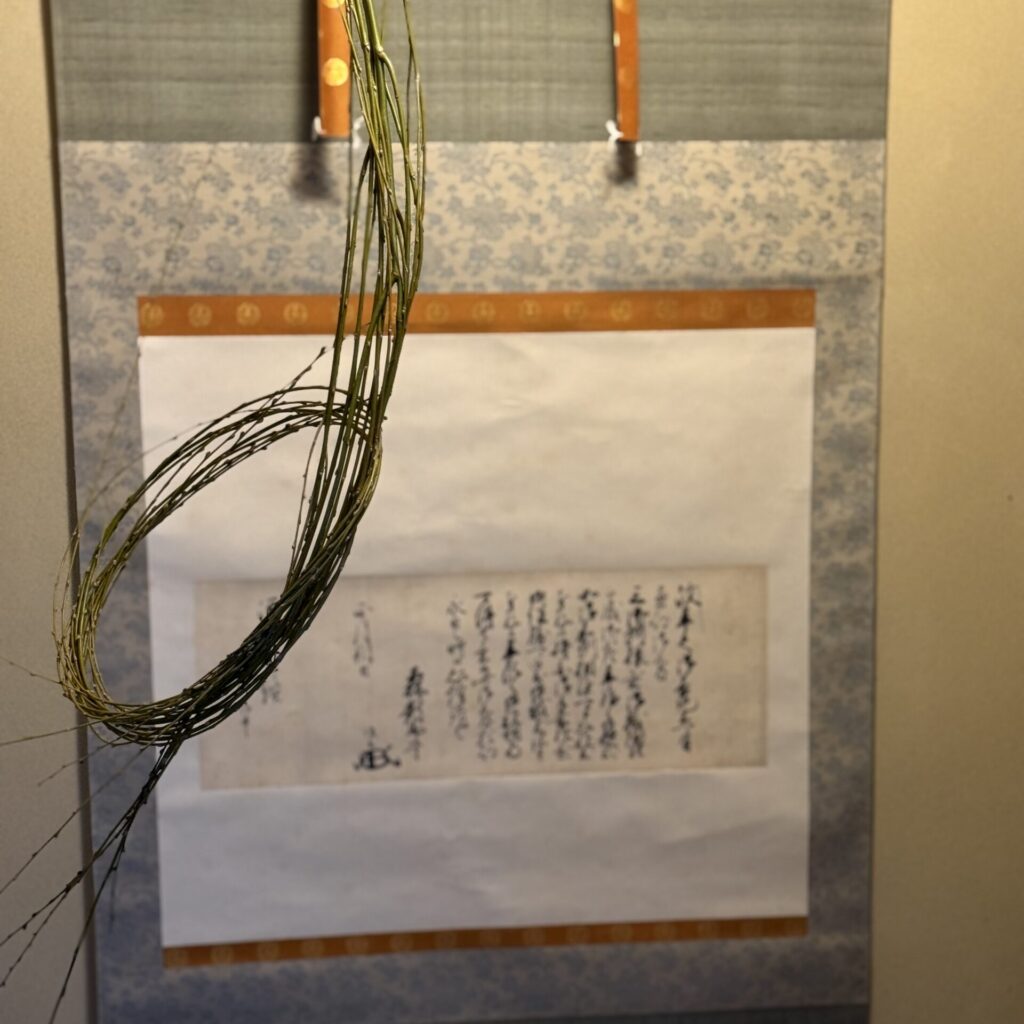
For the tokonoma, we hung a Ryūko ichigyō (龍虎一行) written by Mori Tadatetsu, lord of the Ako Domain.
At that time, the Mori family claimed descent from the Minamoto clan, so his name is written as Minamoto no Tadatetsu (源忠哲).
The ichimonji and fūtai of the hanging scroll are decorated with the Kaiō pattern, a design traditionally passed down through the Mori family, rendered in inkin, gold decoration applied to the textile.
Ryūko (龍虎) brings together the two most powerful beings in the world—the dragon and the tiger. They have traditionally been regarded as protective symbols that ward off evil and bring good fortune.
At the Urasenke headquarters as well, a Ryūko written by Sen no Sōtan III is traditionally displayed during Hatsugama, the first tea gathering of the year.
Lord Mori Tadatetsu died young, in his twenties, and very few examples of his calligraphy have survived. Only four works are currently known to exist: two are preserved by our family, while the other two are said to be in a private collection and at the Ako City Museum of History.
For the hanging flower vase, I arranged red and white plum blossoms with nandina.
Nandina is associated with the phrase “turning away misfortune”, making it an auspicious plant for the New Year.
On the tokonoma, we also displayed several pieces from the wedding trousseau of Princess Kamezuru, who married Mori Tadahiro, the eldest son of Mori Tadamasa.
Princess Kamezuru was the eldest daughter of Maeda Toshitsune, lord of the Kaga Domain, and Tamahime (O-Tama), the eldest daughter of Tokugawa Hidetada. She was therefore Hidetada’s first grandchild.
Through the arrangement of her maternal grandfather, she was adopted as a daughter of Shogun Tokugawa Iemitsu and married into the Mori family. It was the grandest wedding in the history of the Mori family.
Princess Kamezuru passed away not long afterward. Had she lived to have a son with Mori Tadahiro, it is quite possible that the Mori family, like the Maeda and Date families, would eventually have borne the surname Matsudaira.
Thus, even within the quiet setting of Hatsudate, the objects placed in the tokonoma allowed us to look back across centuries of family history.