2018.11.06
Hagi Ware and the Way of Tea at Lyon City Hall
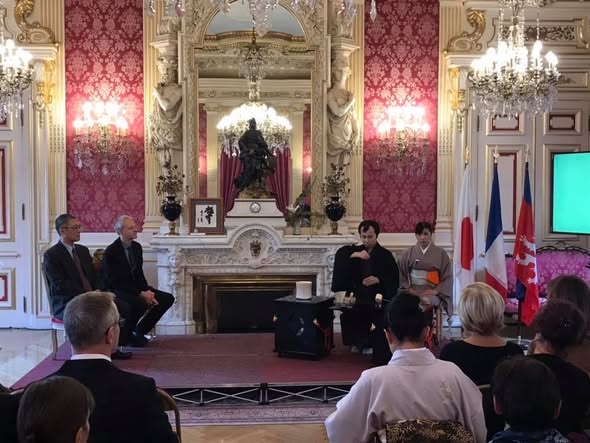
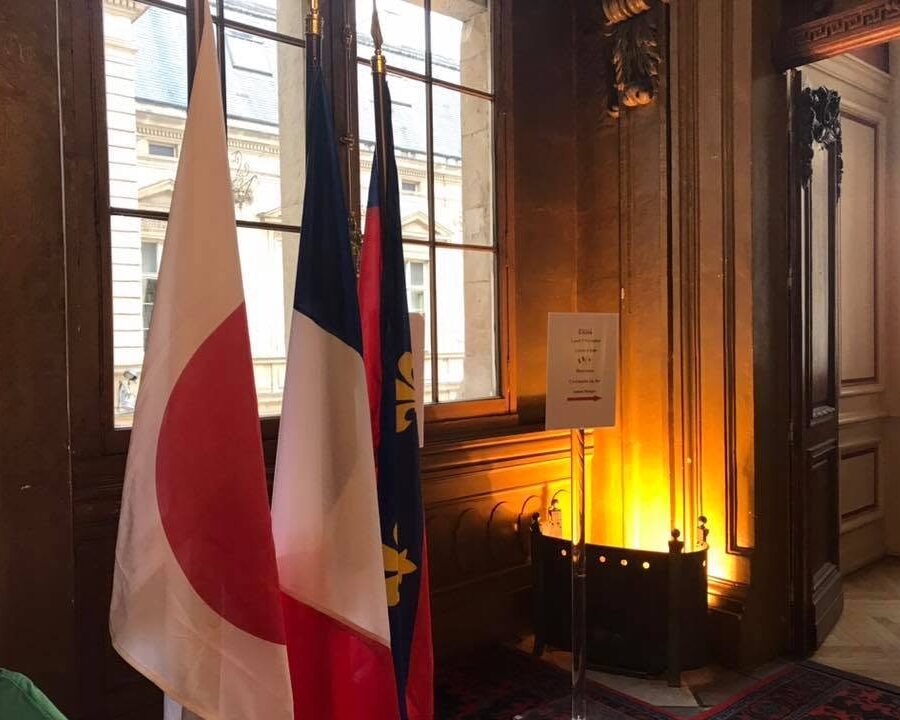
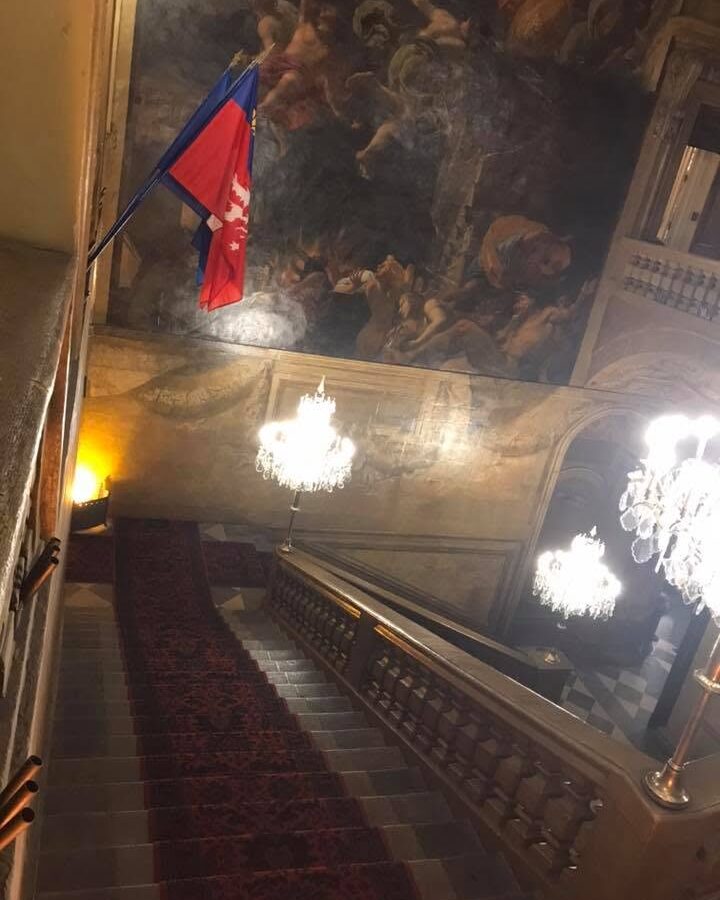
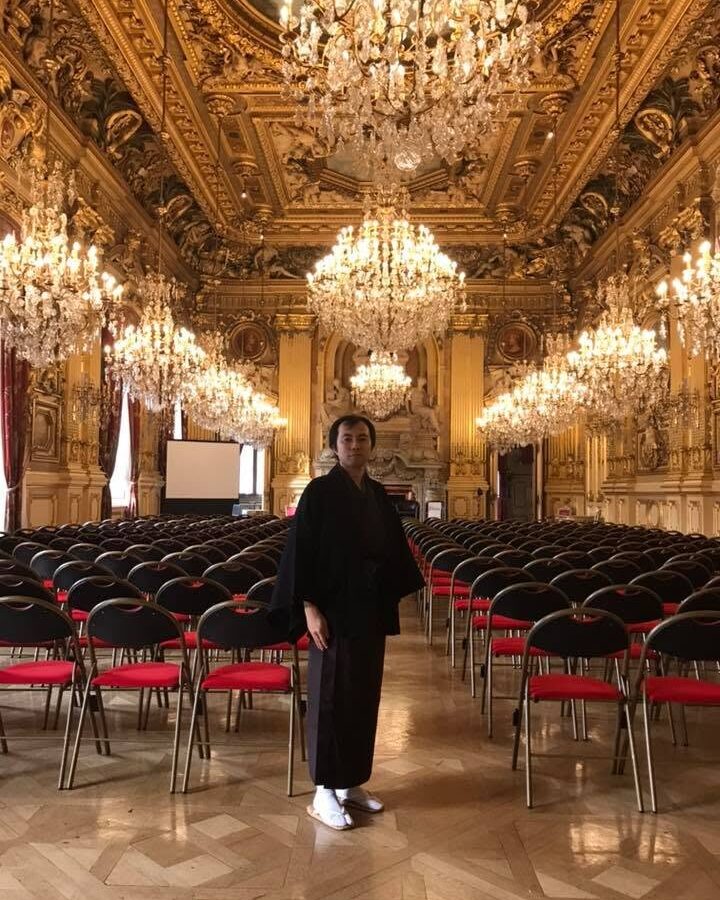
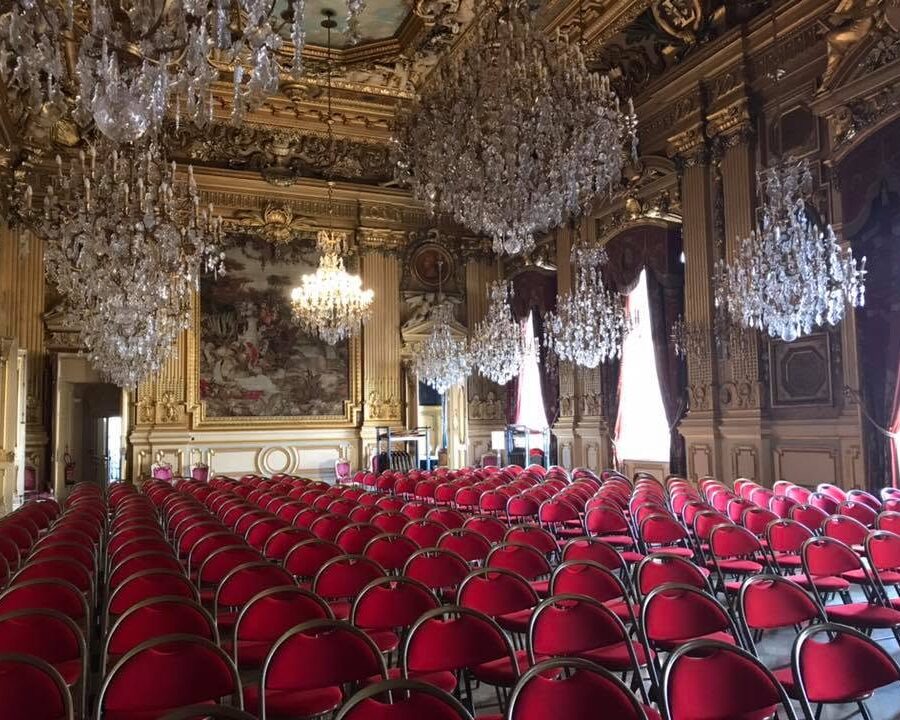
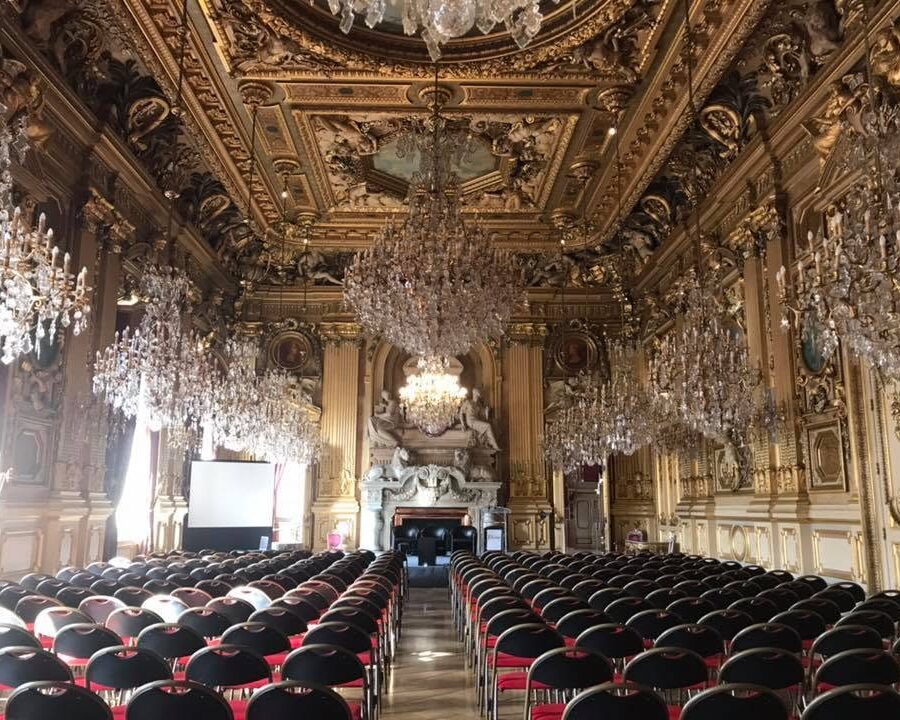
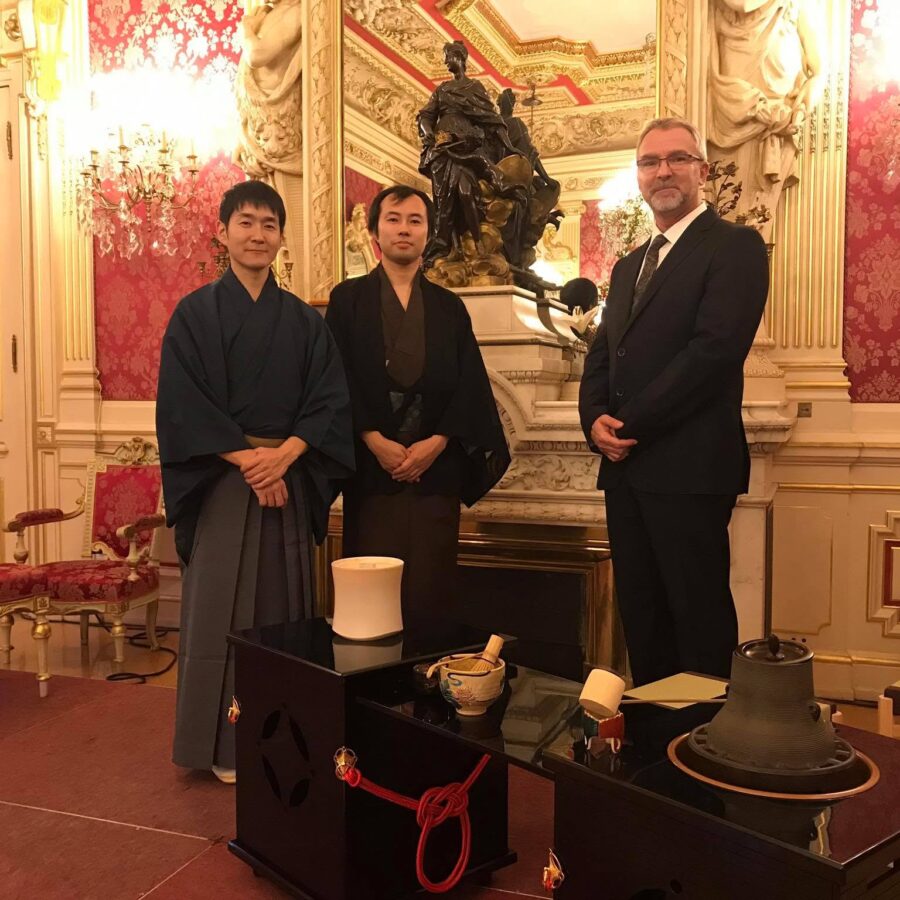
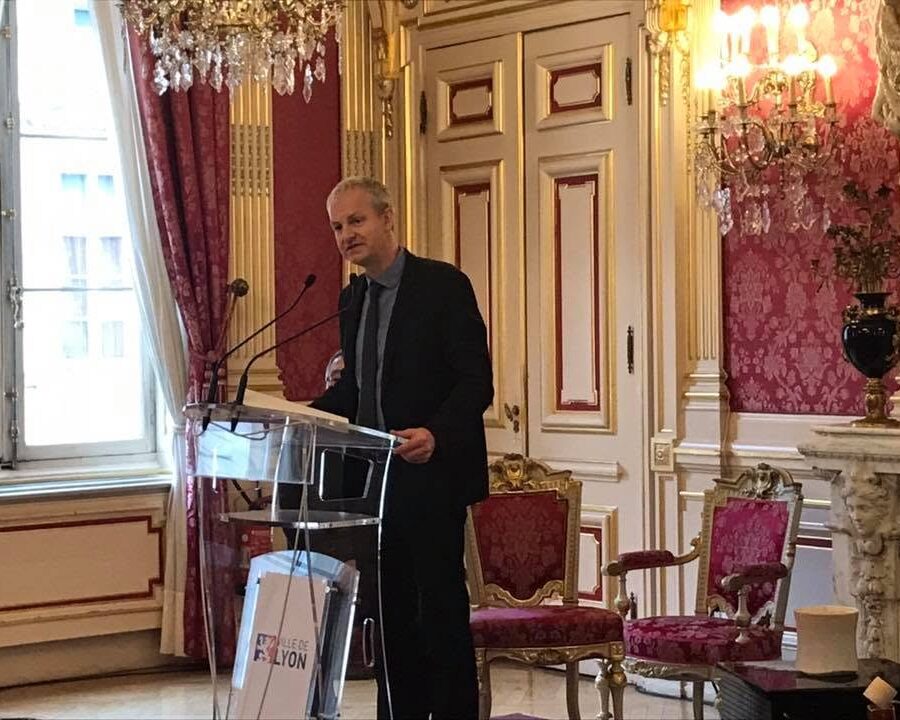
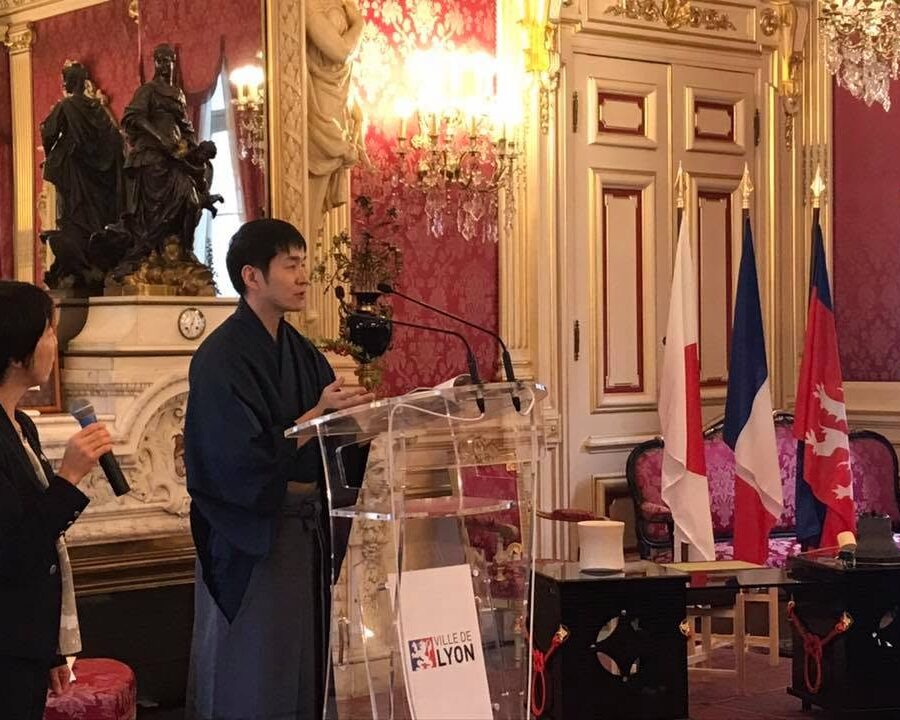
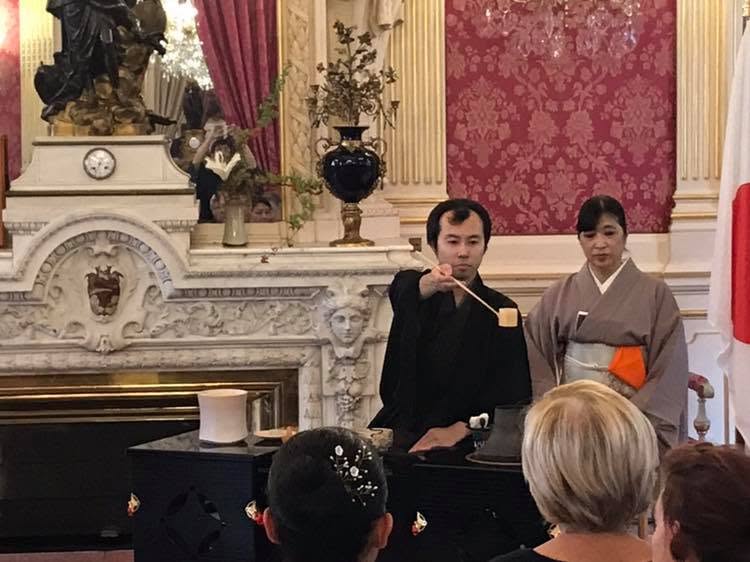
On November 5, an event devoted to Hagi ware and the Way of Tea was held at Lyon City Hall, in Lyon, one of the seven largest economic metropolitan areas in Europe. I was deeply honored to be entrusted with the important role of giving a demonstration of the tea ceremony, together with a lecture on matcha.
Following the demonstration, my friend and fellow member of the Association, Takao Tahara, who serves as its Vice-President, gave a lecture on Hagi ware and the Tahara Tōbei family, one of the great Hagi ware families with a tradition spanning thirteen generations.
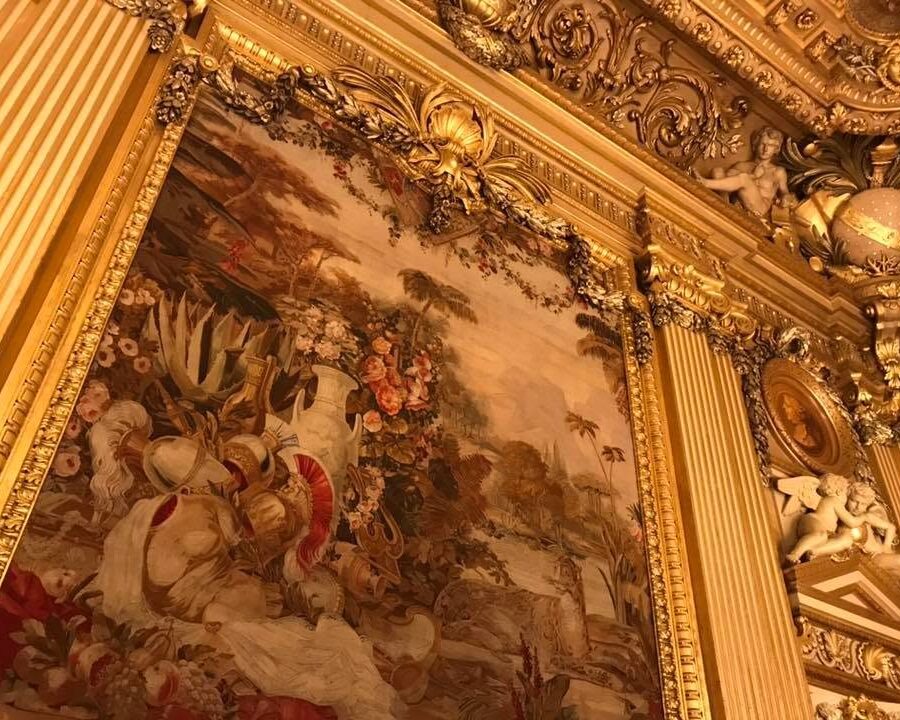
The Red Room of Lyon City Hall, normally closed to the public, is a particularly meaningful setting for Japan-France friendship. It houses a vase that was presented to the citizens of Lyon in gratitude for their support following the Great Kantō Earthquake. The gift was sent by Empress Teimei, consort of Emperor Taishō, and the room has come to be regarded as a place symbolizing the long friendship between Japan and France.
The room is also known as a venue that played an important role during His Imperial Highness the Crown Prince’s visit to France in September.
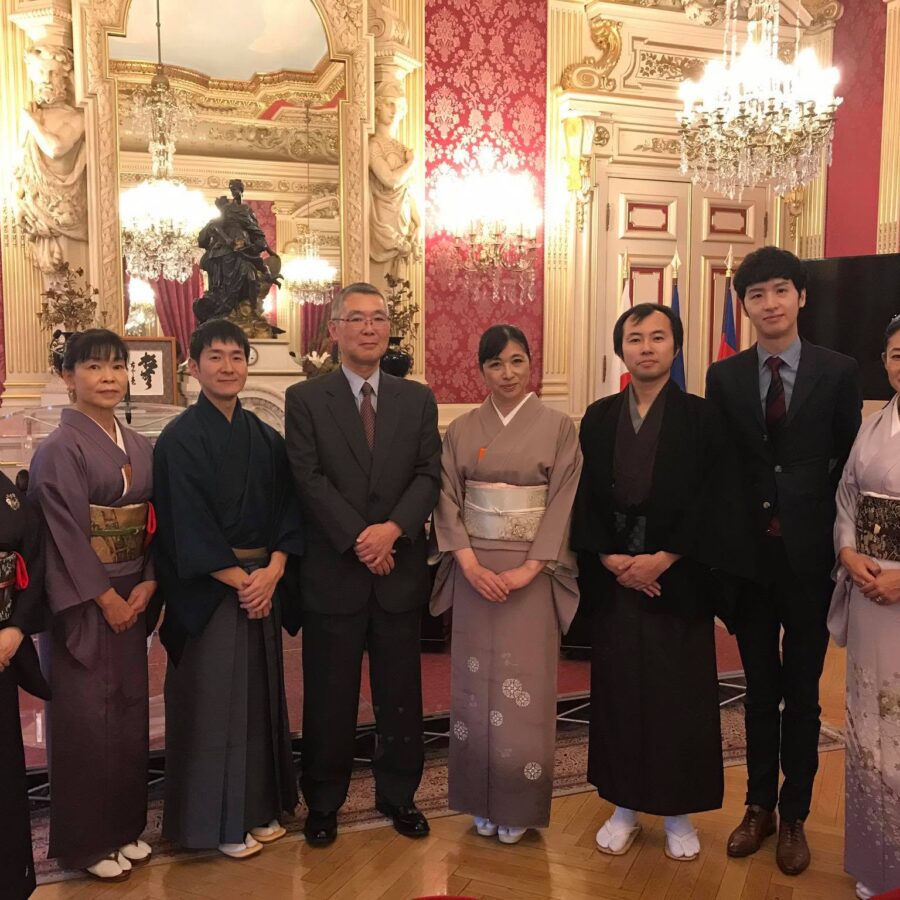
Following the resignation of the mayor on October 2, Loïc Graber, Deputy Mayor in charge of Culture, served as the guest of honor. Consul Nagasawa and members of the diplomatic corps in Lyon, including the Consul General of China, were also present. Although I cannot disclose the details, we were also honored by the presence of distinguished guests who had traveled from Tokyo.
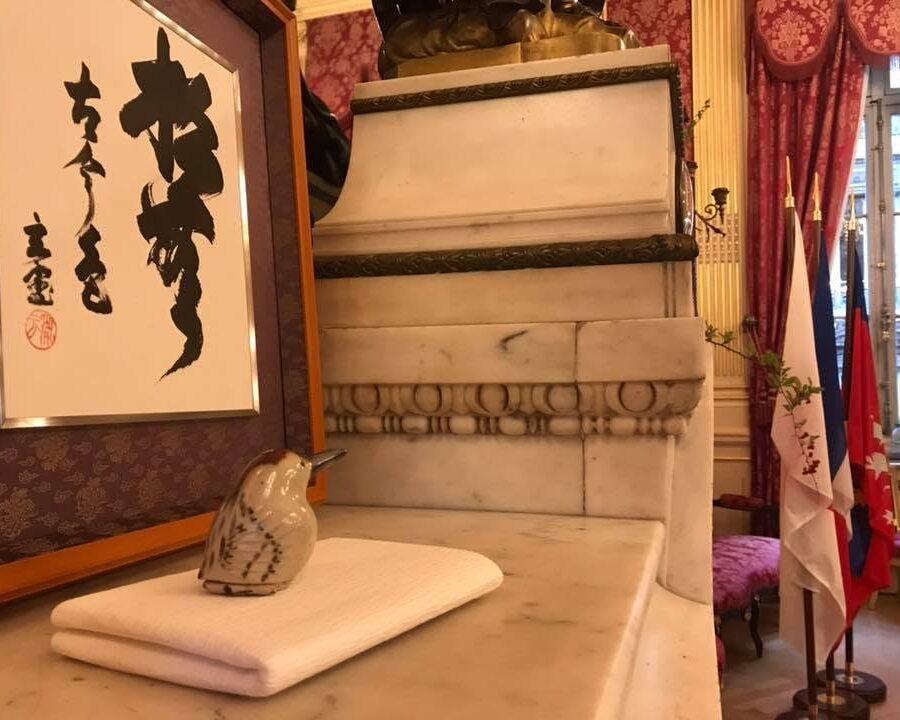
For the tea gathering, I displayed the calligraphy “Matsu ni kokon no iro nashi”—“The pine knows neither old nor new in its color”—which had been entrusted to me by the Grand Master. It expressed my wish that the long history of friendship between Japan and France may remain unchanged.
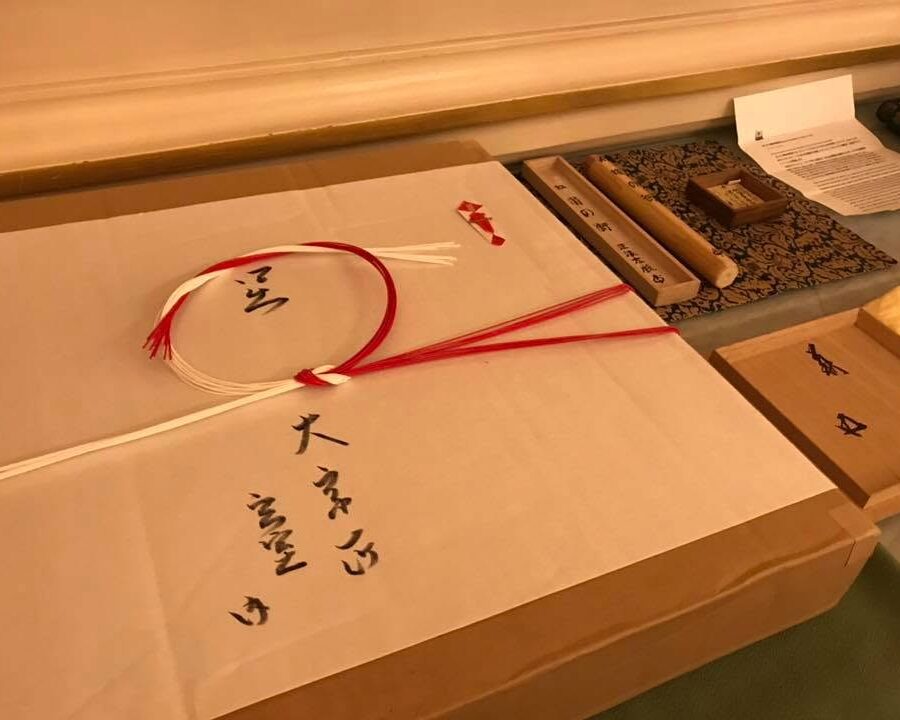
For the tea scoop, I used a work by TAIKAN JYOJI Roshi, a French-born Zen master and abbot of Shōhō-ji Temple, a Rinzai Zen temple of the Myōshin-ji school and the only Zen temple in Europe. Its inscription, “Silk City,” was chosen in reference to Lyon’s historic identity as a center of silk production.
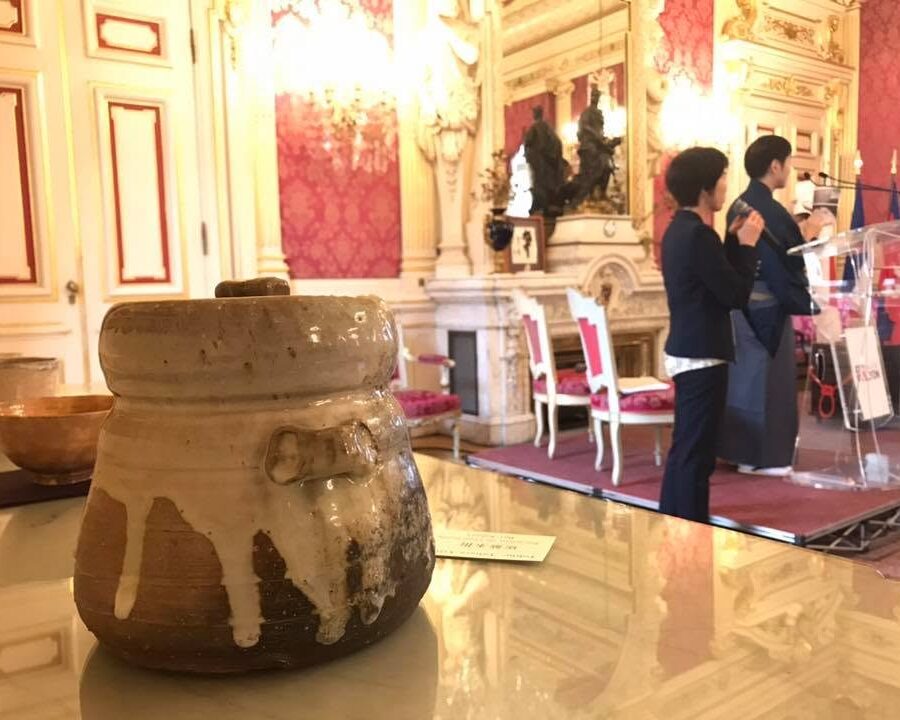
In homage to Itō Jakuchū, whose works had been exhibited in Paris in September, I displayed a Ninsei bird-shaped incense container. The tea bowls included a work by the 12th-generation Tahara Tōbei, as well as a polychrome Asahiyaki bowl created jointly by Shinryū Sugita and Yūsuke Matsubayashi. I also used a work by Hideaki Kimura of Bizen ware.
Each of these pieces is among my treasured possessions, with a deep connection to both Japan and France. For the kensui, I used an old bronze vessel handed down through the Mori family.
I am profoundly grateful to Nobuko Sugai, who came all the way from Berlin; to everyone in my tea group; to the members of our French office who have continued to accompany me through this demanding journey since the event at the Eiffel Tower; and to the friends who came from Tokyo and Paris to support us.
It is truly thanks to all of you that I was given this precious opportunity.
Matcha is now experiencing a boom around the world, while Japanese culture as a whole is receiving renewed attention. Overseas, the number of people from outside Japan who have experienced the Way of Tea is also steadily increasing. I feel that awareness and interest are reaching a new level.
I believe that the time will come, perhaps sooner than we imagine, when many others will share this vision and take action in their own way. I sincerely hope that day will come as soon as possible.
Of course, an undertaking on this scale should not be approached simply by teaching others with a superficial understanding of etiquette, or merely out of the personal satisfaction of being someone who happens to enjoy tea.
My aim is to continue learning from the movements and discipline of my seniors, refining my own skills, and thinking deeply about how the spirit of the Way of Tea can truly be conveyed to people around the world.
It does not seem that such a role can be fulfilled simply by knowing a large number of different temae, nor merely by being able to perform a beautiful temae.
Sugai-san, who served as hantō, has been an invaluable source of spiritual and emotional support. And those who took charge of the mizuya were all seasoned practitioners, true veterans who have supported countless tea gatherings.
I can only express my heartfelt gratitude to each and every one of these people. It is through their support that I was able to reach this extraordinary stage.