2025.06.24
75th Anniversary of Japan’s Membership in UNESCO
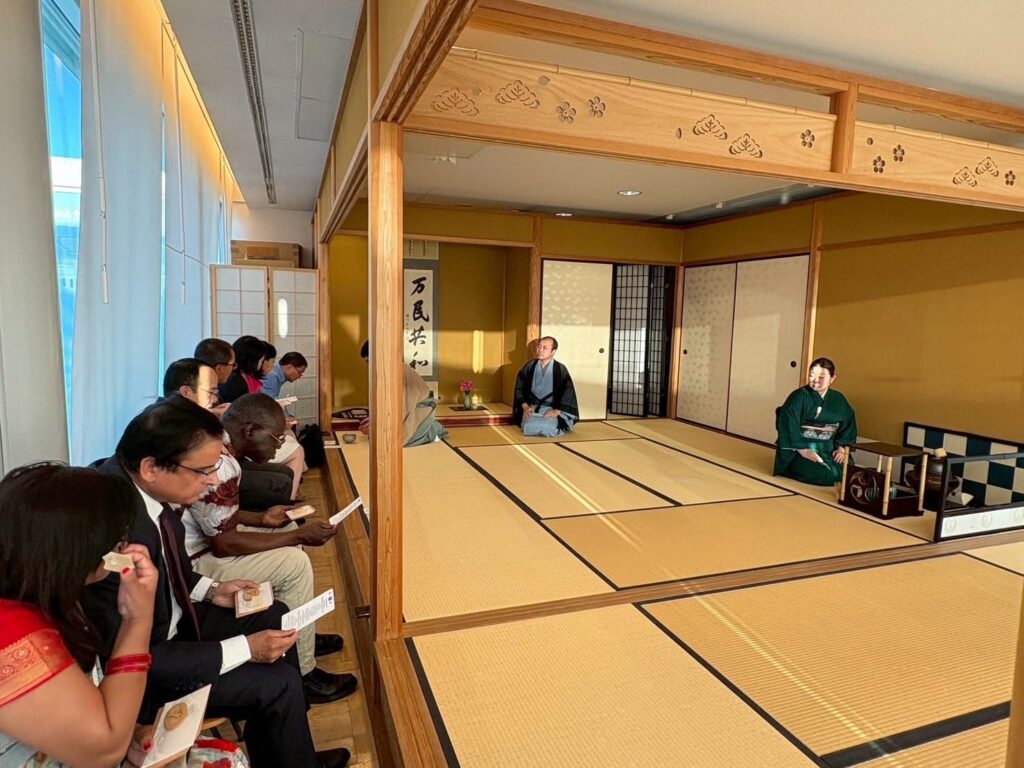
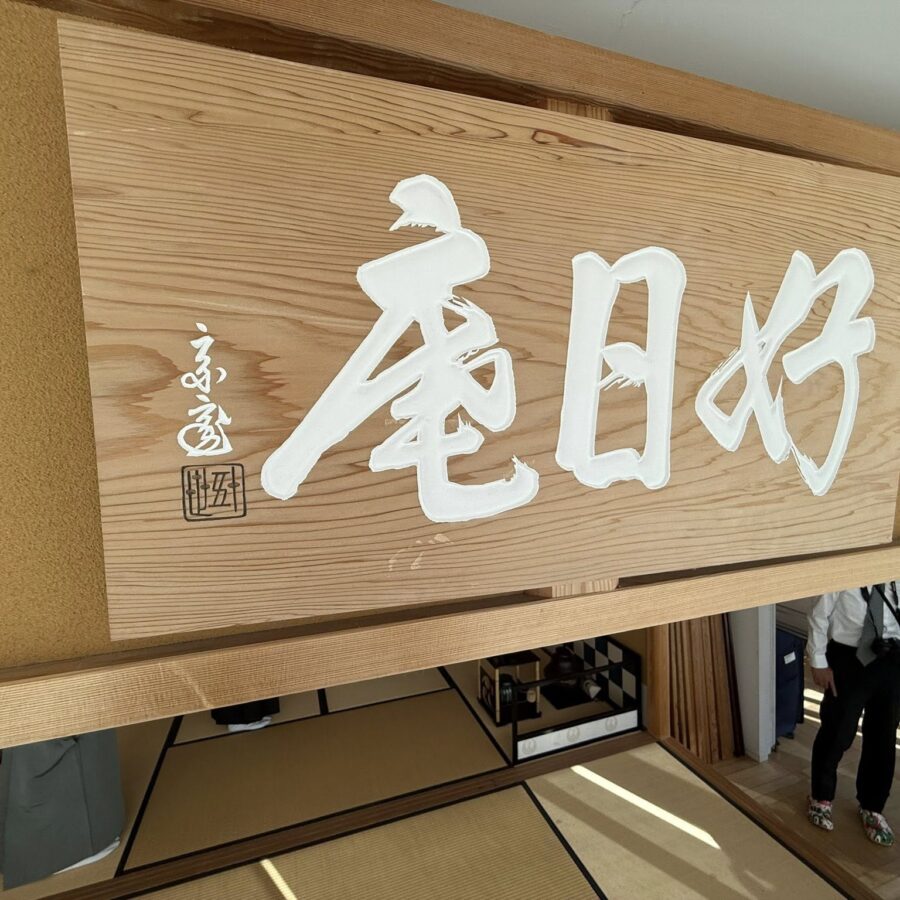
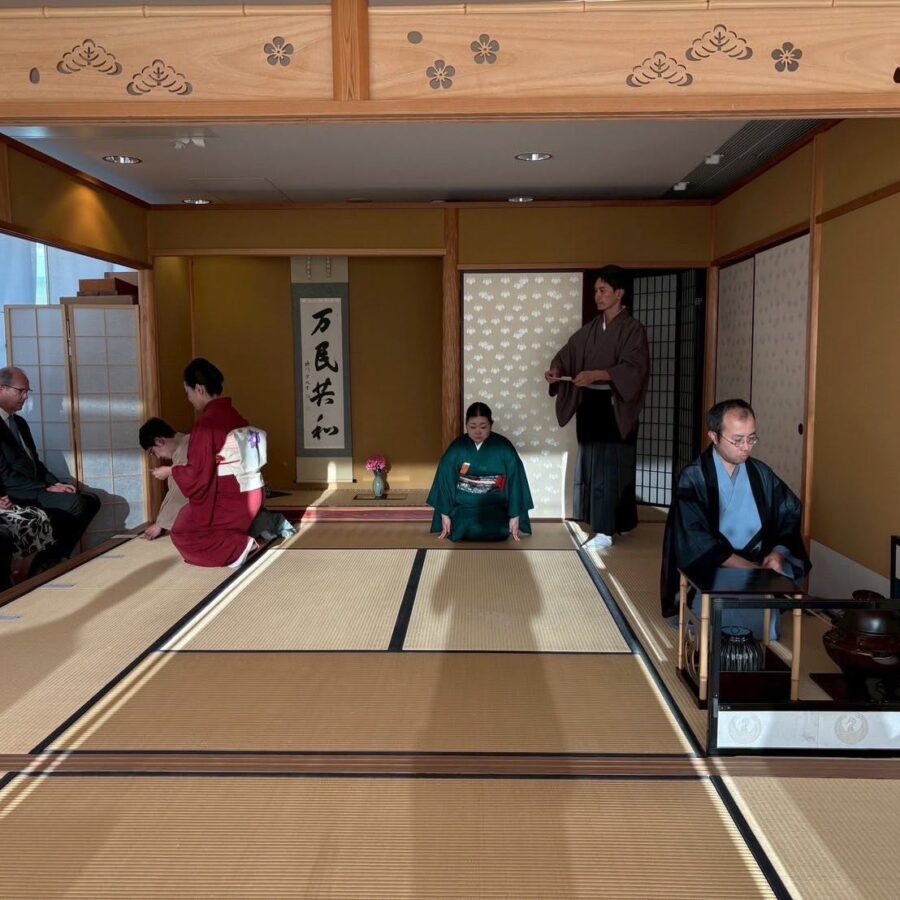
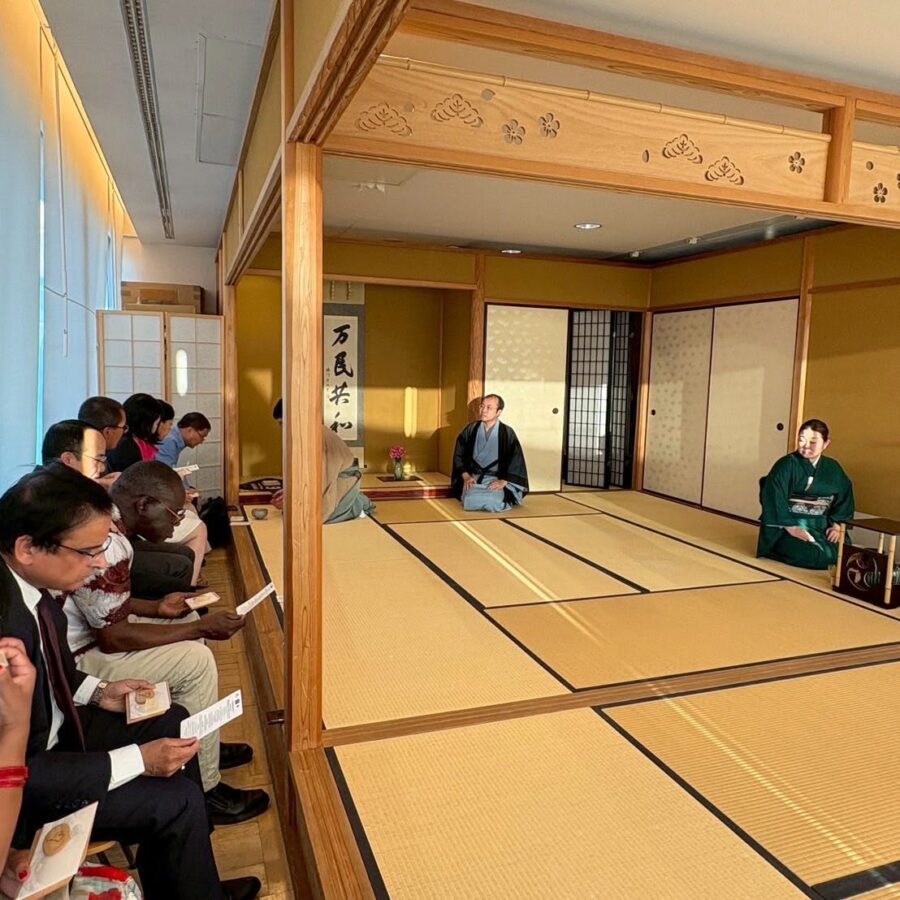
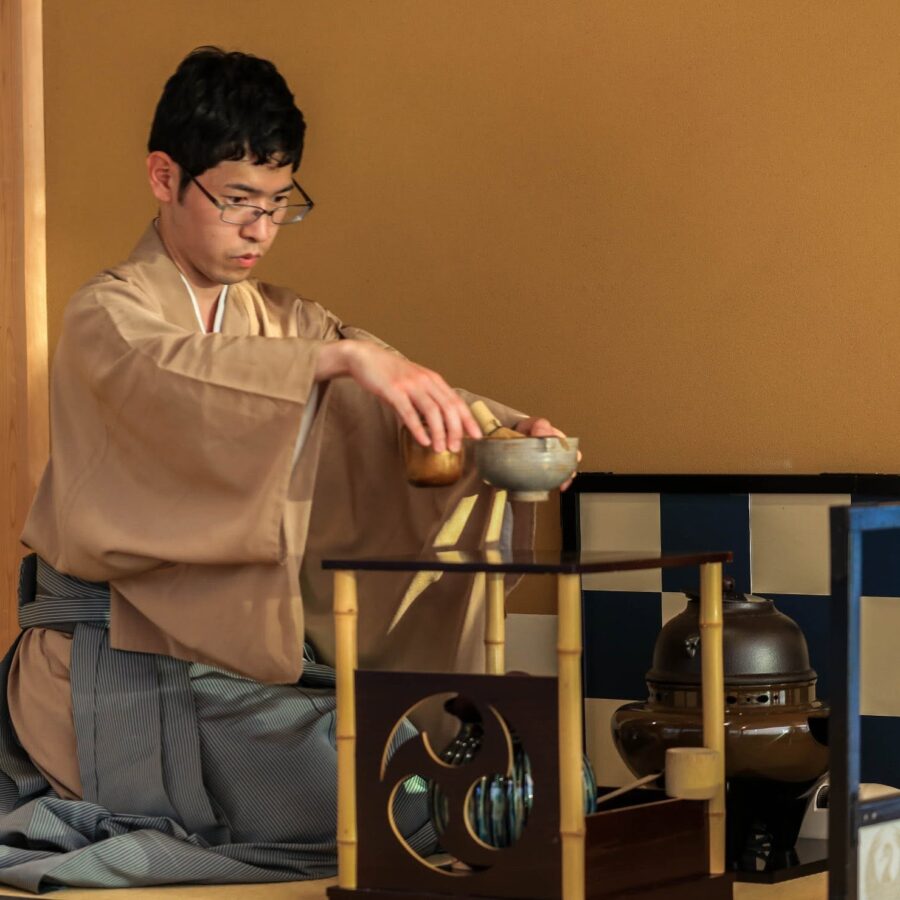
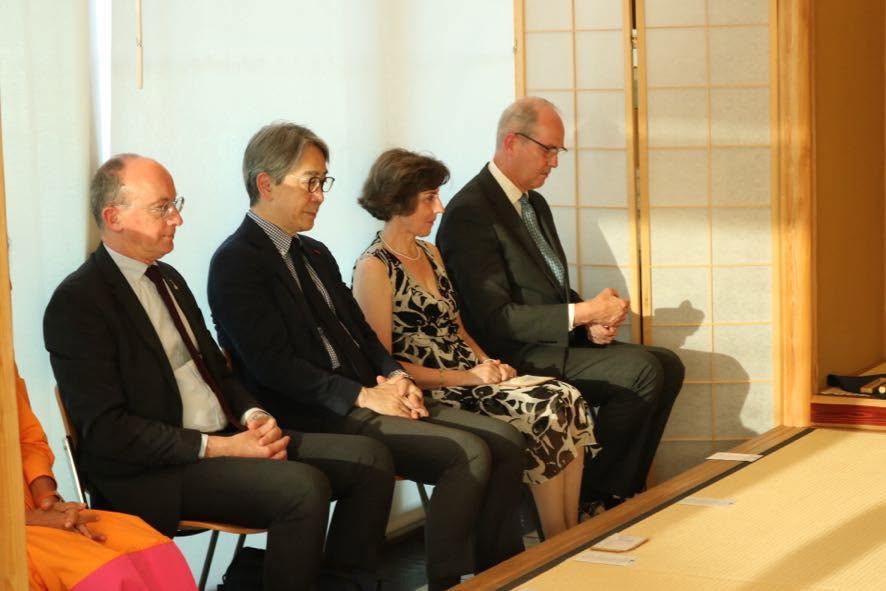
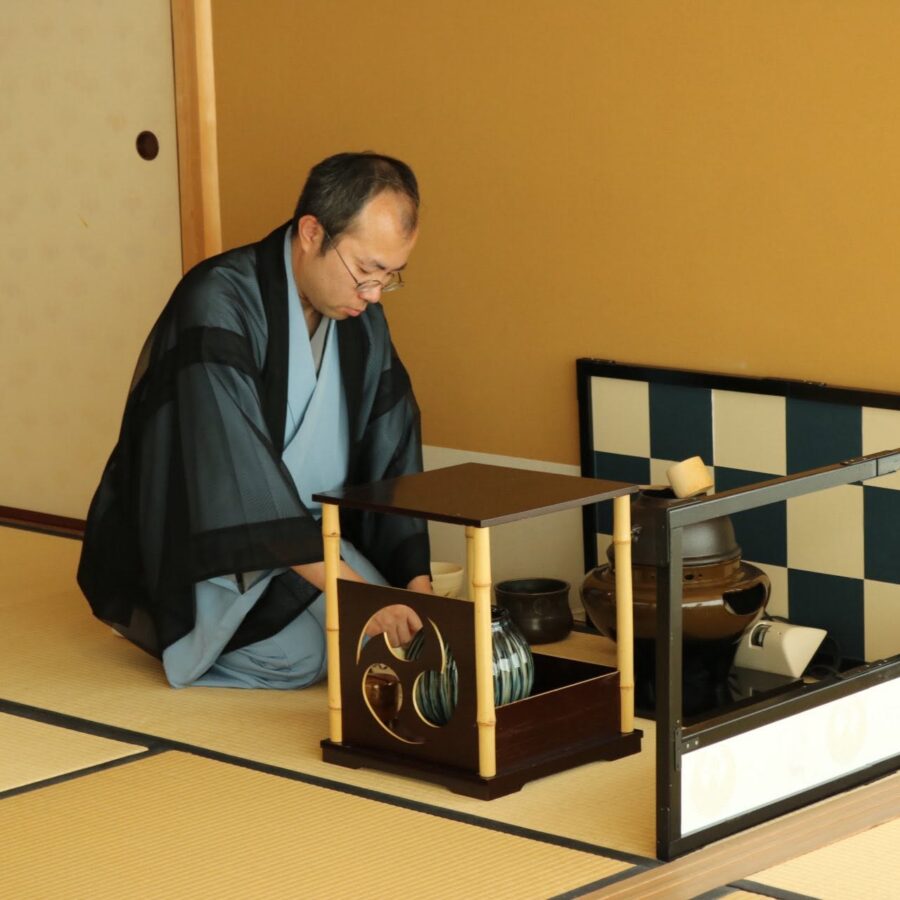
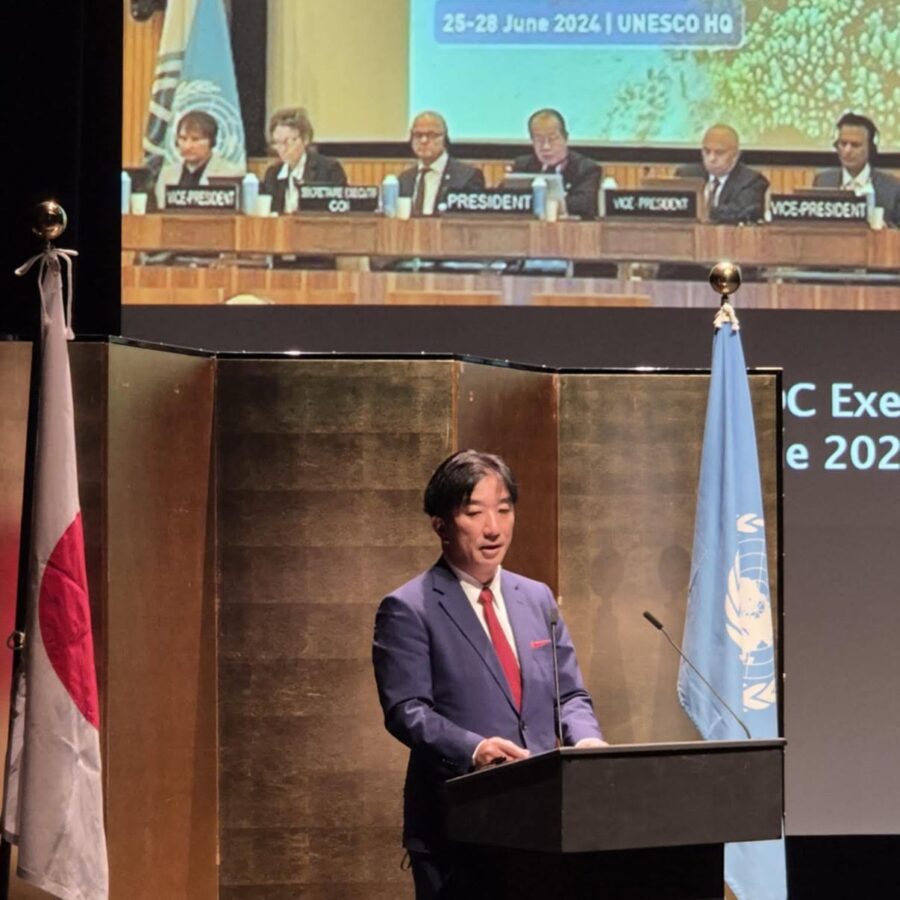
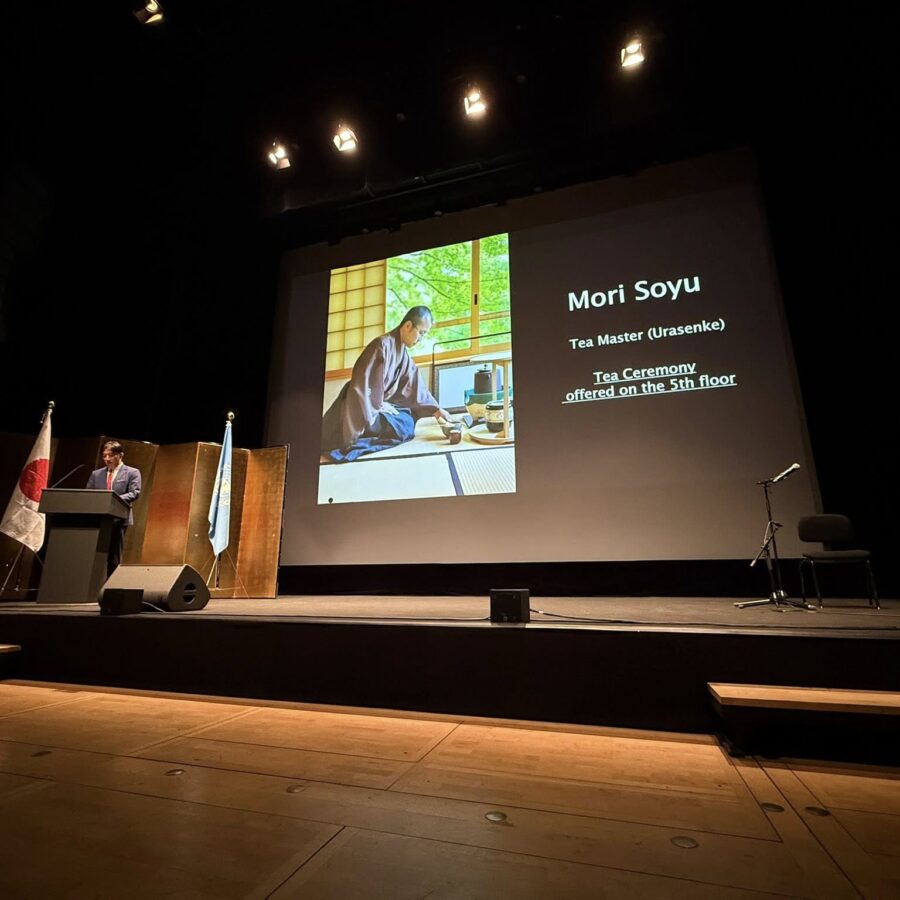
On June 24, 2025, an evening celebrating the 75th anniversary of Japan’s membership in UNESCO was held at the Maison de la culture du Japon à Paris. I was deeply honored to be entrusted with serving tea to approximately 150 distinguished guests, including UNESCO Ambassadors and their spouses from around the world.
For this special service, I was appointed by H.E. Yūdai Kanō, Ambassador Extraordinary and Plenipotentiary and Permanent Delegate of Japan to UNESCO, and undertook the role with the approval and generous support of Grand Master Hōunsai Sen Genshitsu, UNESCO Goodwill Ambassador, and Grand Master Zabōsai, Head of the Urasenke tradition.
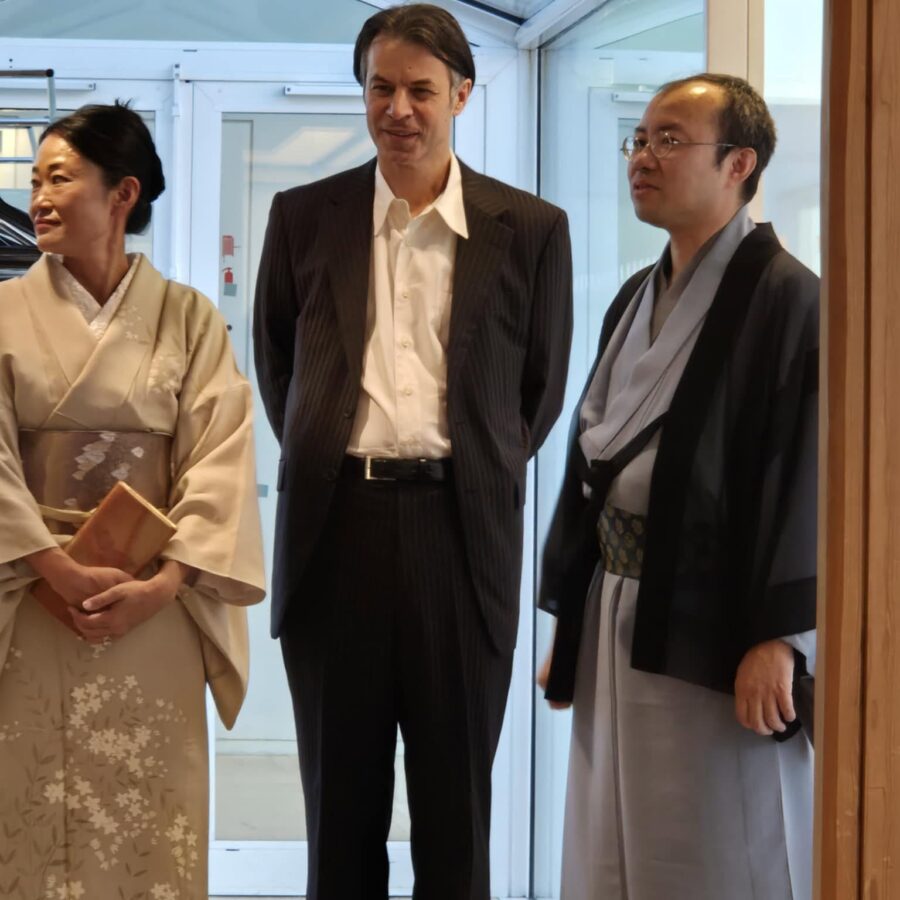
On behalf of the Mori family, we invited Their Royal Highnesses the Duke and Duchess of Angoulême, members of the former French Royal House and the Duke being the younger brother of the Head of the House of Orléans. We were honored to welcome them, together with other distinguished guests including the Chairman of the UNESCO Executive Board and the Deputy Director-General of UNESCO, to the first tea gathering.
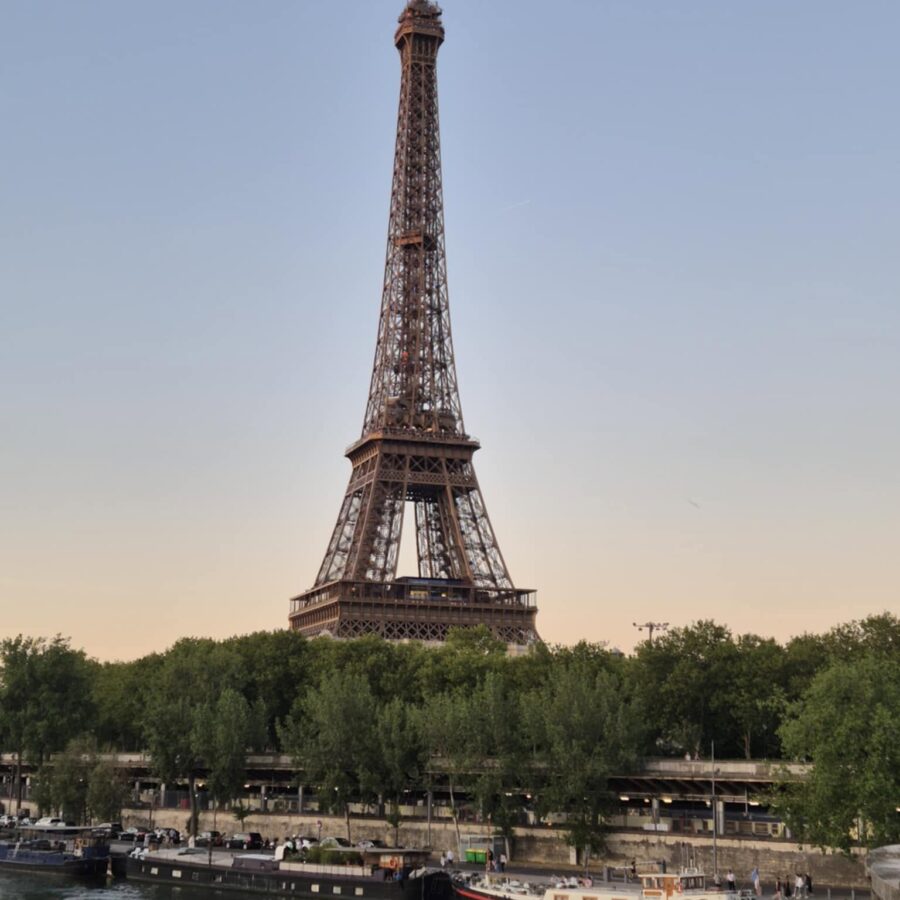
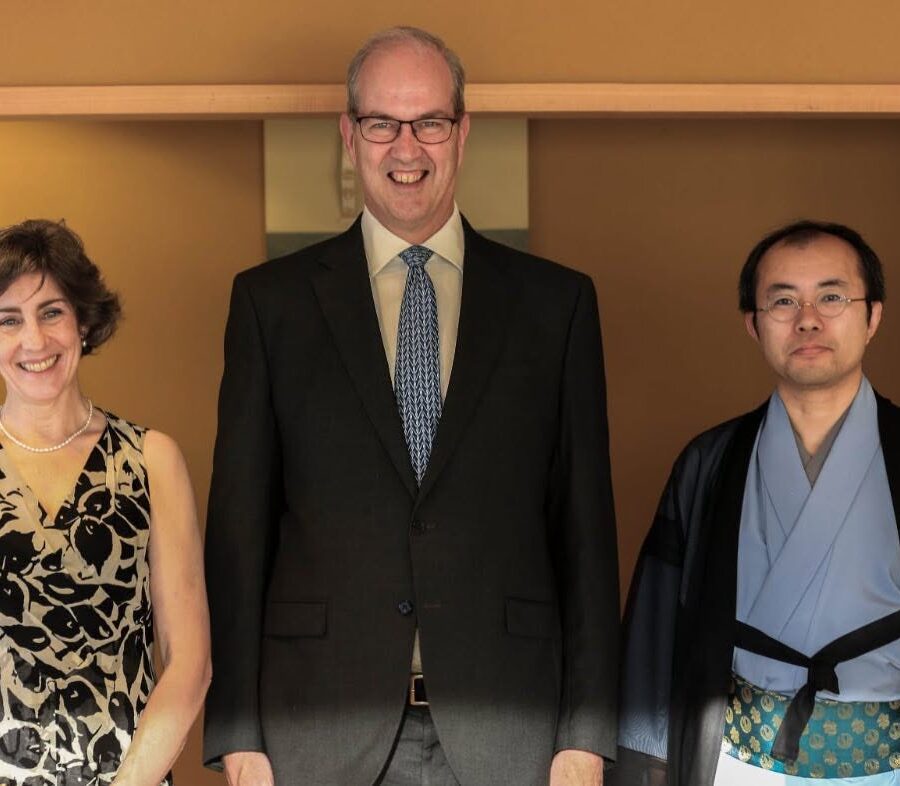
We were also honored by the presence of Mr. and Mrs. Yetman-Eiffel, longtime friends of Tokyo Tower, and Alain Dumas, Chief Engineer of the Eiffel Tower.
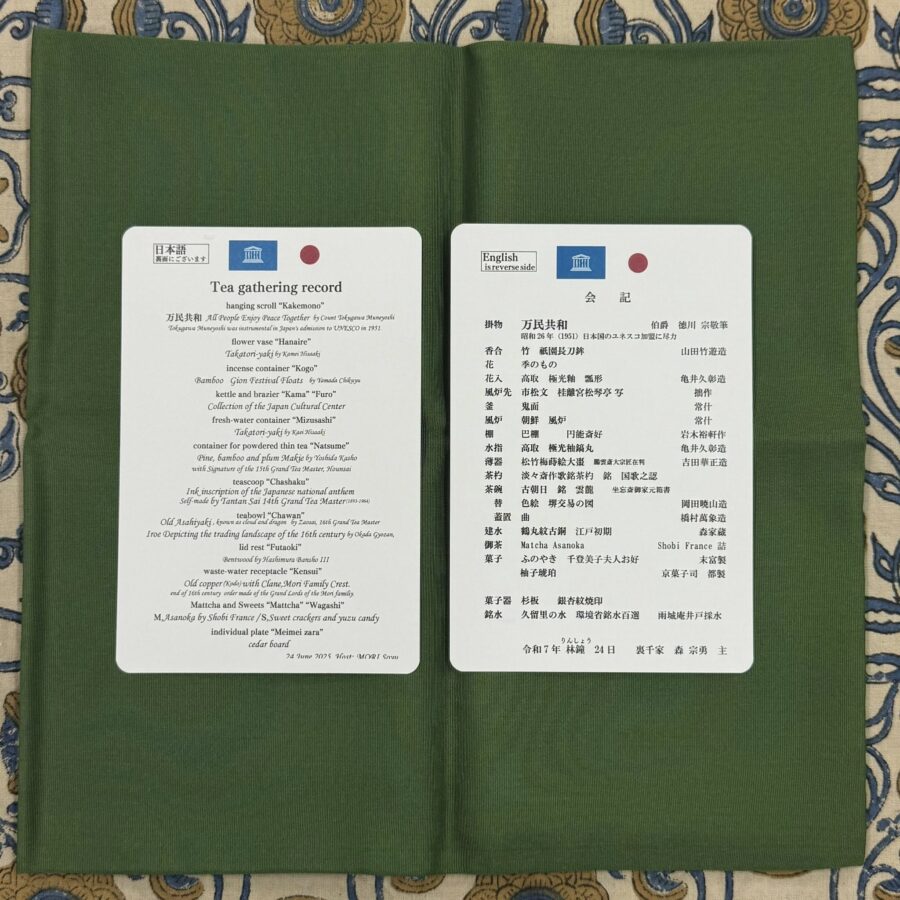
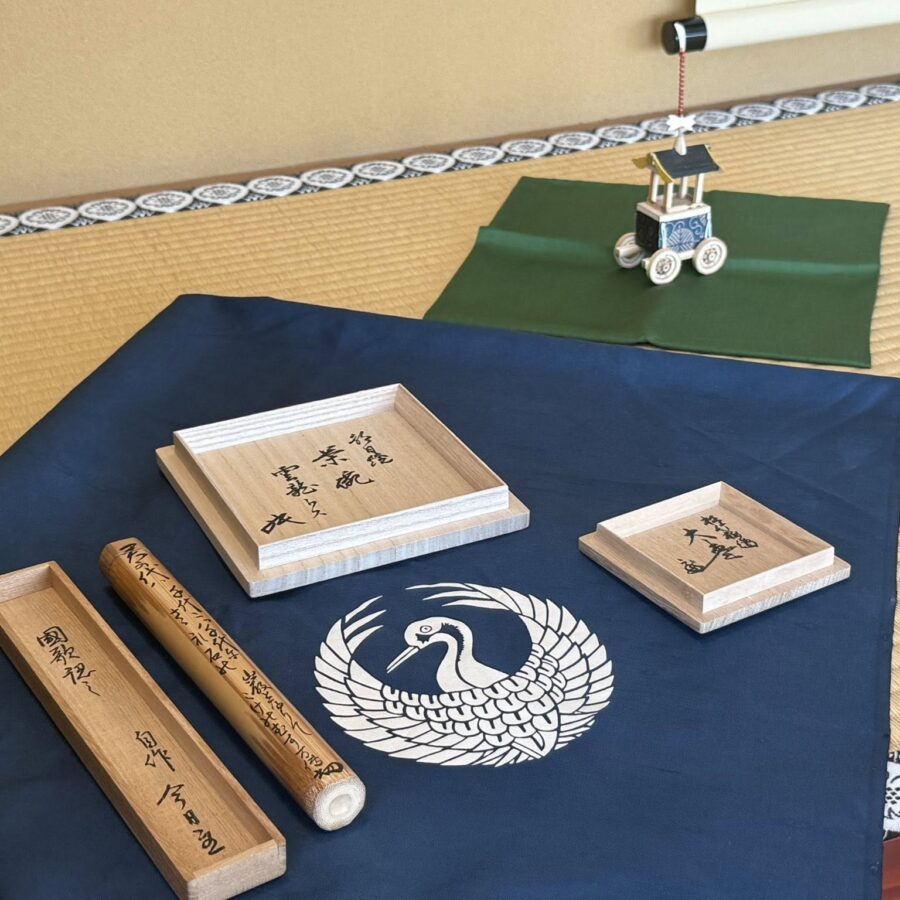
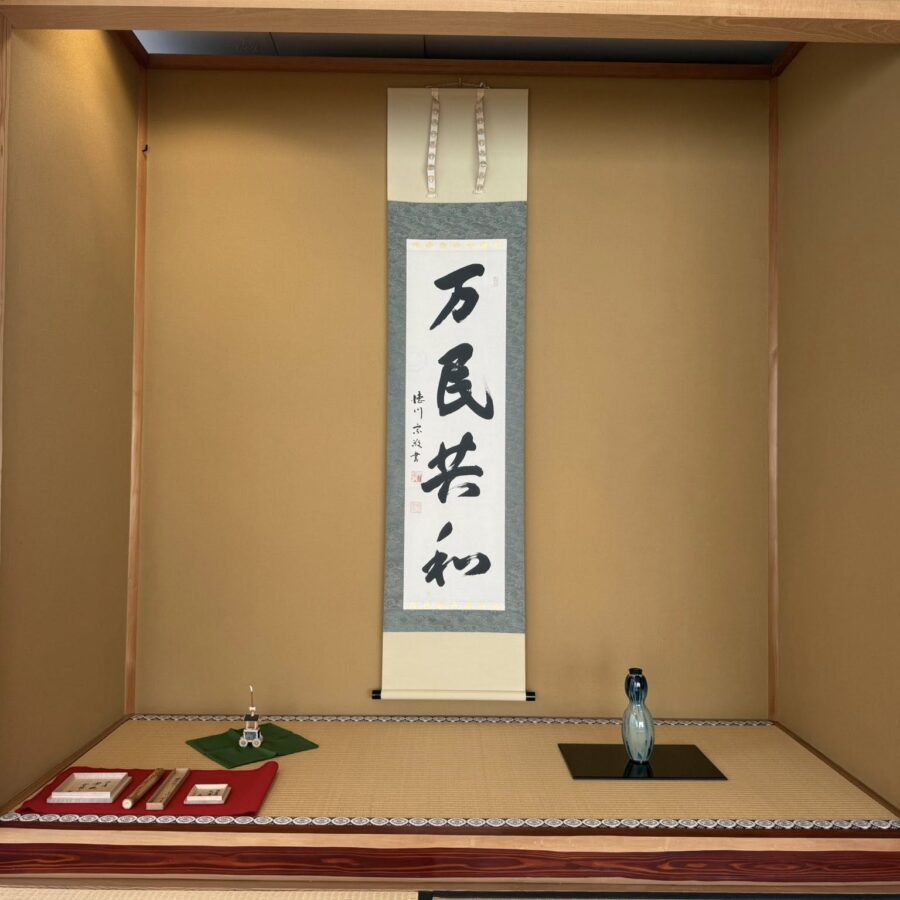
For the hanging scroll, I chose “万民共和 — Banmin Kyōwa,” meaning “All people share peace,” written by Tokugawa Munetaka, which had been personally presented to my great-grandfather.
Tokugawa Munetaka was a member of the Tayasu branch of the Tokugawa family and served as one of Japan’s plenipotentiaries to the San Francisco Peace Treaty. He also made a significant contribution to Japan’s accession to UNESCO, which became the first international organization Japan joined after the war.
The phrase, and the person who wrote it, seemed almost as though they had been destined for this particular occasion. I had received the makuri—the unmounted calligraphic scroll—from my great-uncle about thirty years ago and had it mounted as a hanging scroll twenty years ago. On this day, it seemed to fit the venue perfectly.
The English rendering was deliberately simple:
“Everyone shares peace.”
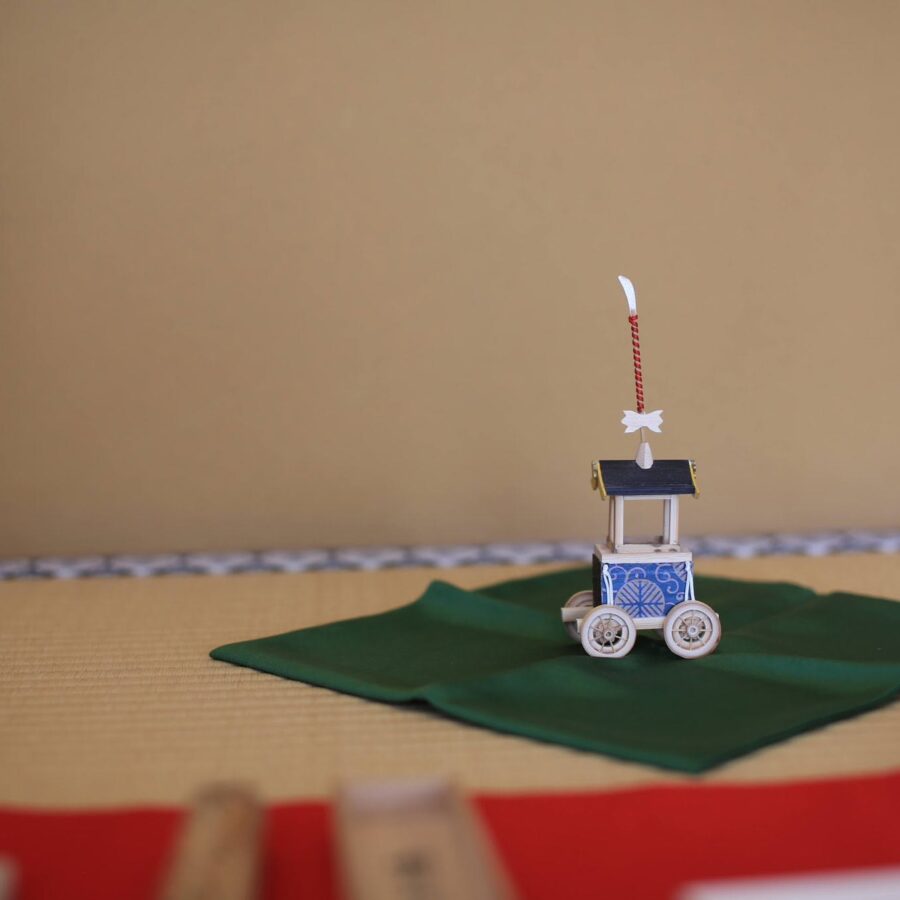
In an effort to evoke the atmosphere of the Yamaboko floats of the Kyoto Gion Festival, which is inscribed on UNESCO’s Representative List of the Intangible Cultural Heritage of Humanity, I placed a yamaboko-shaped kōgō and adapted the sōkazu arrangement of the Tomoe-dana for the tea setting.
The water used for the tea was brought all the way from my hometown of Kururi, drawn from the well at Ujō-an, and boiled in the kettle before being used.
For the first gathering, I consciously incorporated elements of the Kinin Kiyotsugu procedure, traditionally associated with serving tea to a distinguished guest.
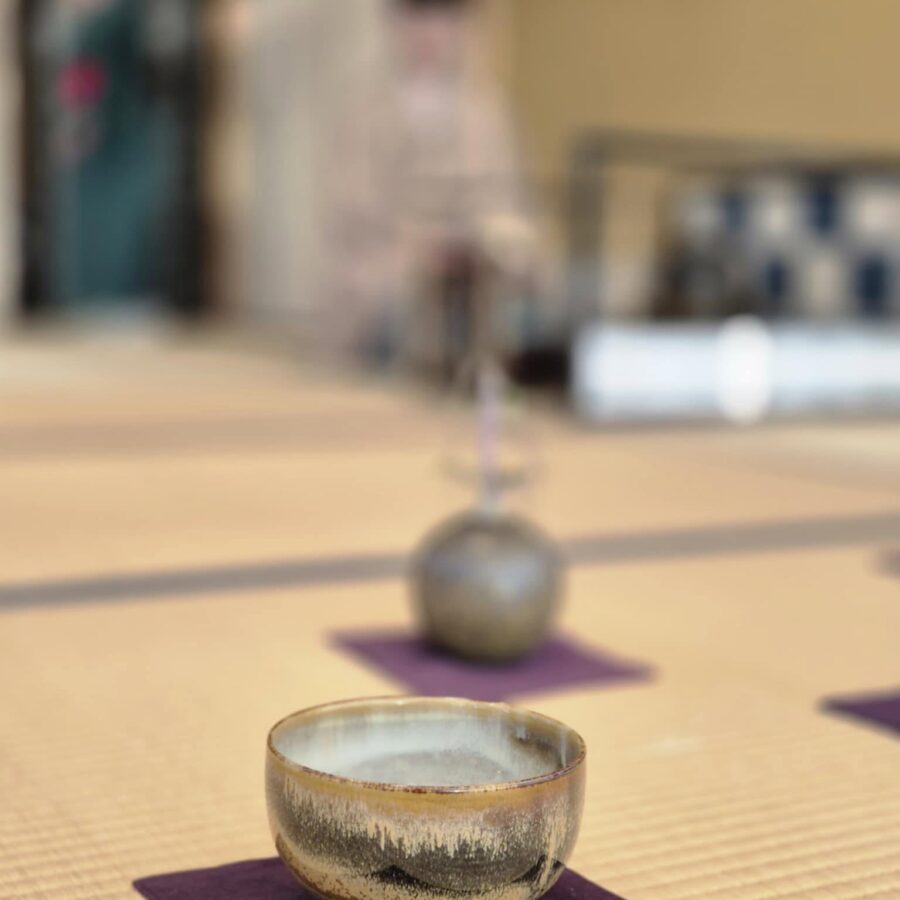
As the visit of Their Royal Highnesses was only confirmed after I had already arrived in France, I had not brought a tenmoku-dai. Nevertheless, I wanted to do everything possible within the circumstances. I therefore used brand-new fukusa, chasen, chakin, and tea bowl for the first guest.
For the following guests, I deliberately changed the chakin and chasen—although these, too, were new—and used the tea bowl that had initially been designated as the principal old Asahiyaki bowl only afterward.
Participants came as a combined group of students and family members from my three tea-study locations in Tokyo, Funabashi, and Kanozan, with additional support from our tea friends in Paris.
I would like to express my deepest gratitude to H.E. Ambassador Kanō, who honored me by entrusting me with this distinguished service, and to Grand Master Hōunsai Sen Genshitsu, UNESCO Goodwill Ambassador, for granting his approval.
My sincere thanks also go to the Permanent Delegation of Japan to UNESCO, which worked tirelessly to arrange the use of the tea room; the French office of the Franco-Japanese Association for the Way of Tea; the Urasenke headquarters and Tankōkai headquarters, which generously donated the tea equipment; and the Maison de la culture du Japon à Paris, which provided the space and facilitated its installation.