2026.09.26
Tokyo Tower Jūgoya Tea Gathering ”150th Tokyo Tower Tea Ceremony”
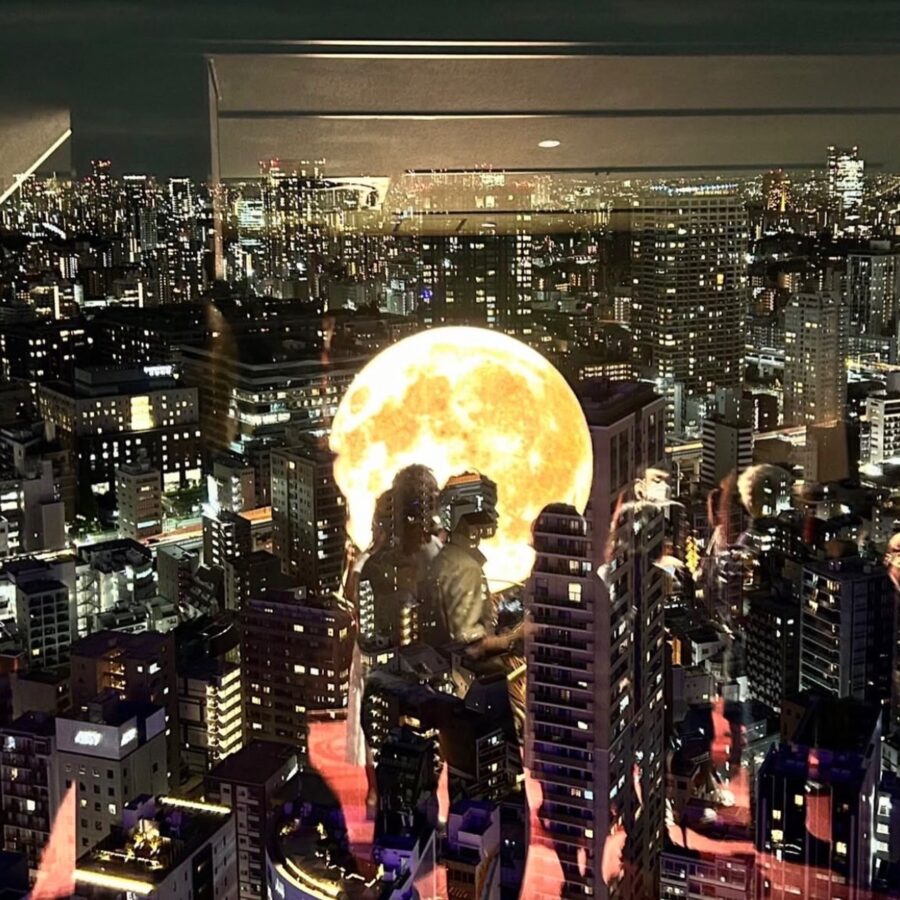
Last night, September 25, was the night of the Fifteenth Moon.
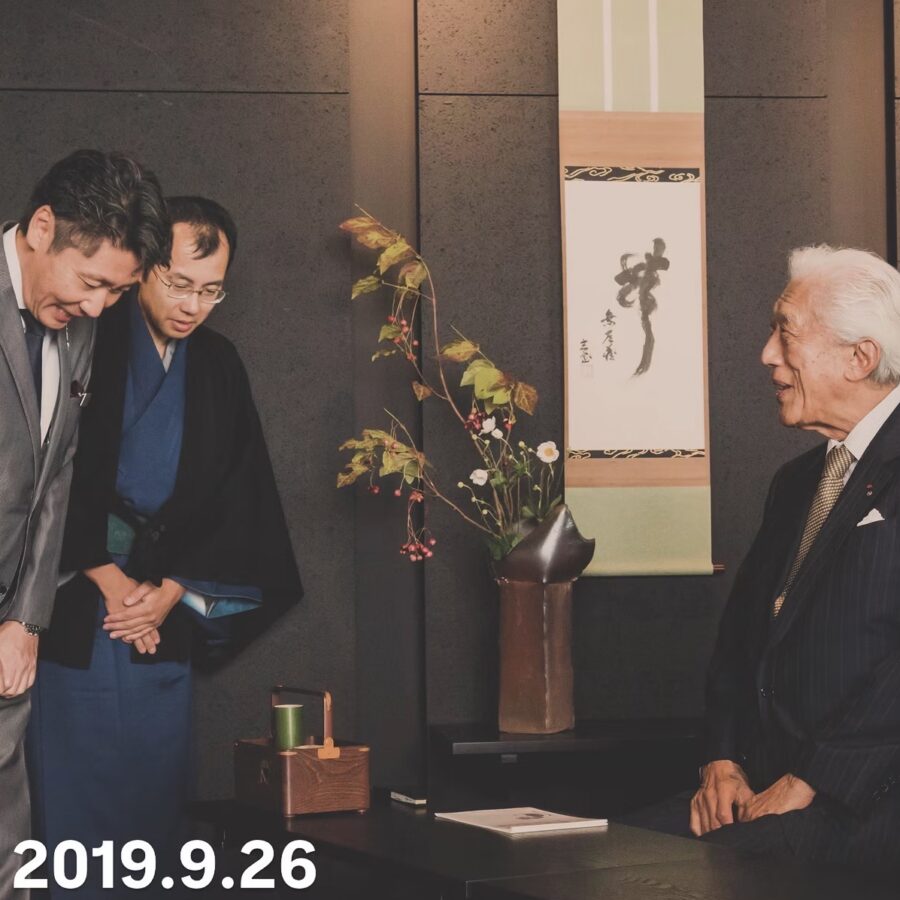
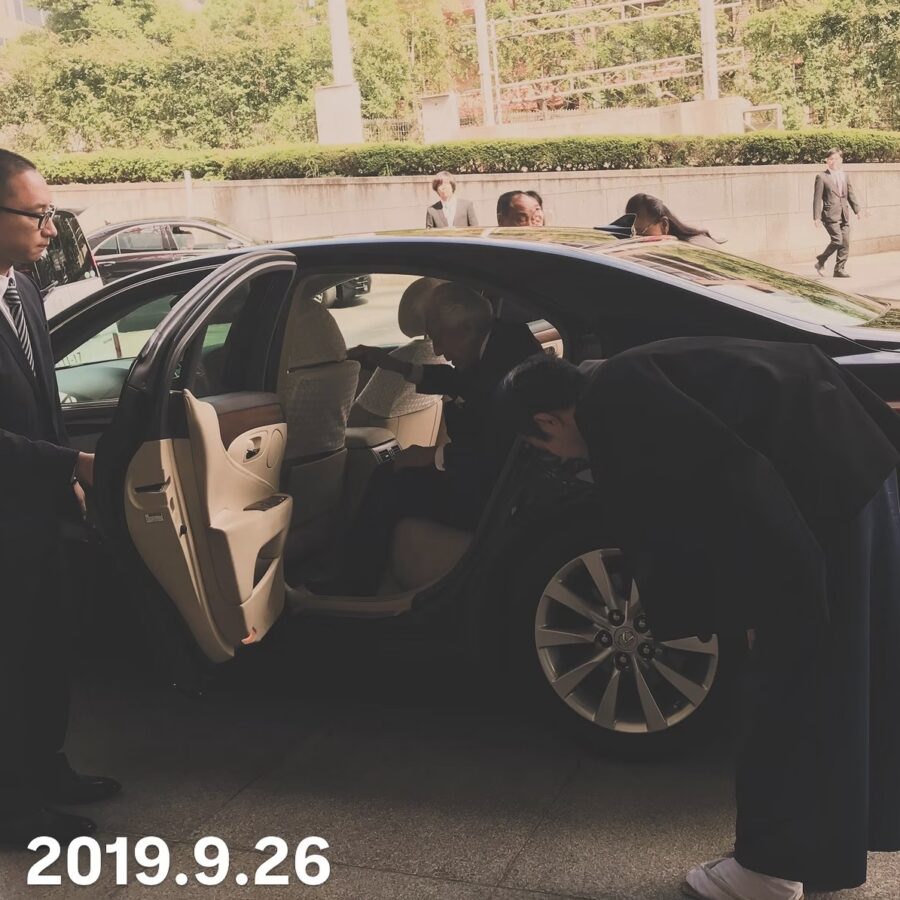
Seven years ago, on the morning of September 26, 2019, at 8:50 a.m., I had the great honor of welcoming Grand Master Hōunsai, the 15th Grand Master of the Urasenke school of tea, to the main entrance of Tokyo Tower. I then had the privilege of serving him a bowl of tea in the tea room “Musha-kyo” on the observation deck.
That moment marked the beginning of Tokyo Tower Asacha-no-yu.
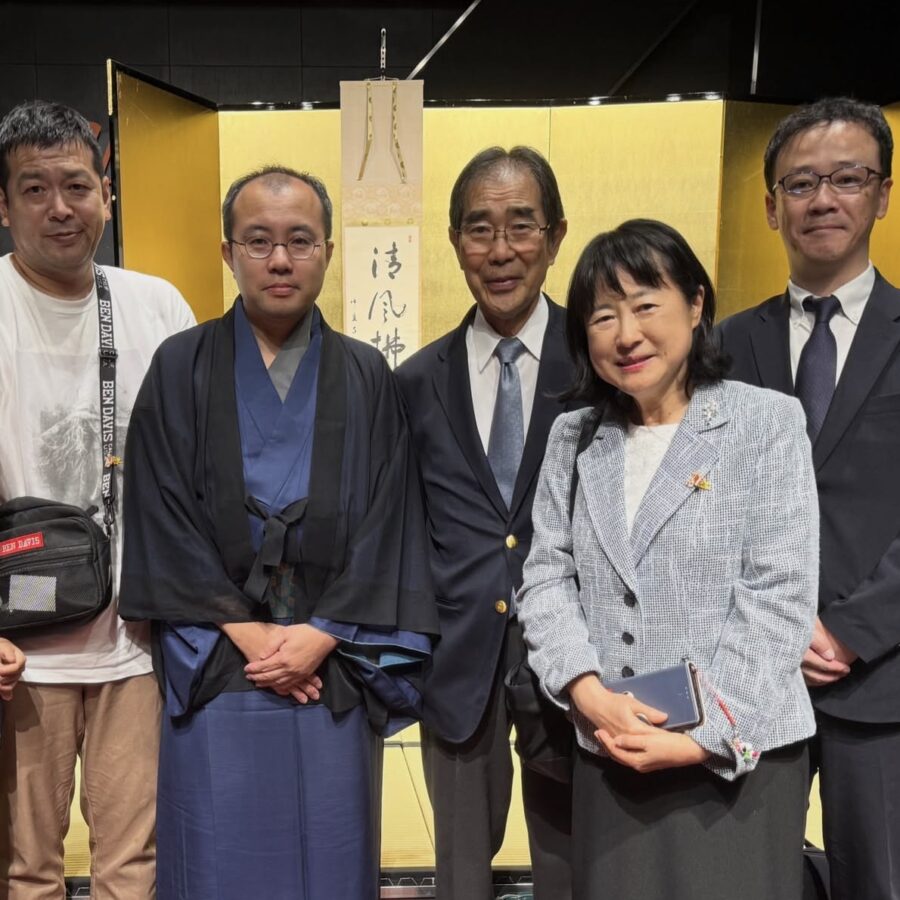
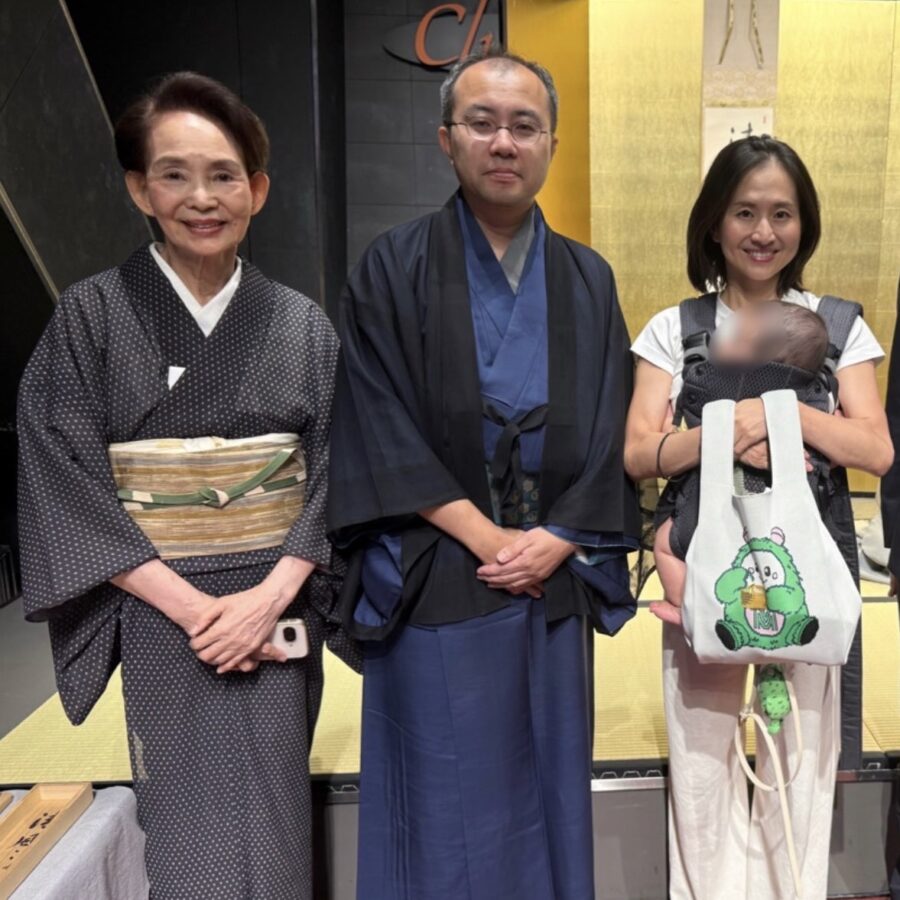
With my teacher, senior teachers who have guided me throughout my life in tea, His Lordship Mr. Kuroda, head of the former Kuroda family of Kururi Domain, many tea friends, and all the directors of our company gathered around me, that first tea gathering remains one of the highlights of my life in the way of tea.
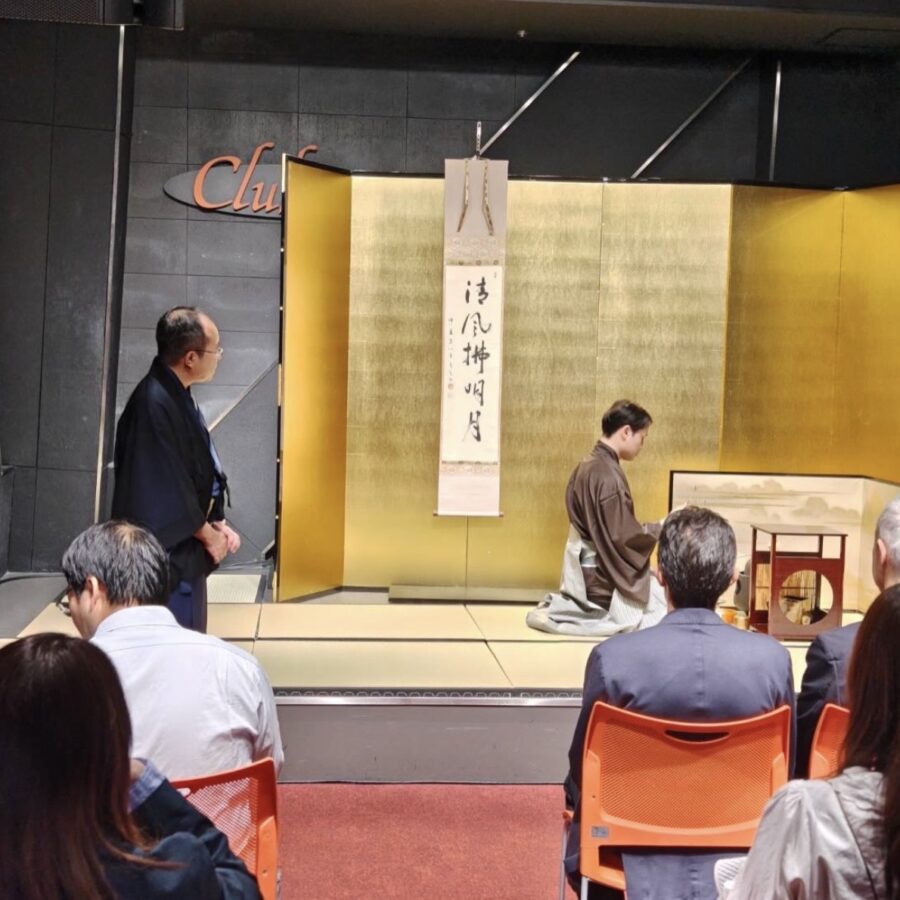
Last night was the 150th gathering.
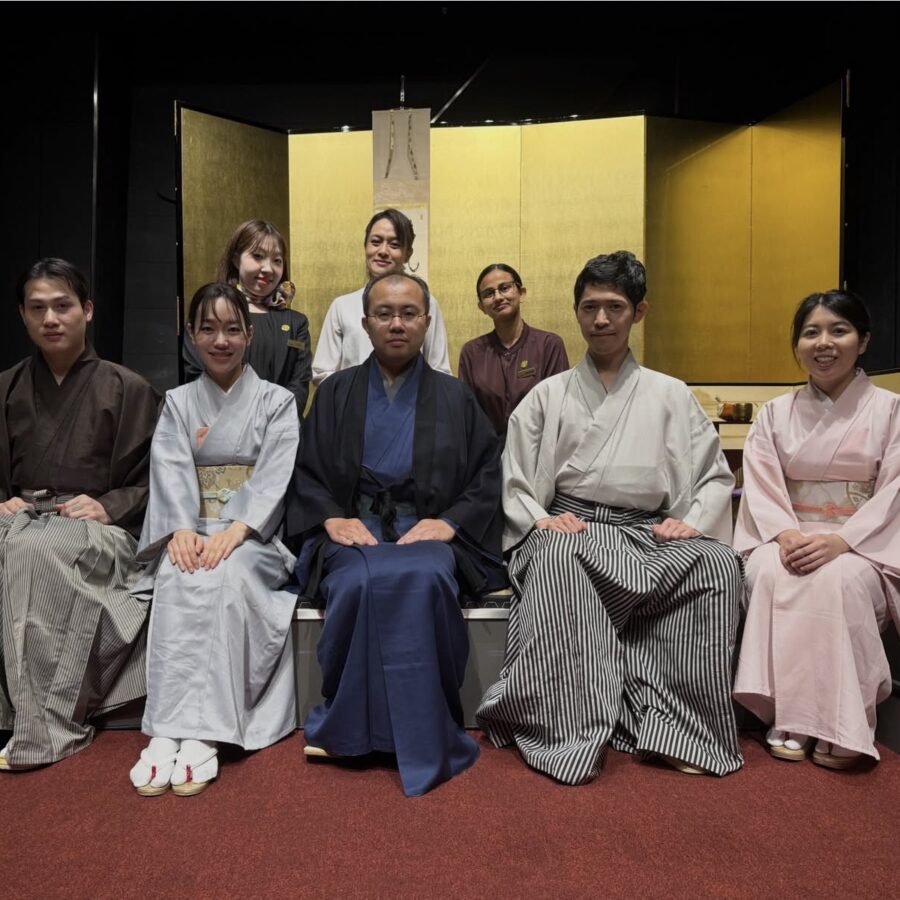
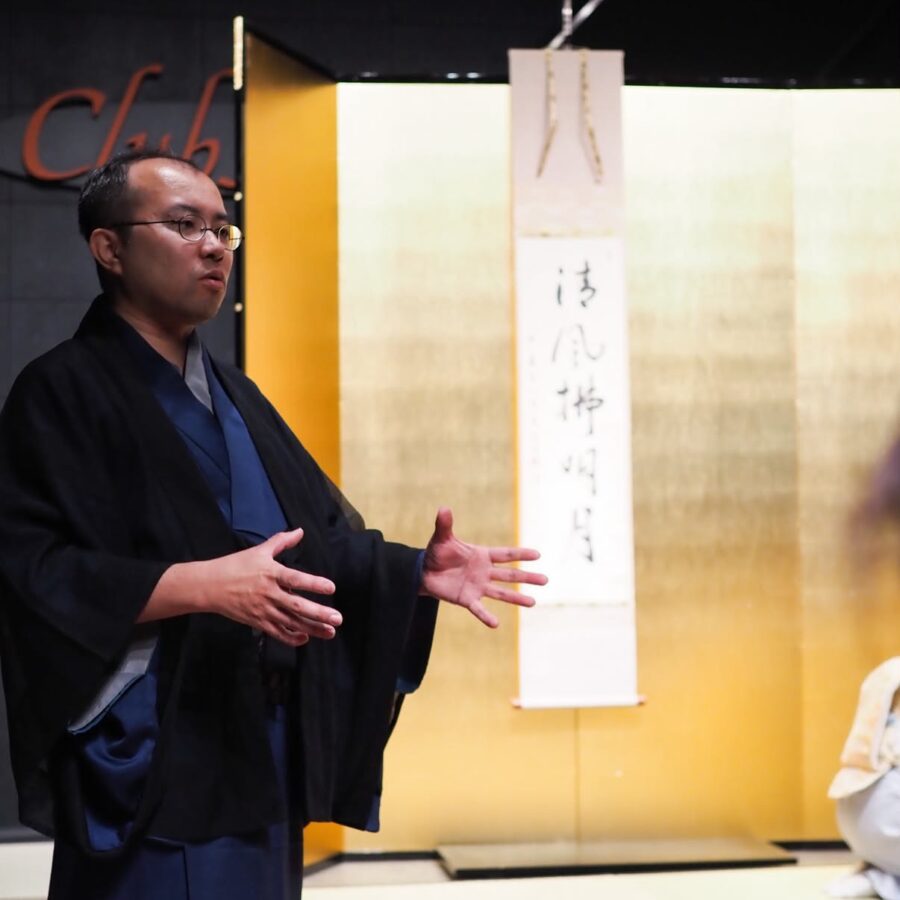
For the occasion, I wore the very same nagajuban and kaku-obi sash as that first morning, together with the jittoku robe that had been bestowed upon me.
There was, however, one thing I could not bring with me this time: the water from Kururi, which is now an area affected by disaster.
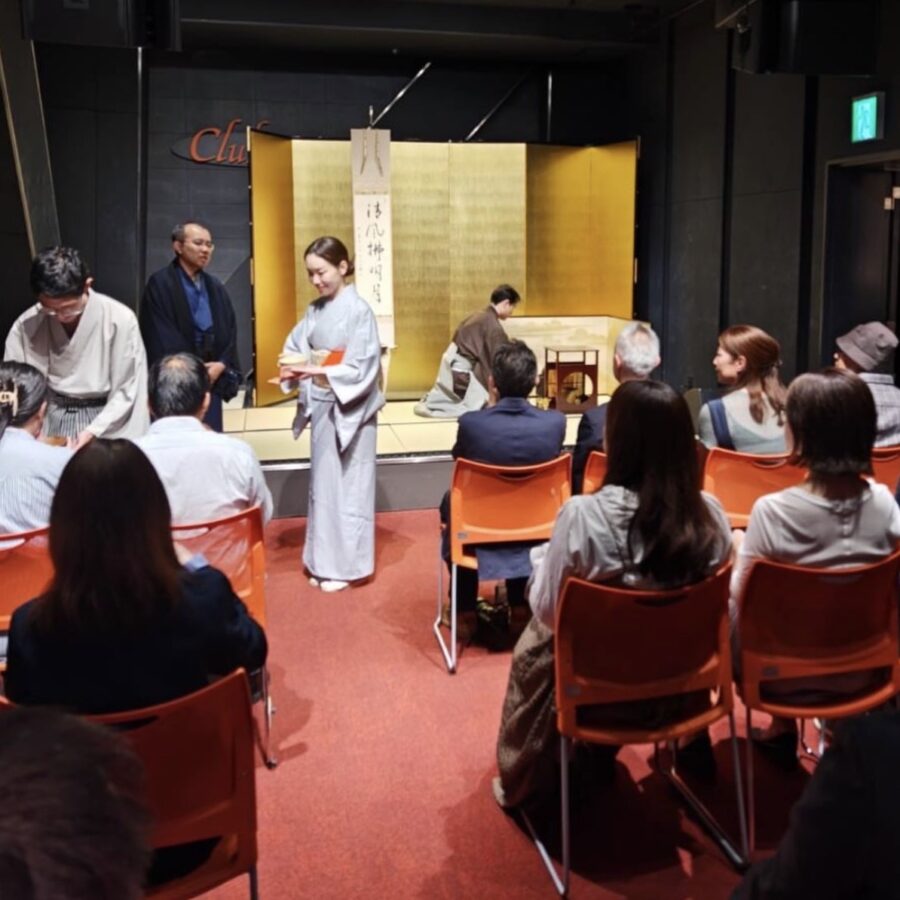
Over the course of the evening, I had the honor of serving tea to a total of 245 guests: distinguished guests who had honored us with their presence at the very beginning, those who have supported us throughout these 150 gatherings, and everyone who purchased a tea ticket and entered the tea room.
At the very first seating, we welcomed Sōshō Kobori, head of the Enshū school of tea, together with the Shifuku artist Mrs. Miura. At subsequent seatings, we were honored by the presence of Lord Kuroda, former lord of Kururi Domain; Lord and Lady Hotta, former lord and lady of Sakura Domain; and Lord Nabeshima and his family, former lords of Hasunoike Domain.
We were also honored by H.E. Ambassador Wang, Ambassador of Singapore to Japan; Minister Forrat-Jaime and the Cultural Counsellor of the French Embassy; Mrs. Hayashi, wife of a member of the House of Representatives; H.E. Ambassador Ōsawa, H.E. Ambassador Fujiwara, and Mrs. Watanabe, wife of Ambassador Watanabe, as well as Mrs. Kanō, wife of Ambassador Kanō, from the Ministry of Foreign Affairs.
We were also delighted to welcome Mr. and Mrs. Yamaya, former Minister Plenipotentiary of Japan to France; Mr. Kawamura, former Director of the Cultural Affairs Division at the Embassy of Japan in Thailand; former colleagues from my NHK days; former students who have since become colleagues and alumni of our company; and many students from each of my tea practice locations.
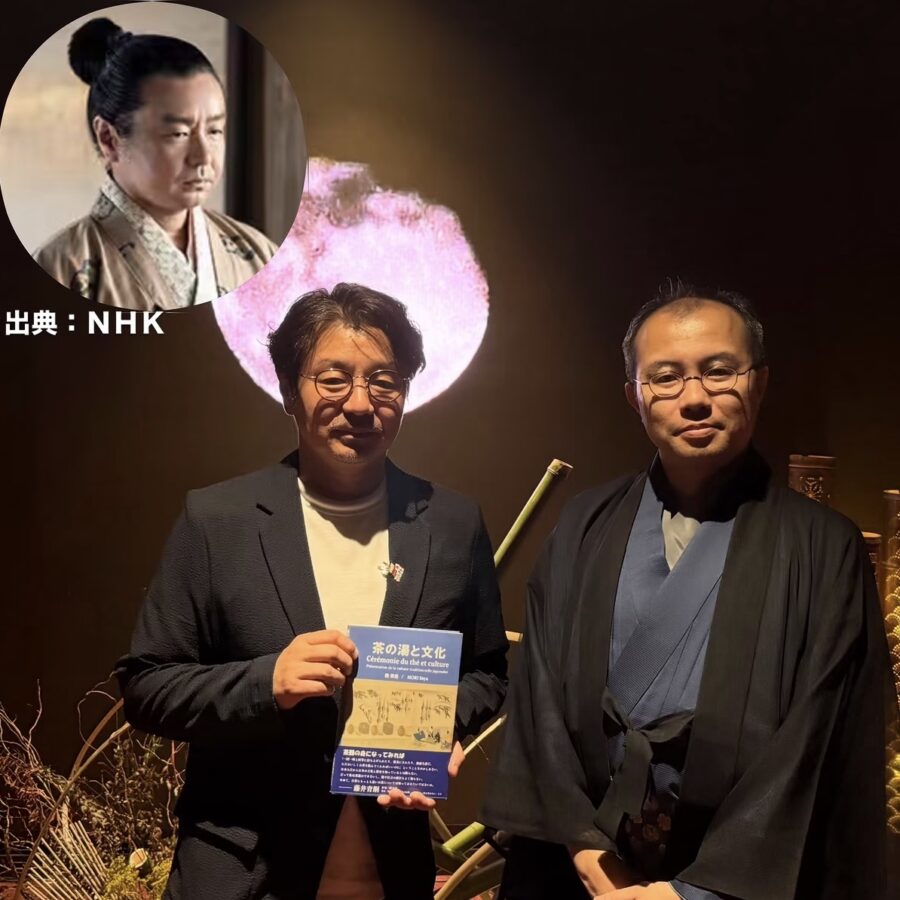
On a personal note, I was especially honored to welcome actor Kenji Mizuhashi [@k.mizuhashi], who played My ancestor Lord Mori Yoshinari in this year’s NHK historical drama, “The Toyotomi Brothers.”
Hearing him address Lord Yoshinari as “Yoshinari-kō” and listening to his stories from behind the scenes of the production was both nostalgic and deeply enjoyable.
I was also very fortunate that my teacher was able to attend and offer his guidance and supervision. Only recently, he had personally instructed one of my students, who is therefore his great-grandstudent. Thanks to his guidance, I was able to bring yesterday’s gathering to a safe and successful conclusion.
We began the first seating at 5:00 p.m. and held thirteen seatings in total. By the time it was over, my voice was completely hoarse, and it was nearly 9:00 p.m.
Ordinarily, serving thirteen seatings at this pace would be physically impossible.
But this is also one of the strengths of Tokyo Tower as a tourist destination.
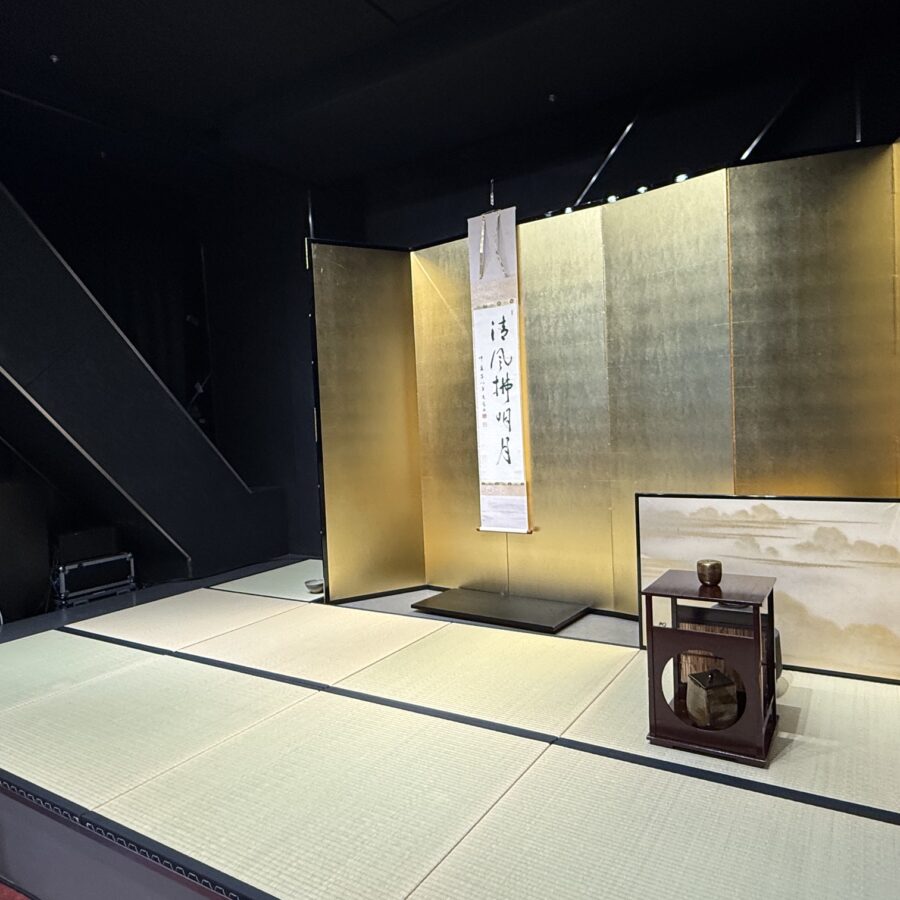
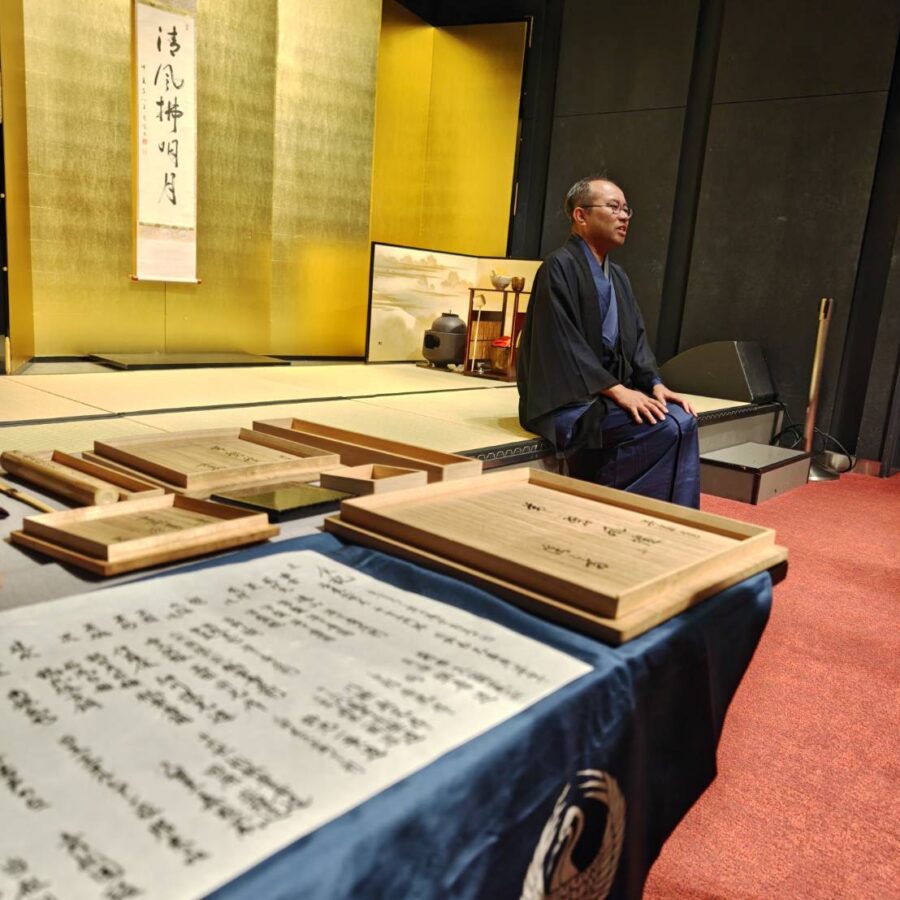
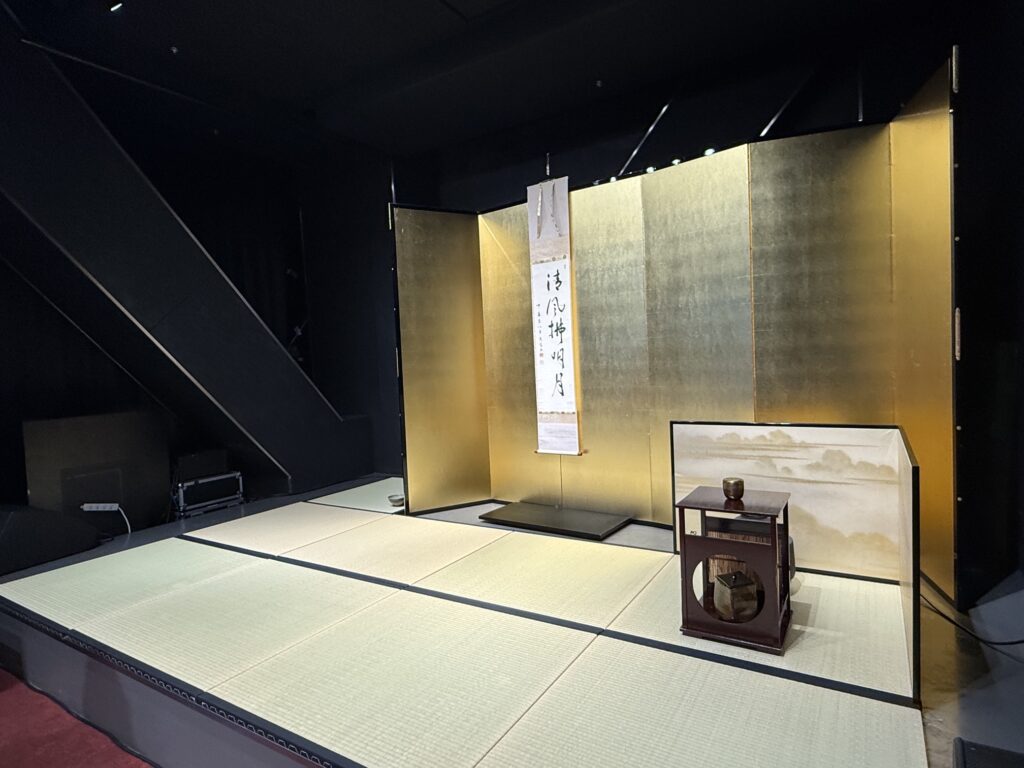
Unlike our morning gatherings, held when the observation deck is almost empty and quiet, the tea gathering at night took place in a much busier environment, in a multipurpose space on the observation deck.
Our priority was to allow as many people as possible to experience and enjoy tea. We therefore adapted the temae, drawing on the principles of sō-shō, and created an almost continuous flow of preparation and service. Rather than a formal tea gathering in the strictest sense, it became a lighter form of tea service.
There were, nevertheless, technically demanding moments: knowing exactly when to replace the chakin with a fresh one, and the subtle exchange by which the next practitioner, depending on whether they were a man or a woman, transferred the fukusa placed on the mizusashi to their own fukusa.
Is this a formally prescribed temae? Perhaps not.
But the ability to adapt may also be necessary when welcoming a large and diverse audience to a tea gathering of this kind.
That said, 245 guests was certainly an extraordinary number.
Perhaps that is something for us to reflect upon as we look toward the next gathering.
What touched me particularly was the presence of so many people who had contributed donations during our recent fundraising effort for Kumamoto.
I sometimes worry that, unintentionally, this tea gathering may have become a kind of platform for promoting that initiative. In truth, I merely passed the donations on to those responsible for delivering them, so I feel almost embarrassed when people kindly take the trouble to thank me personally.
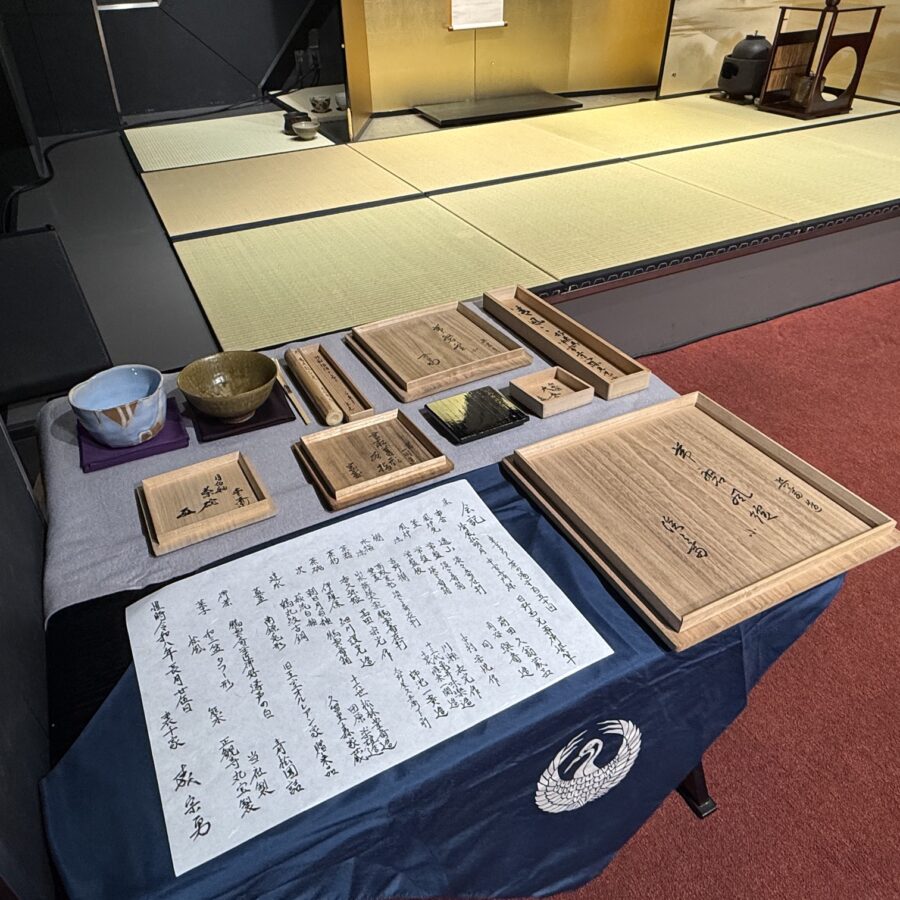
For the sweets served at the tea gathering, we chose Matsukaze from Shōkanji Maruhō in Kumamoto, accompanied by our own tower-shaped wasanbon sugar.
I first discovered this confection as a gift from one of the guests at Asacha-no-yu. Since then, it has never been absent from the sweets served at our practice gatherings, and it has become one of my personal favorites.
Asacha-no-yu is normally held on an observation deck emptied of visitors, allowing guests to enjoy a quiet moment of tea.
Holding it at night is therefore not easy.
But perhaps, with the full moon of the Fifteenth Night as our special treat, there is something wonderful about occasionally transforming the space into an evening festival of tea.
To everyone who joined us last night, I offer my heartfelt gratitude.