2017.10.20
A Tea Gathering at the Hyogo Prefecture Paris Office — 2017
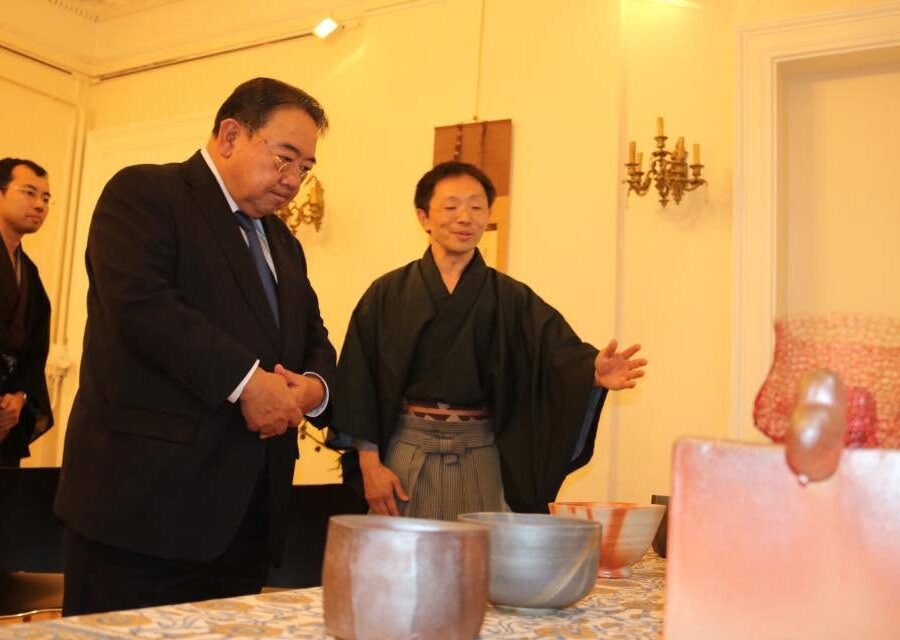
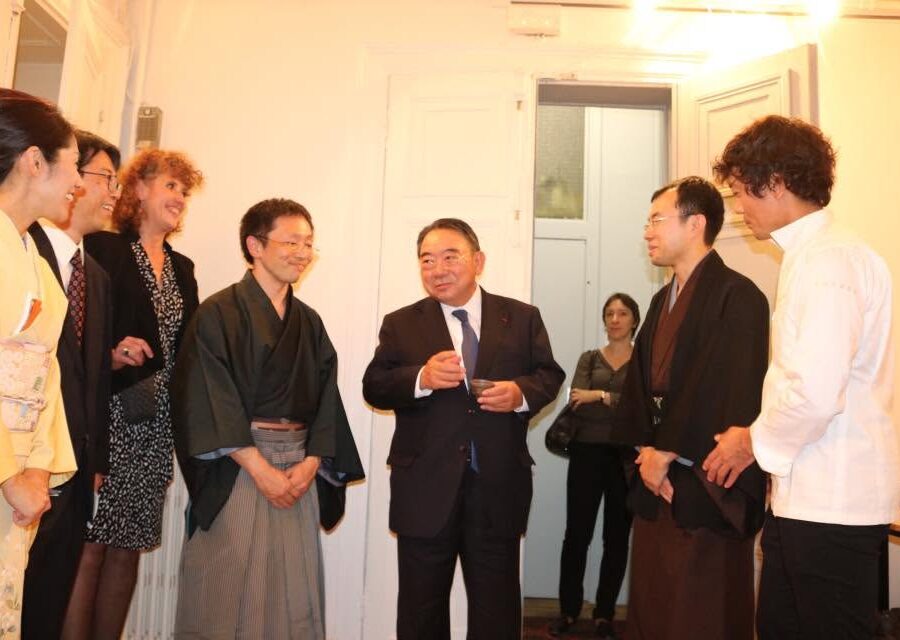
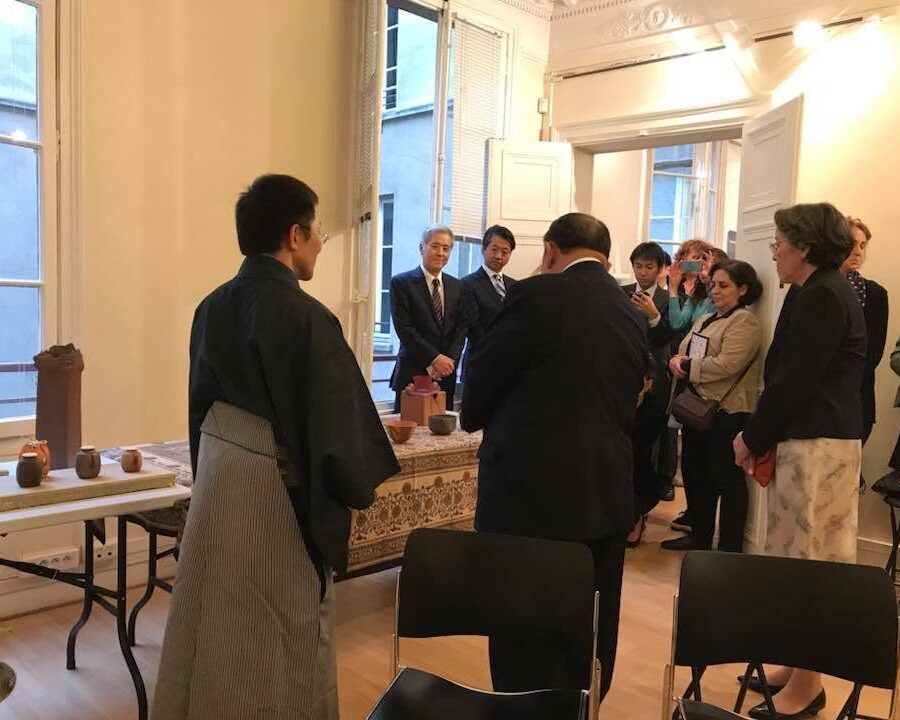
We held a private preview, or vernissage, of the exhibition “The World of Bizen Ware and the Way of Tea”, which opens to the public in Paris tomorrow, at the Hyogo Prefecture Paris Office.
This year’s theme was Bizen ware. Following previous presentations devoted to Kyō-yaki, Asahi-yaki, and Kamakura-bori, this marks the fourth occasion on which we have worked together with a distinguished Japanese craftsman.
This year’s featured artist was Hideaki Kimura, the 18th-generation master of the Kimura family, one of the great lineages of the historic Bizen Rokusei, the six hereditary families of Bizen potters.
The scale of this project has grown year by year, and among all the events on this year’s tour, this is by far the largest. In many respects, it represents the culmination of the work we have undertaken over the past seven years.
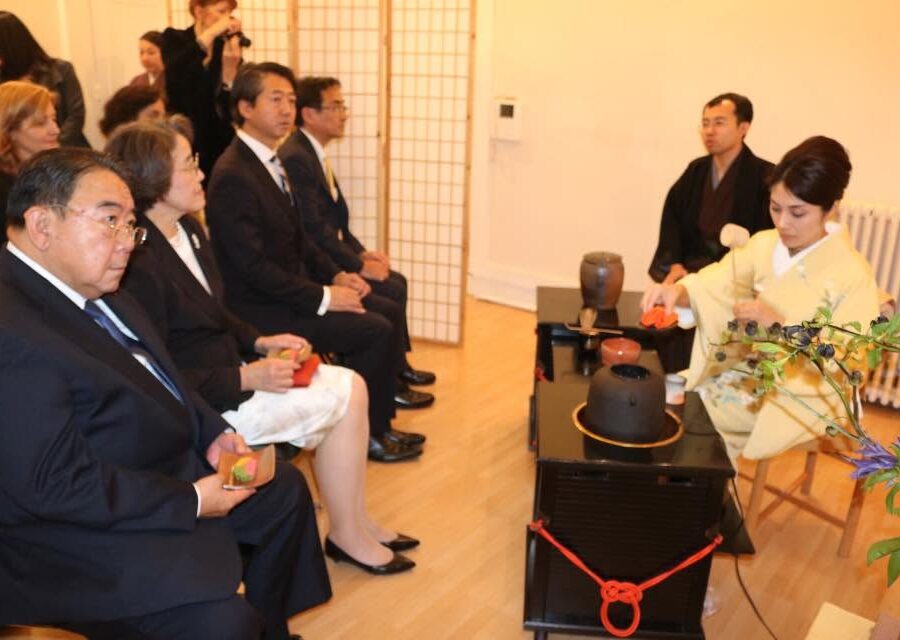
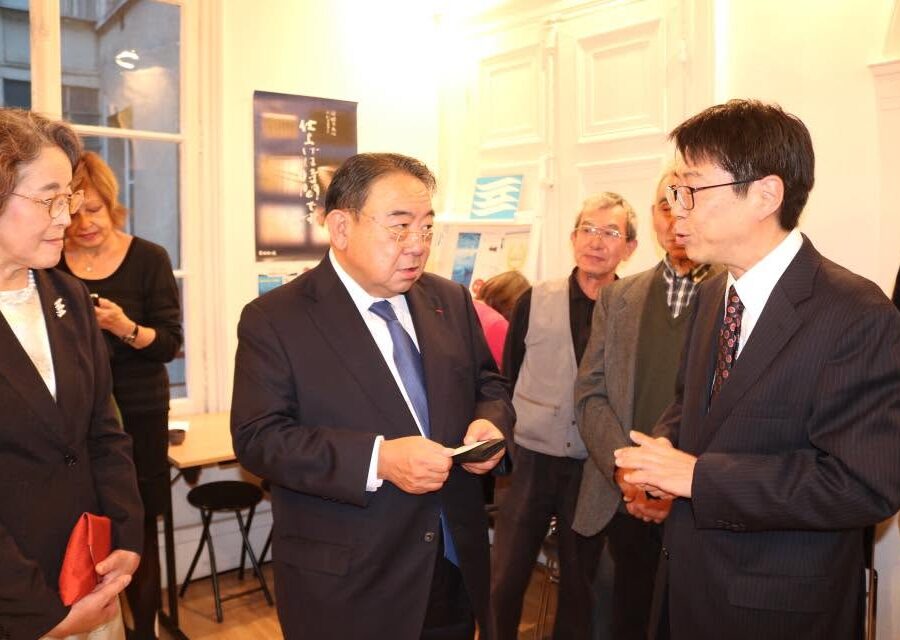
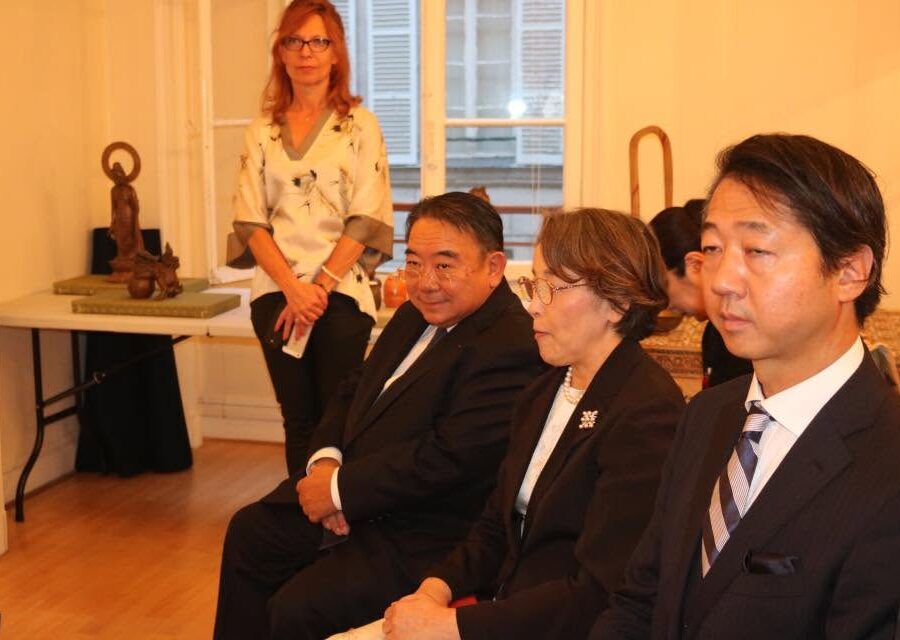
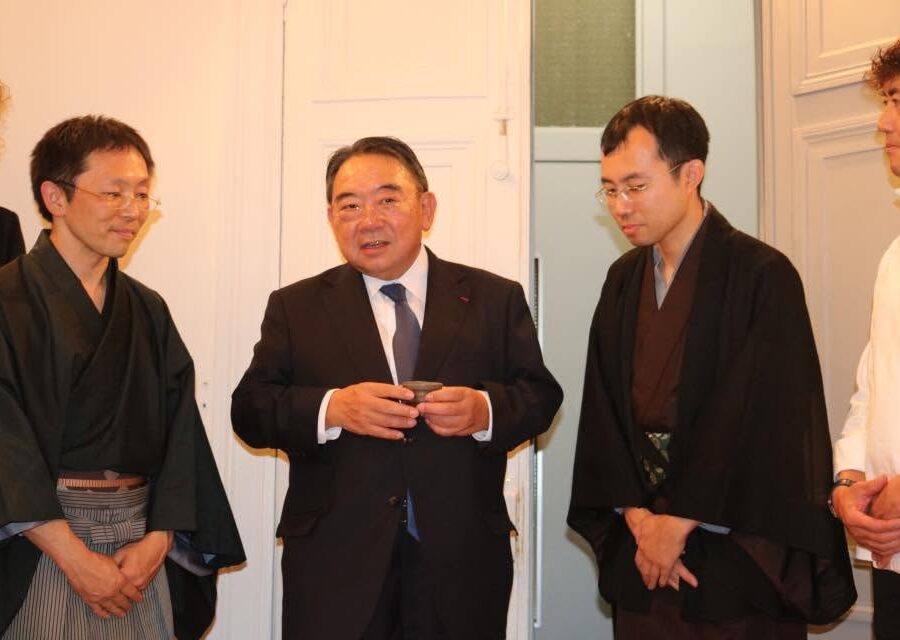
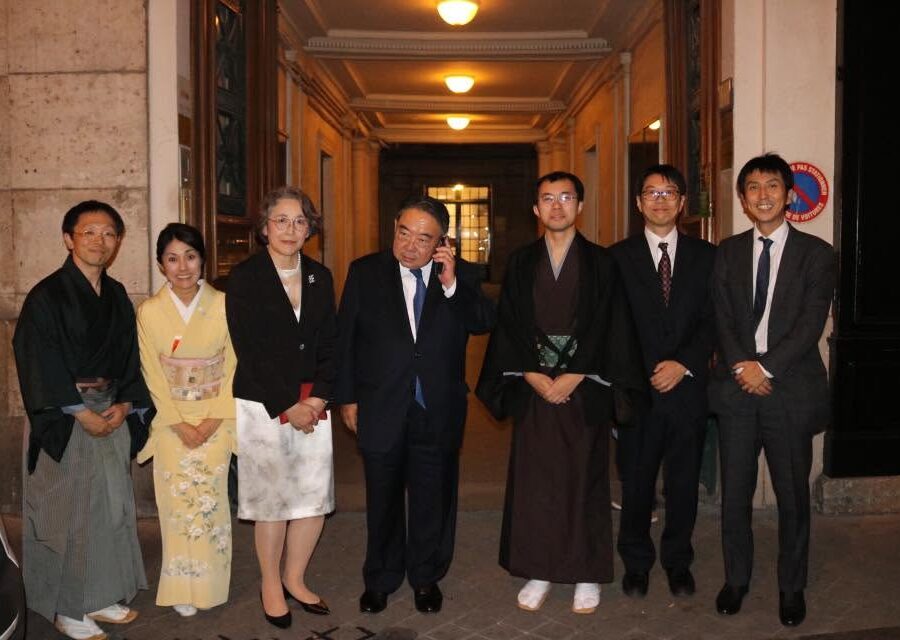
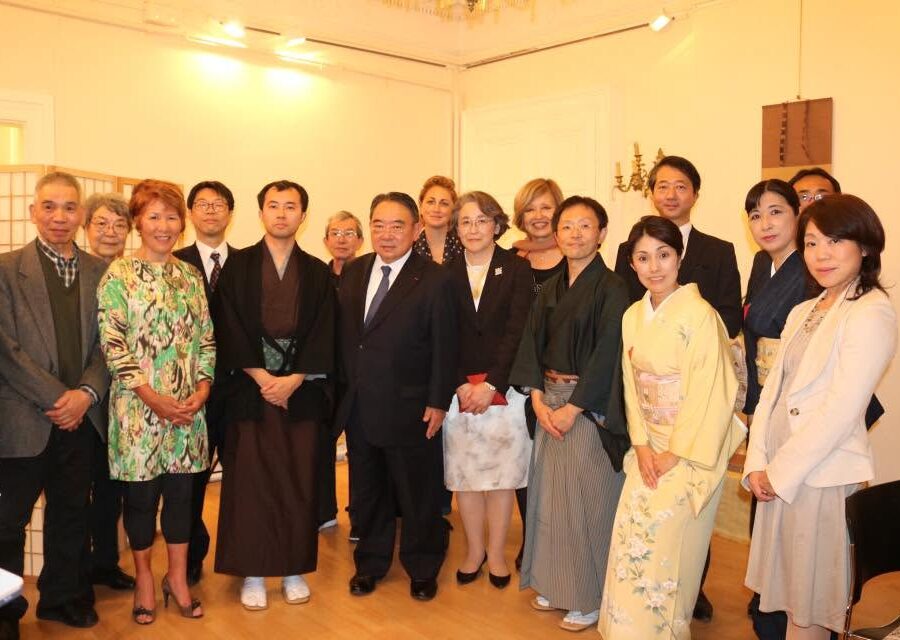
We were deeply honored to welcome as our guests of honor His Excellency Mr. Masato Kitera, Ambassador of Japan to France, and Mrs. Kitera. Despite our making the request at very short notice, His Excellency graciously offered warm and generous words of encouragement.
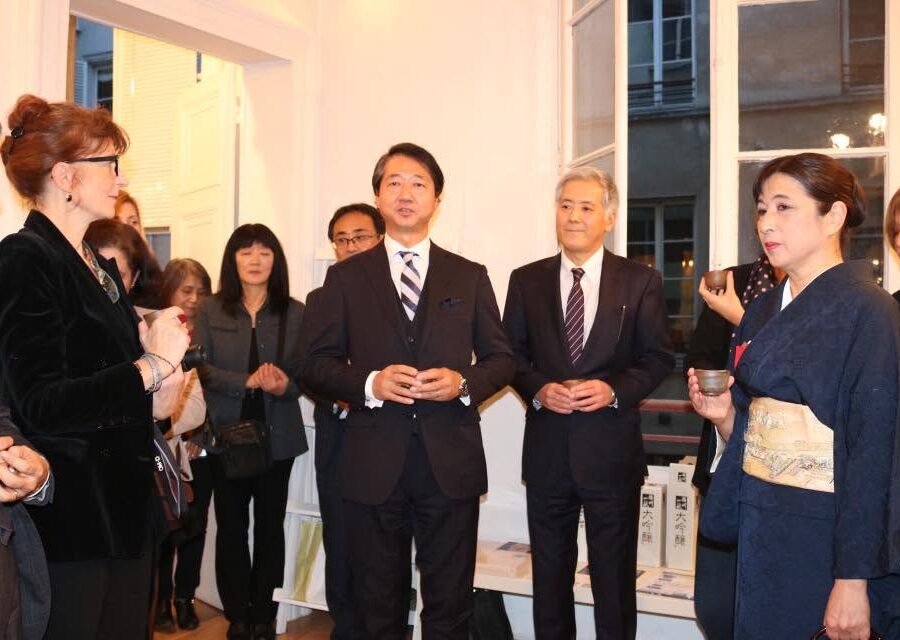
The toast was proposed by Mr. Kobayashi, President of the Paris Chamber of Commerce and Industry in Japan and General Manager of the Paris Branch of MUFG Bank.
From the Japan National Tourism Organization, we were honored by the presence of Ms. Nakayama, Director of the Paris Office. From NHK, with which I had the privilege of working closely in my previous position, we welcomed Mr. Takao, Director-General of NHK’s European General Bureau.
We were also delighted to welcome Mr. Sasaki, President of Toraya France, together with Mr. Ono, Chief Pâtissier, who have supported our activities year after year.
Several distinguished guests connected with the Louvre Museum and the Musée national des arts asiatiques – Guimet also joined us.
From the world of tea, Ms. Nobuko Sugai, Vice-President of the Urasenke Tankōkai Berlin Association, kindly traveled to Paris to be with us. It was a wonderful opportunity to strengthen the bonds of fellowship among practitioners of the same tea tradition. I am sincerely grateful that she came such a long way to support us.
Once again this year, the catering was generously provided by LeBonBento, with the support of Florian Mandy and Miki Shudo-Mandy.
The rice balls prepared with rice from the Tamba region and cooked with Japanese natural spring water were particularly well received, and brought great pleasure to the Japanese community living in France as well.
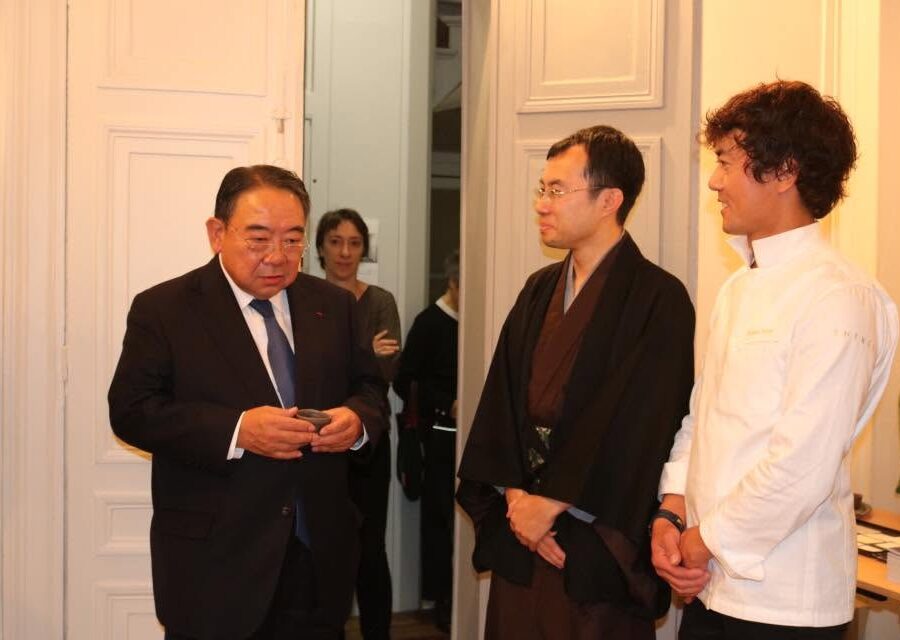
We were also delighted to have Chef Yasuhiro Takagi of ENTREE, with whom I previously had the opportunity to give lectures together in Grenoble. He presented a selection of cakes made with ingredients born in France, creating a wonderful marriage between French and Japanese culinary traditions.
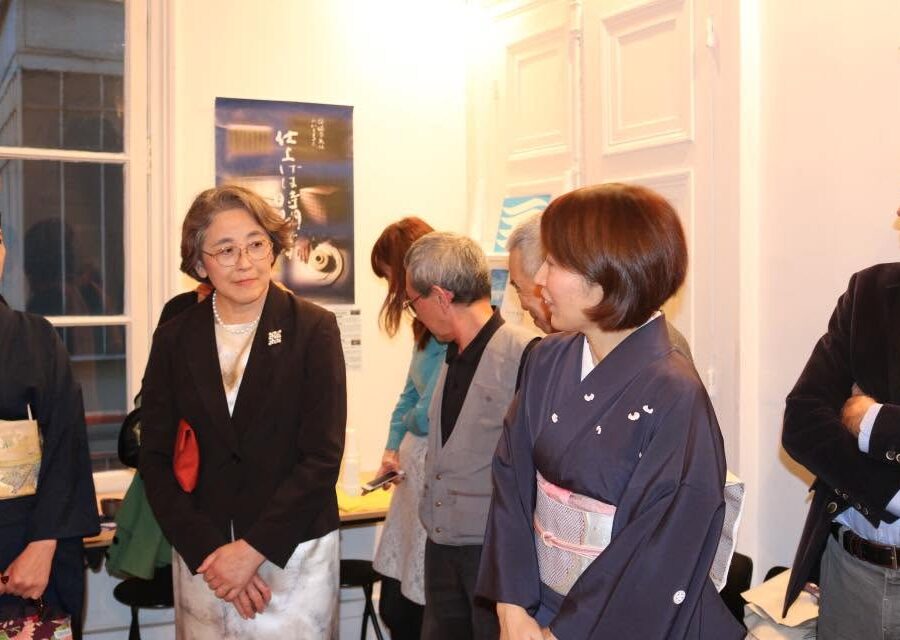
During the two-hour evening preview alone, 74 guests came to visit.
This was an even greater attendance than last year, and it means that next year we will have to give further thought to how we can make the best use of the available space.
The exhibition opens to the public today, and we have already received reservations from many visitors.
Two very intense days now lie ahead. We will do our utmost to take care of our health and energy so that we can welcome each and every visitor with warmth and hospitality.
The Tea Setting
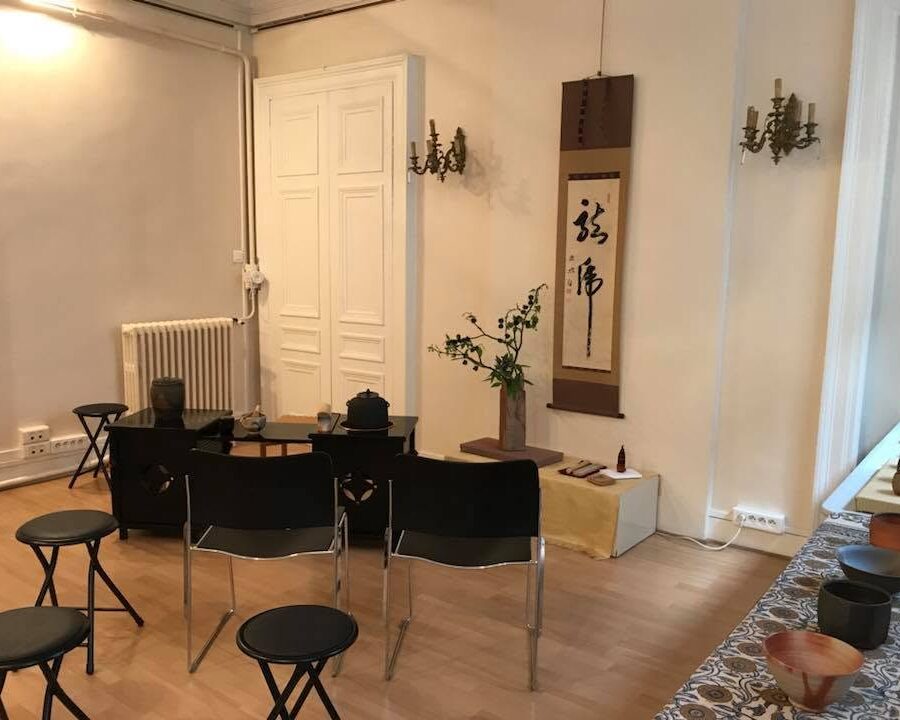
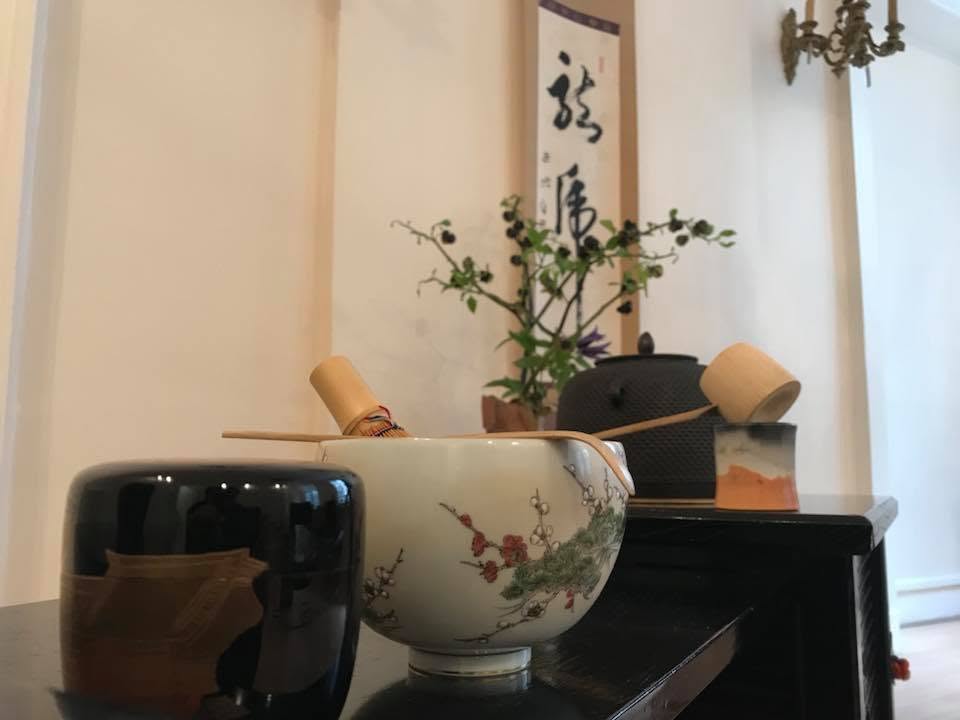
Due to the limitations of the space, this evening’s tea gathering was held in the ryūrei style, with guests seated at tables and chairs.
With November approaching—a month traditionally regarded in the world of tea as the New Year of Tea—I selected the utensils with this seasonal significance in mind.
I also chose objects associated with Hyogo Prefecture, reflecting the history and character of the venue.
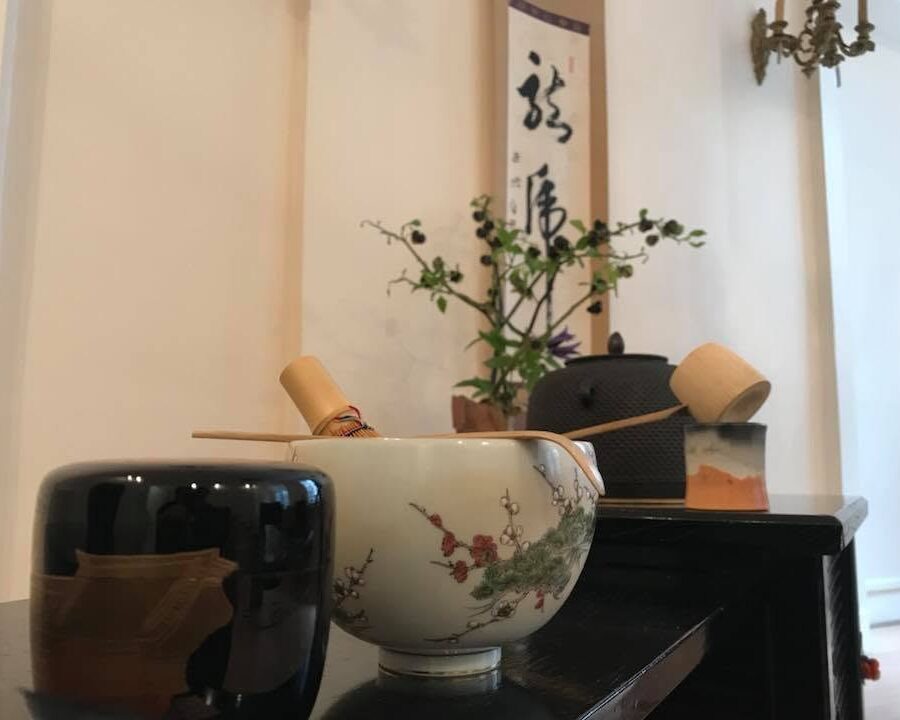
For the hanging scroll, I selected a work bearing the inscription “Ryūko” (Dragon and Tiger) by Mori Tadaakira, Lord of the Ako Domain and a member of another branch of my ancestral Mori family.
At the Urasenke headquarters, a similar work by Sen no Sōtan is sometimes displayed during the first tea gathering of the New Year.
The dragon and tiger represent two of the most powerful creatures in the traditional East Asian imagination. Their pairing has long carried an apotropaic meaning, protecting against evil and misfortune. It also symbolizes the idea of great masters challenging and inspiring one another as they each pursue mastery of their respective paths.
For a gathering centered on encounters between people, I chose this scroll with the hope that we, too, might inspire one another and strive together toward excellence.
Lord Mori Tadaakira of Ako died at a young age, and only a very small number of his works are known to survive. Four are currently known, including works preserved on deposit at the Ako City Museum of History.
The flower arrangement featured black husk cherries (kuro-hōzuki), locally grown in France. They were selected and arranged by Yuko Takaoka (Sōyū), a Urasenke practitioner in Paris, who has also been supporting this project.
For the incense container, I chose one shaped like a shō, the traditional Japanese mouth organ.
In French, a shō is associated with the word “orgue,” or organ. This reminded me of the pipe organ, which was the original purpose of my first journey to France twenty years ago. For that reason, I chose this particular incense container.
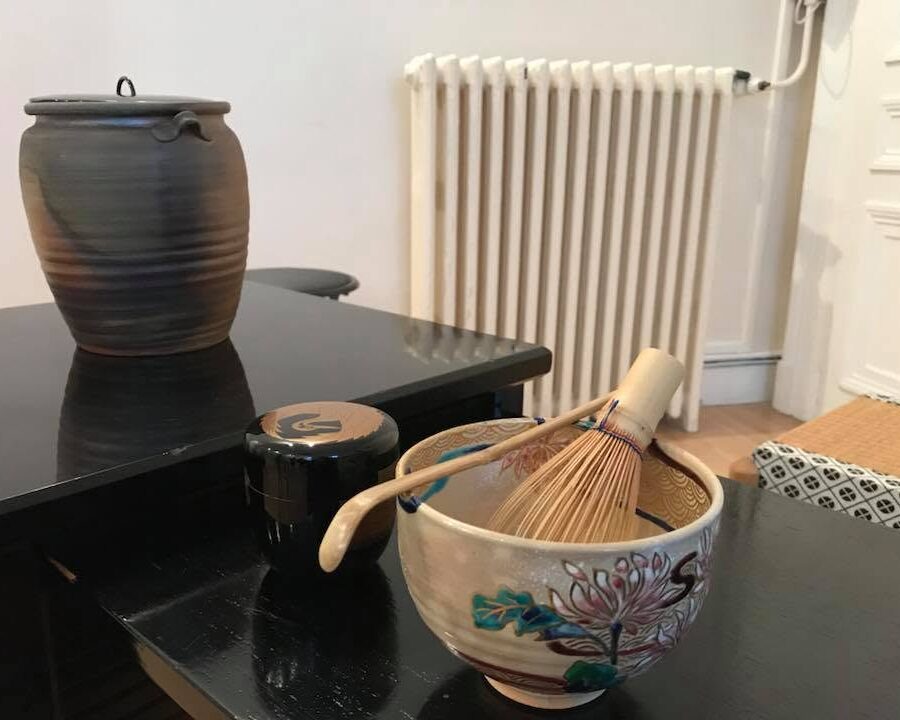
The Tea Utensils
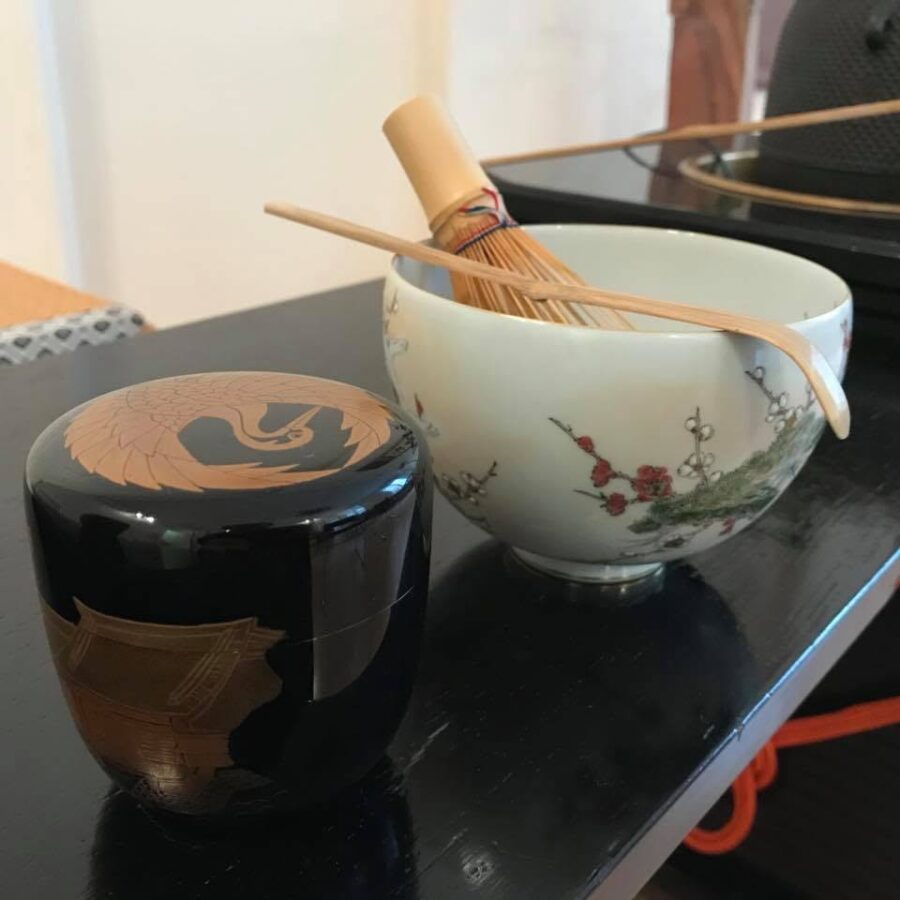
The tea bowls included a red tea bowl by Ogawa Chōraku I, a polychrome Asahi ware bowl created jointly by Yusuke Matsubayashi and Shinryū Sugita, and a Kutani ware tea bowl by Ruri Takeuchi.
The tea scoop was made by Taisen Rōshi, a Rinzai Zen master of Hekiganzan Shōhō-ji in France, and bears the name “Silk City.”
It was created to commemorate the sister-city relationship between Lyon and Tomioka City, both historically associated with the silk industry.
The natsume tea caddy depicts the jinya, or fortified administrative residence, of the Mikazuki Domain in Banshū. Prominently displayed on its lid is the Tsurumaru crest of the Mori family, Lords of the Mikazuki Domain.
The lid rest is a piece of Aioi Unka-yaki, one of the representative ceramic traditions of Hyogo Prefecture.
For the kensui, the waste-water container, I brought out a karakane bronze vessel bearing the Tsurumaru crest, which has been handed down within my own family, the Mori family, hereditary senior retainers of the Kururi Domain.
Thus, this tea gathering brought together historical materials from three branches of the Mori family:
the Mori family, Lords of the Ako Domain;
the Mori family, Lords of the Mikazuki Domain;
and the Mori family, hereditary senior retainers of the Kururi Domain.