2024.11.13
Lectures on the Way of Tea at Université Grenoble Alpes 2024
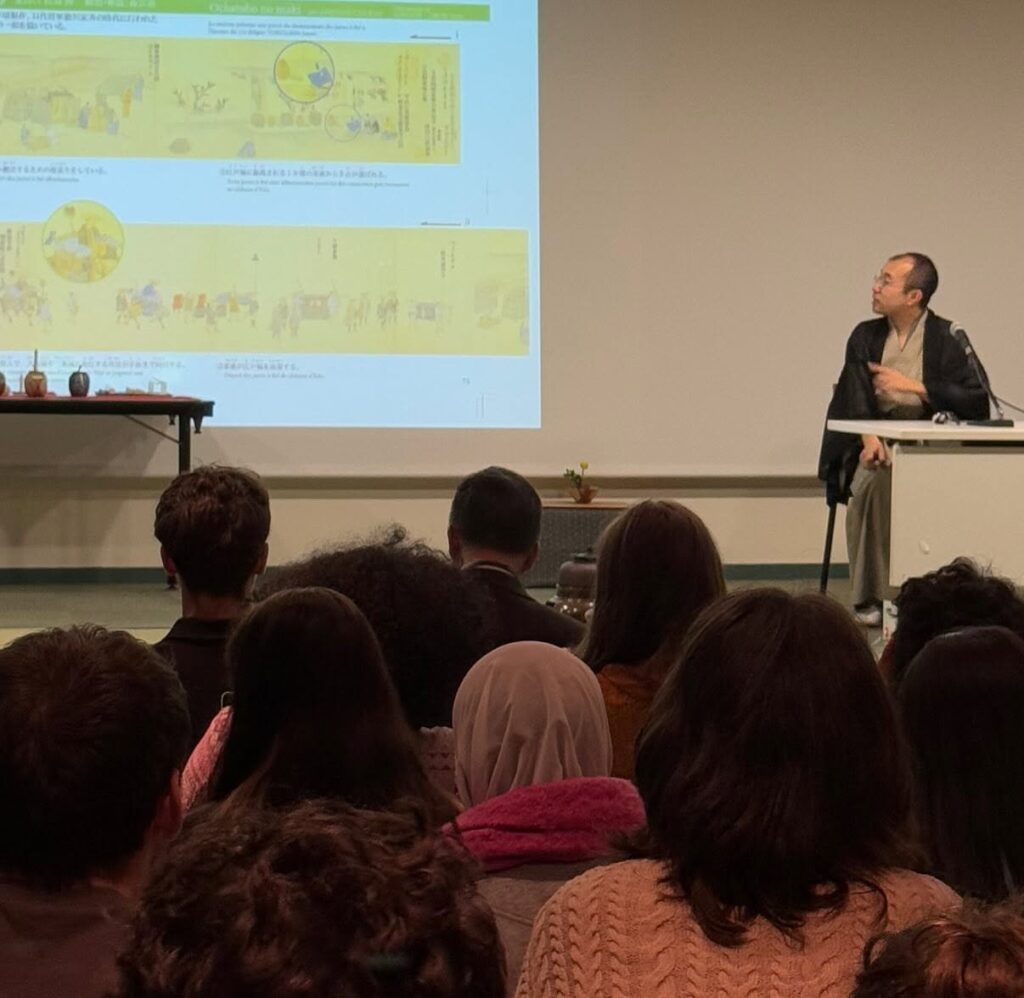
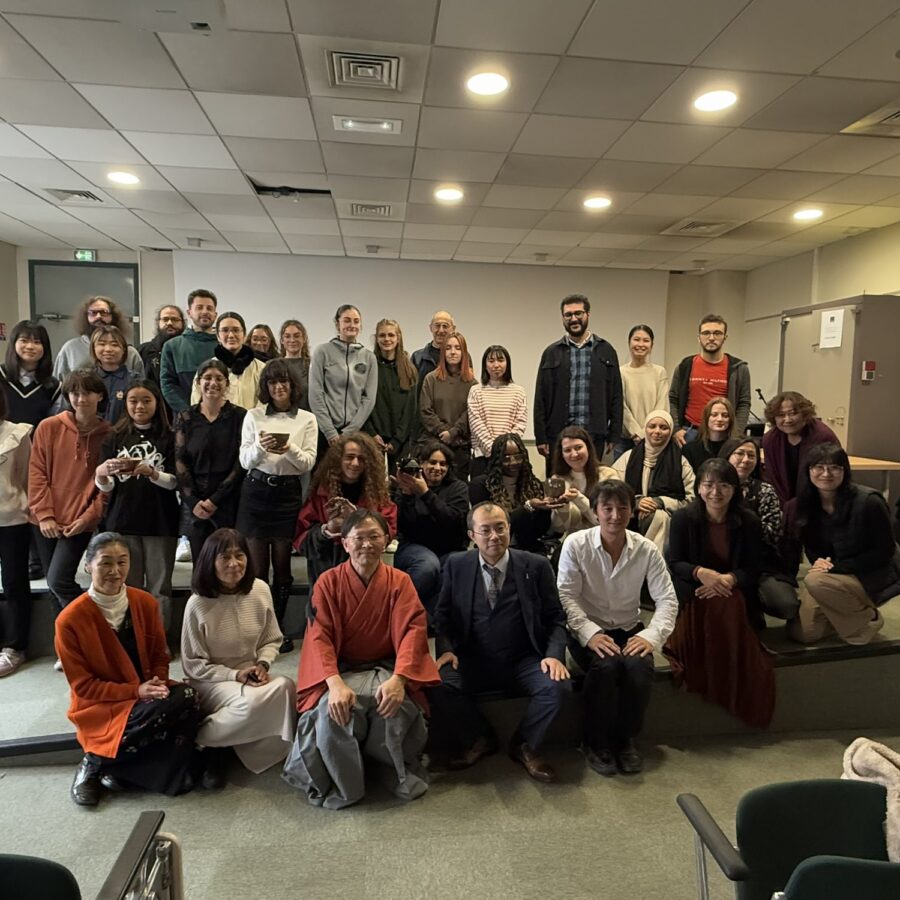
On November 12 and 13, I gave my seventh lecture on the Way of Tea and Japanese traditional crafts at Université Grenoble Alpes, marking the tenth year since I first began teaching there.
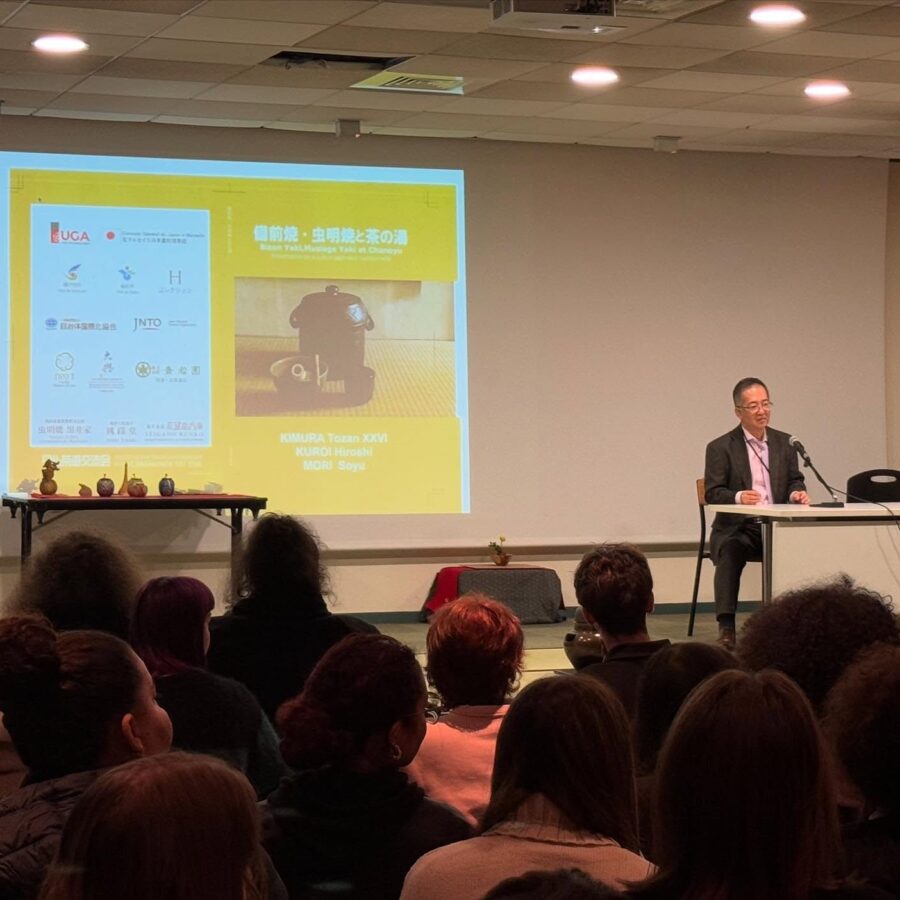
For this year’s exhibition catalogue, we were honored to receive contributions from Consul General Kitagawa of Marseille, President Lagnéc of Université Grenoble Alpes, and several other distinguished contributors. At the opening of the first lecture, we were also honored by the presence of Consul Ogata of the Consular Office in Lyon.
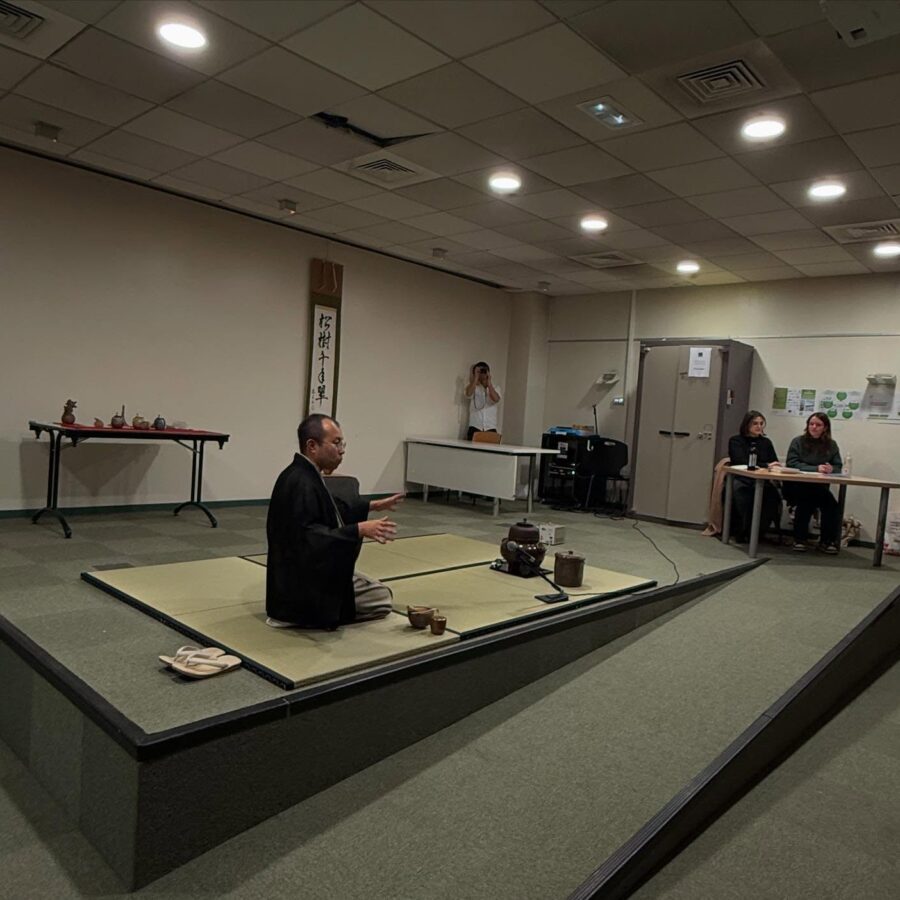
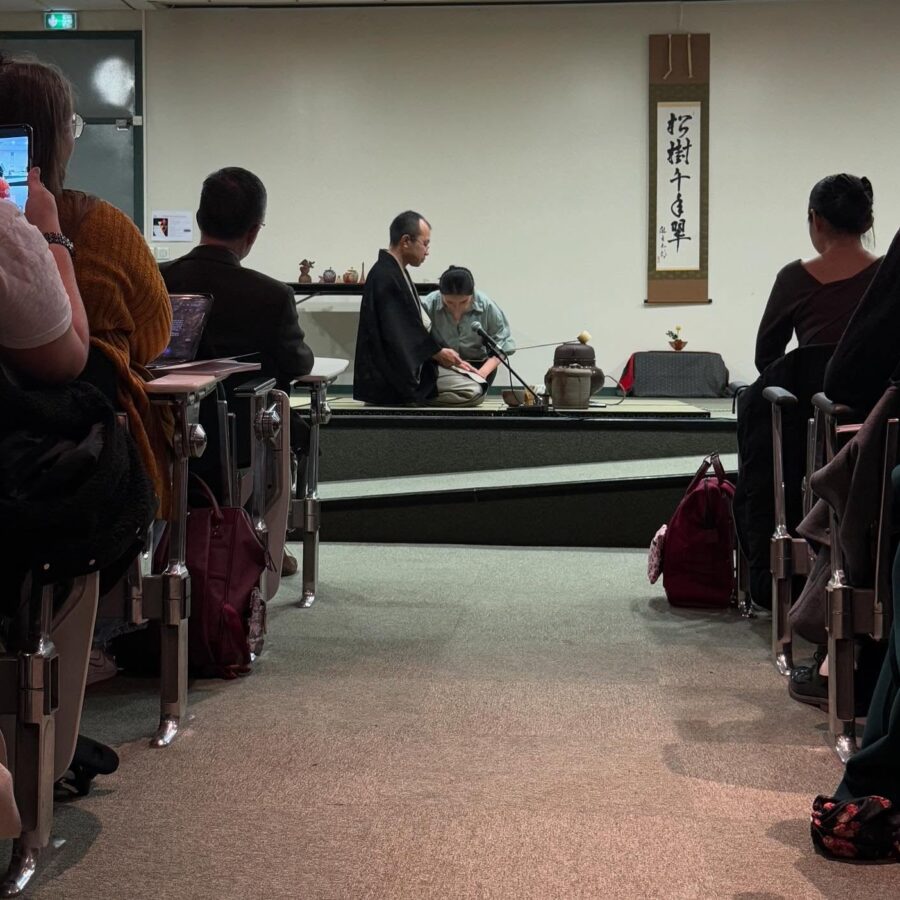
The hanging scroll chosen for this year was “Shōju Sennen no Midori” — 松樹千年翠, “The pine remains green for a thousand years,” specially written for me by Mr. Taro Aso, former Prime Minister of Japan.
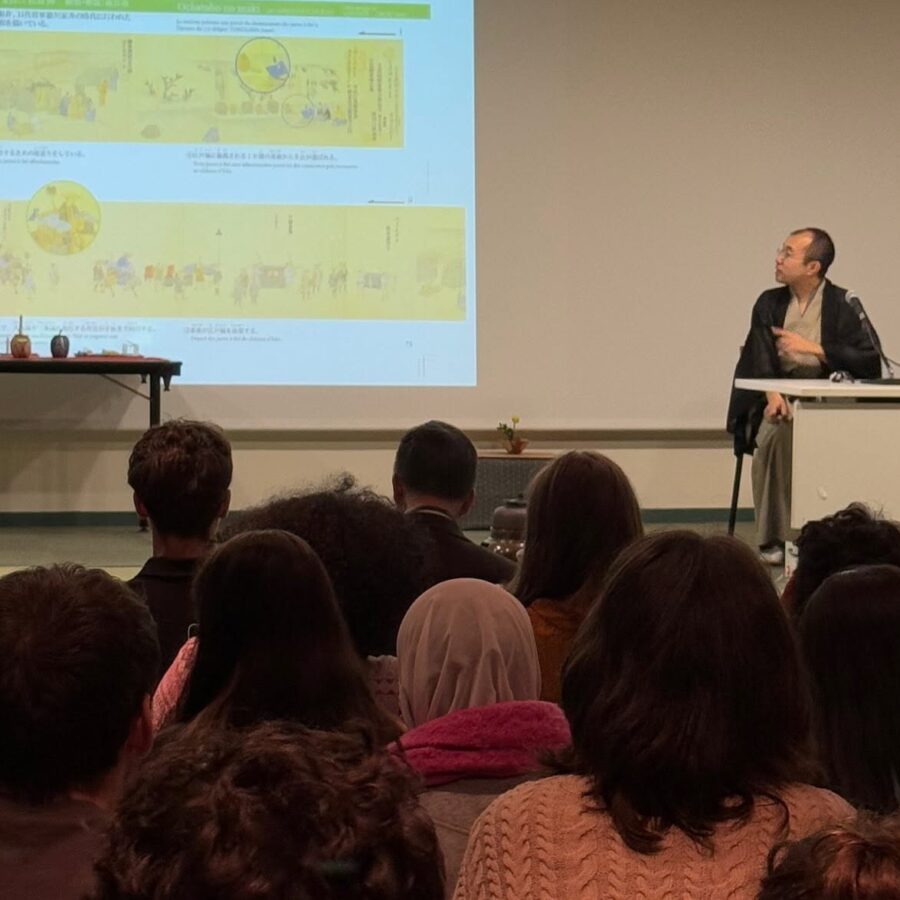
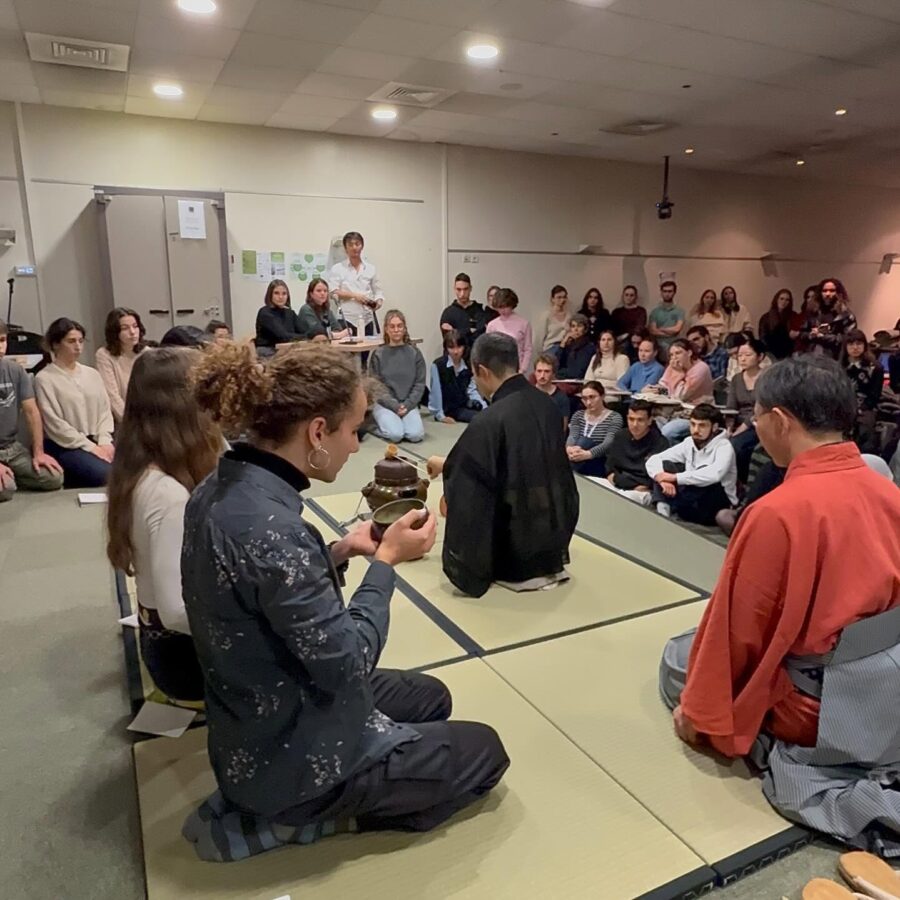
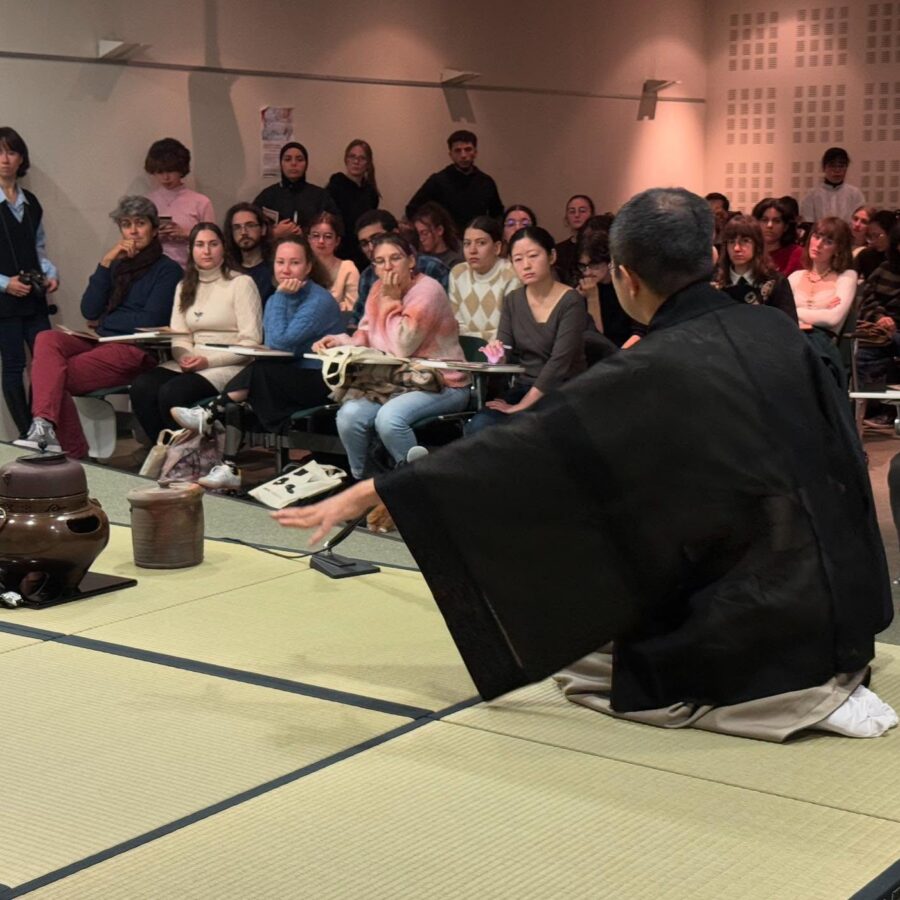
On November 12, the first day and the first lecture, more than 100 students attended, with some having to stand. Before this large audience, I explained the origins of the Way of Tea and the meaning behind the various movements of temae, the preparation of tea.
Although this is a lecture I have given repeatedly over the years, there is simply not enough time to actually teach the students how to perform temae. Usually, I focus on the Four Principles of Tea—Wa, Kei, Sei and Jaku, or harmony, respect, purity and tranquility—and on Rikyū’s Seven Rules, before demonstrating the preparation of tea and allowing the students to experience matcha and traditional Japanese sweets.
This time, however, I decided to change things slightly.
It was November, after all—the season in Japan when the hearth is opened for the winter and the year’s newly finished matcha is traditionally opened and enjoyed.
So I explained to the students that, just as wine has Beaujolais Nouveau, matcha has its own equivalent—what I jokingly called “Matcha Nouveau.”
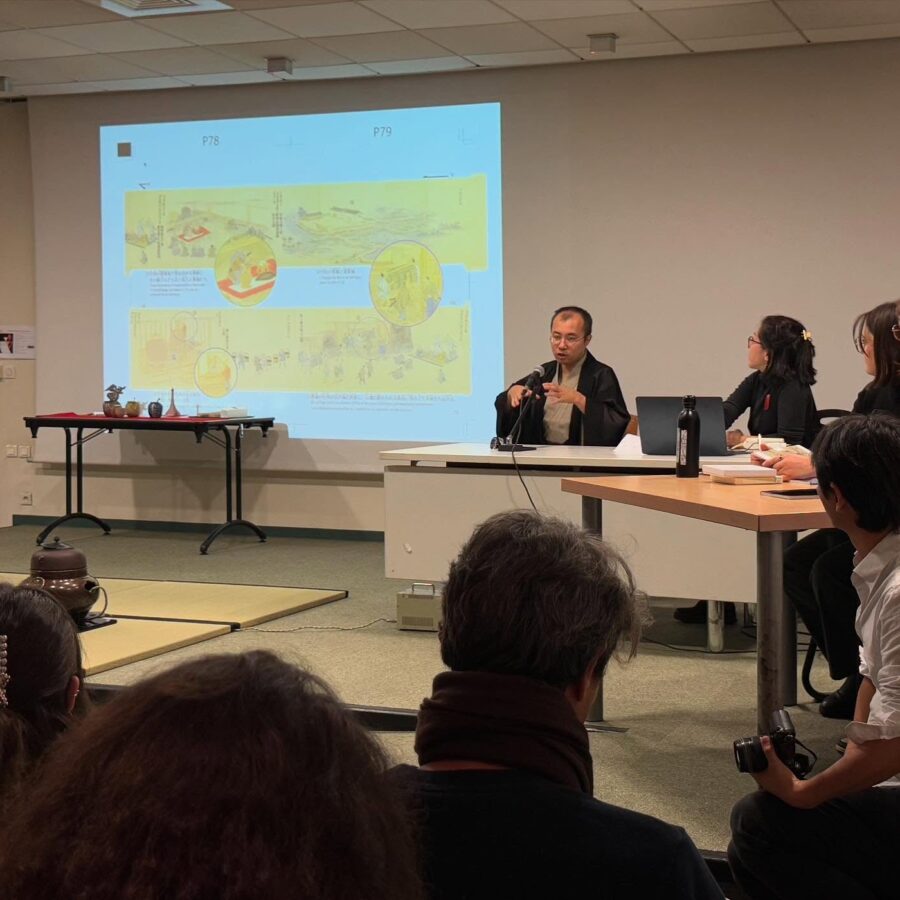
Using the Chatsubo no Maki, the “tea jar scroll,” as a starting point, I explained the entire process: from the harvesting of the tea leaves, through processing and aging, to the journey of the tea to Edo Castle.
After that, I did something that may have been slightly unconventional: I placed a microphone beside the temae-za, the tea preparation area, and demonstrated the entire sequence while explaining each movement as I performed it.
Why do we purify the utensils with the fukusa?
Why are there different ways of handling the hishaku, the bamboo ladle?
I explained these details as I went along.
Then, after showing them the whole sequence, I said:
“All right, now we are going to move on to the practical part, so I’m not going to talk anymore. From here on, no talking. If you want to see, come closer.”
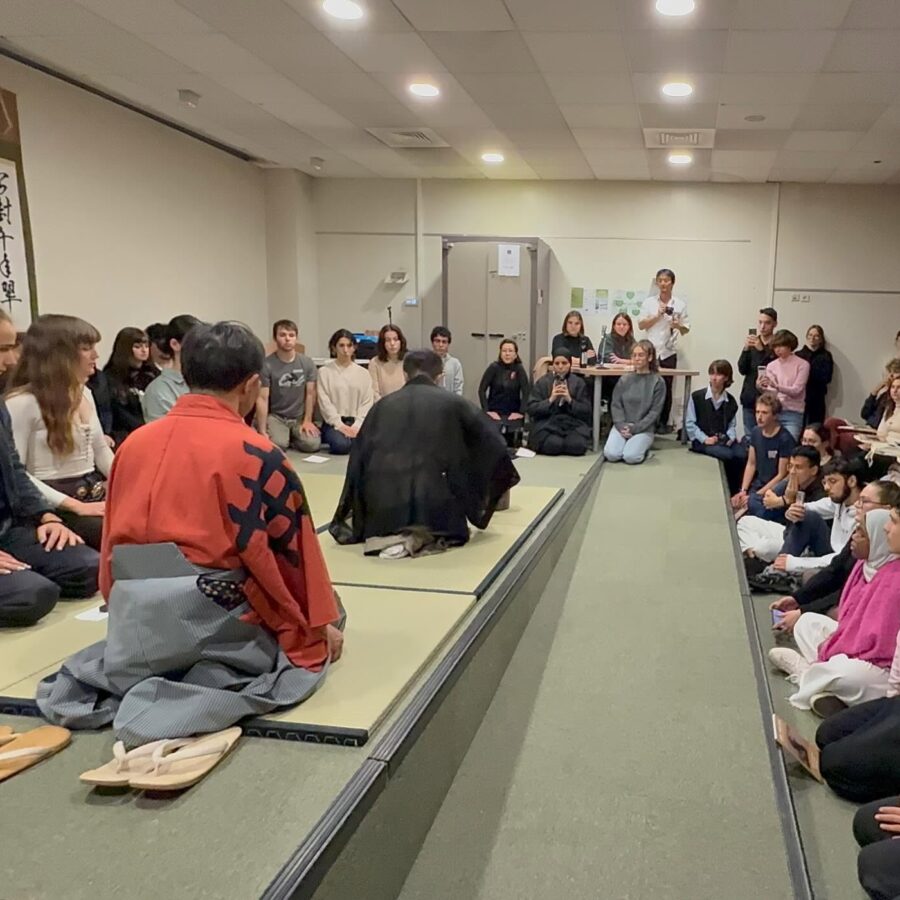
Within moments, the entire area around the stage had become a circle of students.
And, remarkably, they were sitting in seiza, the traditional formal kneeling position.
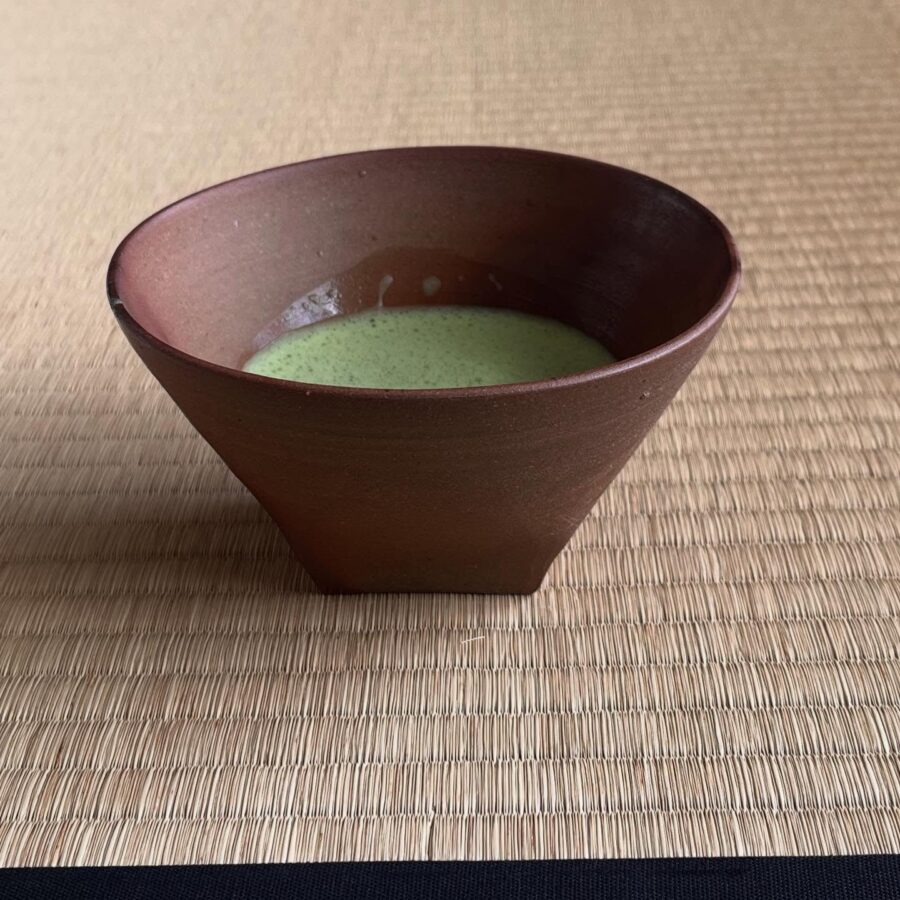
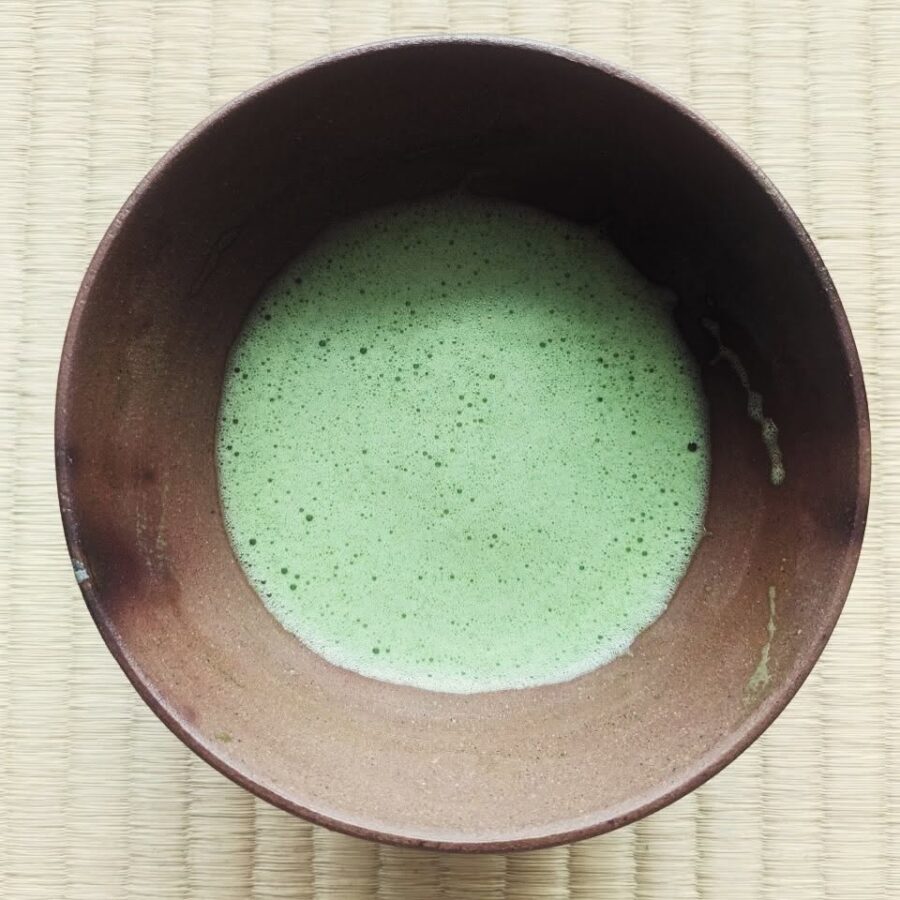
For the hira-temae demonstration, I used the Bizen-ware mizusashi and tea bowls that would be used in the following day’s lecture.
Thinking back, when I gave my very first introductory class on the Way of Tea at Université Jean Moulin Lyon 3 in 2012, nothing like this happened.
The audience was predominantly male. When I invited questions, they would ask about hakama, or somehow the conversation would turn to Japanese swords.
These were people who had begun learning about Japanese culture through anime and the films of Akira Kurosawa.
Over the years, from what I could sense, the number of female students gradually increased. The questions then shifted toward subjects such as beauty and health.
Matcha had become familiar to them through sweets, and they were beginning to take an interest in matcha itself as an ingredient and beverage.
Of course, throughout this period there were also many students who developed a serious and profound knowledge of tea and ceramics.
Some later came to Japan as exchange students, joined tea schools, and eventually became tea practitioners themselves. Others apprenticed themselves to Japanese ceramic artists and went on to become artists in their own right.
And now, things have changed again.
The students attending today are increasingly those who already understand matcha primarily as the tea of the Way of Tea.
They know very well that the matcha used in sweets and cooking is generally of a lower grade, while higher-quality matcha is recommended when the tea is intended to be consumed as a beverage.
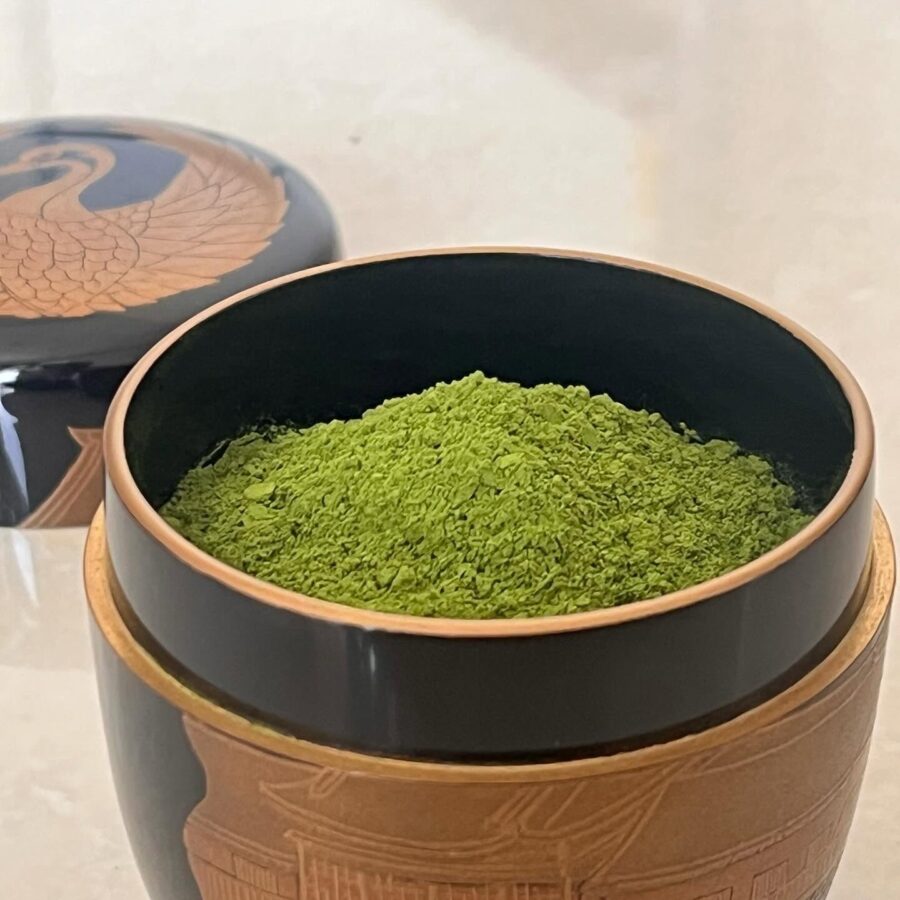
For this November’s lectures, Shinjuku Seishōen (@seishouen), which has always supported my activities, ground the freshest possible matcha for me just two days before my departure from Japan.
It was probably the freshest matcha ever brought into France by me.
When I opened the lid of the natsume, the brilliant, almost fluorescent green of the matcha drew gasps of admiration from the students.
On the final day of the lectures, a pair of siblings who had attended together asked me to write something on a shikishi.
My father, who was a professional jockey, never signed shikishi, and I have chosen to follow that tradition myself. But they were not asking for a signature—they wanted a few words.
So I wrote for them the words from Rikyū’s Hyakushu, the One Hundred Verses of Rikyū, that I personally consider the most important.
Once again this year, I received a warm welcome from the university’s professors and staff, and I am deeply grateful for all their kindness and support.
I hope these lectures will continue to provide students studying Japan with an opportunity to discover the joy of the Way of Tea and the beauty of Japanese traditional craftsmanship.
@universitegrenoblealpes