2024.10.31
Training for Ministry of Foreign Affairs diplomats serving at overseas diplomatic missions
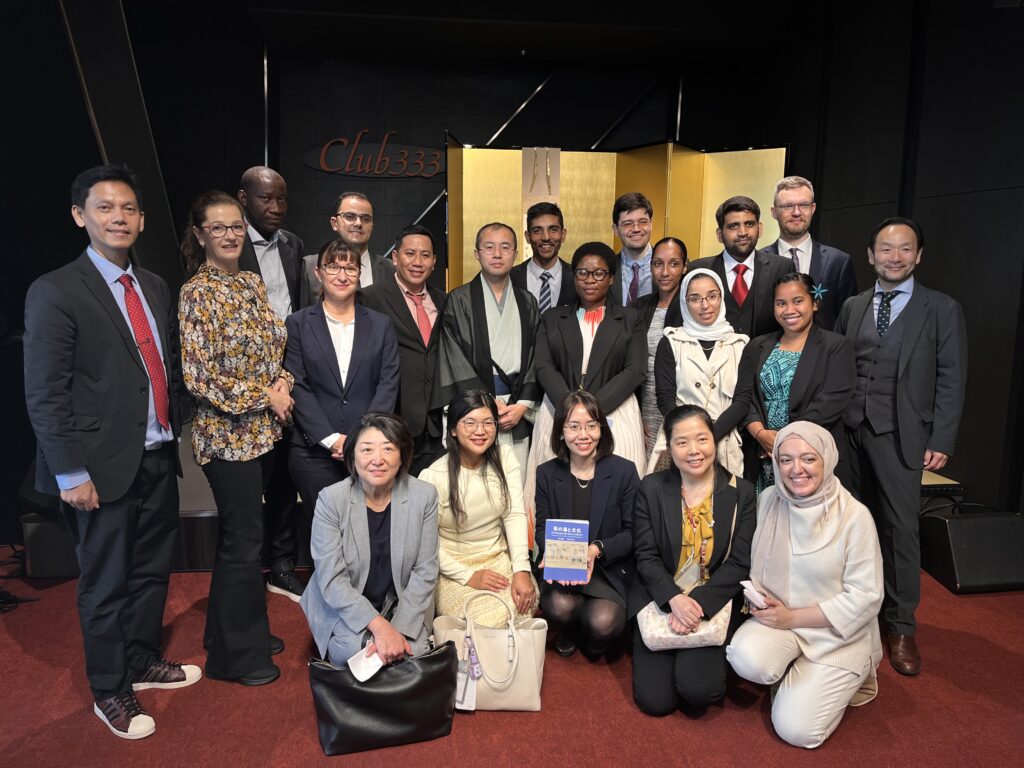
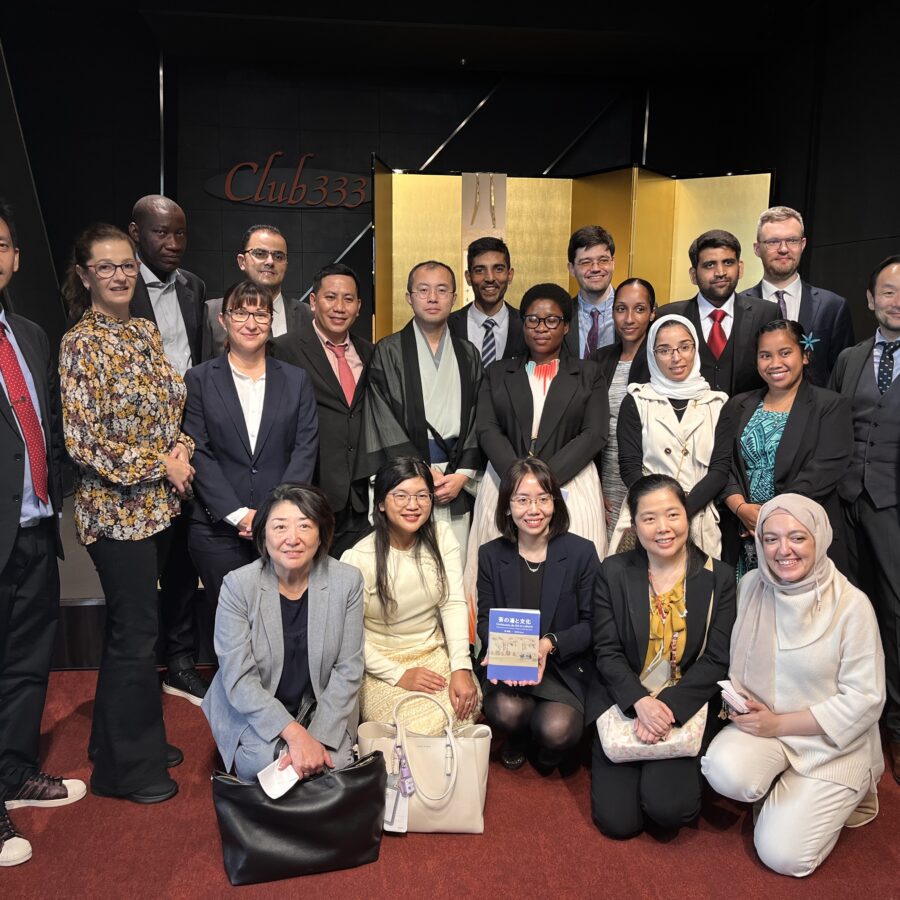
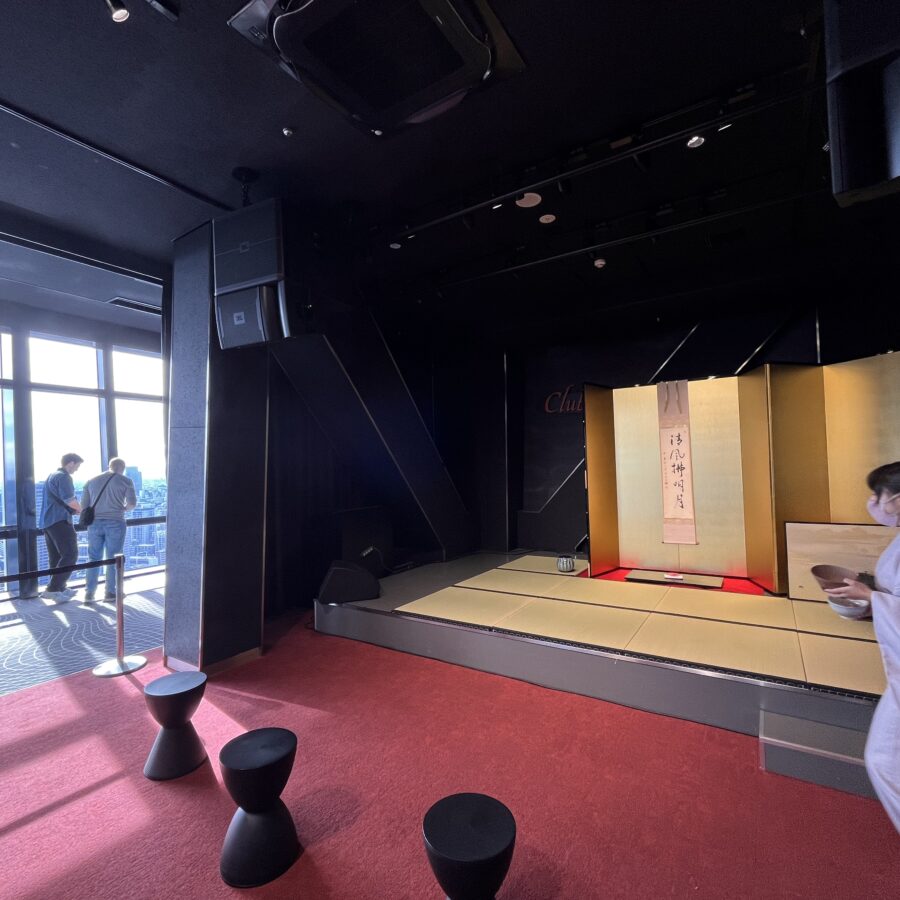
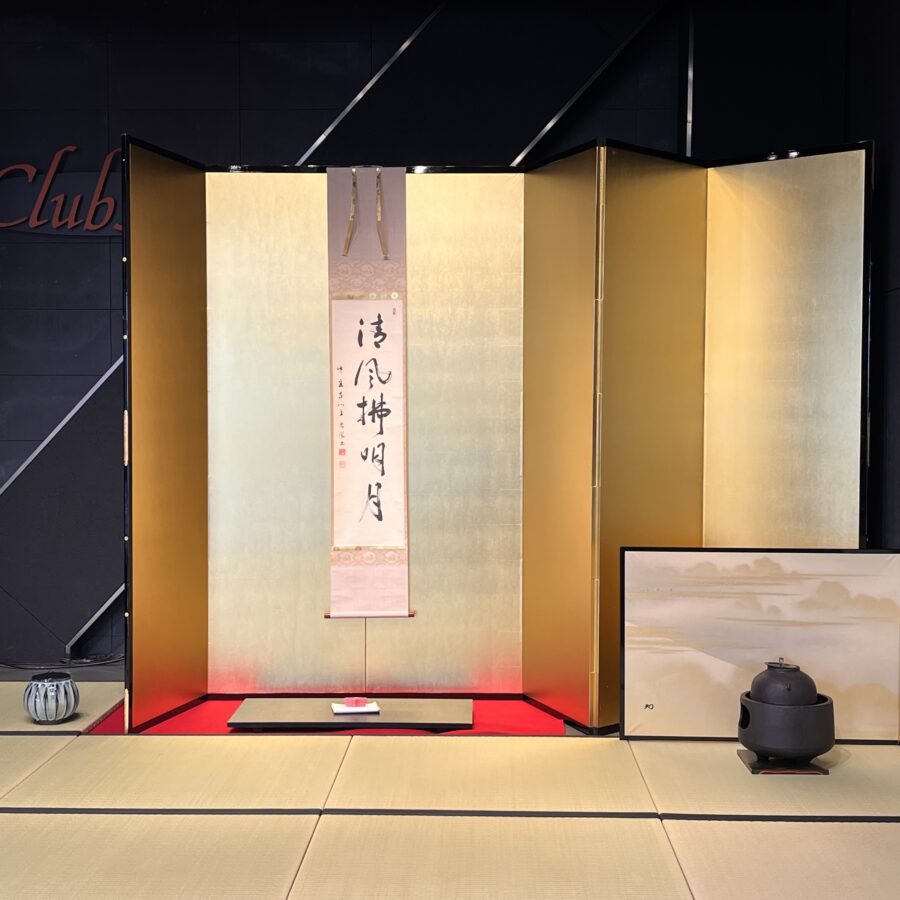
We were honored to have the tea room at Tokyo Tower used for a training session organized by the Ministry of Foreign Affairs of Japan.
Our tea space is also available for training programs and seminars for government agencies and private companies.
For the past six years, we have continued an approach based on a simple principle: to make Japanese tea culture as accessible as possible without compromising its authenticity or simply telling people what they want to hear. We carefully select works by traditional craftspeople and contemporary artisans, and strive to create tea gatherings that leave our guests with an accurate and lasting impression of Japanese culture.
This time, the majority of the participants were from overseas.
People who grew up in Japan often have an unconscious familiarity with Japanese culture. But when someone who did not grow up with any knowledge of Japan becomes interested in Japanese culture, even an explanation given from the same perspective may not necessarily be understood in the same way.
Take the expression “tea ceremony,” for example.
Long ago, Okakura Tenshin translated and presented Japanese tea culture in English using this expression in his writings. As a result, many people outside Japan came to understand Chadō as a ceremony or ritual.
For someone who has just begun to take an interest in Japanese culture, the situation can become even more confusing.
Information found online and in general books often says that tea was introduced to Japan centuries ago by Buddhist monks.
At this particular moment, that can be a rather unfortunate way to introduce the subject!
It is certainly true that the Zen monk Eisai is traditionally credited with bringing tea back to Japan.
But that does not mean that we prepare tea in front of a Buddhist image while chanting sutras.
There are, of course, forms of tea practice associated with religious rituals, but that is not what one learns in an ordinary tea school.
I have met many people of other faiths who have told me:
“I cannot participate in the Japanese tea ceremony because I belong to another religion.”
I sometimes wish Okakura Tenshin had added a little more explanation to prevent this misunderstanding.
Today, Urasenke recommends the expression “Way of Tea”, rather than reducing Chadō to the idea of a “tea ceremony.”
That is often where I begin my explanation.
I talk about the handling of the fukusa, the meaning behind cleansing and purifying the utensils, and I also make sure to add a little humor from time to time.
Because laughter does not mean that we are being frivolous.
What we want to convey is not a school-like form of education in which participants take tests to measure how much they have learned.
Rather, we want certain things to remain in their minds as little drawers of knowledge that they can open again whenever they need them.
In other words, it is a way of teaching without forcing anything upon people.
And for that, the first priority is to make everyone feel comfortable.
With my limited abilities, I certainly cannot claim to produce great bursts of laughter, but a small smile or a little laugh is an essential ingredient.
There is just one thing…
I wish I could speak foreign languages a little more fluently!
That is probably my greatest frustration. Sometimes it makes me want to stamp my feet in frustration.
But then again… I have never really liked studying.
Finally, I would like to express my deepest gratitude to a senior official of the Ministry of Foreign Affairs, whose encouragement profoundly changed the course of my life in tea.
Looking back, I realize that the university lectures I have given every year in southern France also began through this person’s recommendation. This year marks the tenth anniversary of those lectures.
Since then, I have occasionally been invited by the Ministry in Tokyo and by Japanese diplomatic missions overseas, and I have often found myself traveling with my chabako under my arm.
But this was the first time that people from the Ministry came to my own workplace, Tokyo Tower, for such an occasion.
It was a deeply meaningful experience for me, and a piece of work that I will remember for a very long time.